
PHOTO
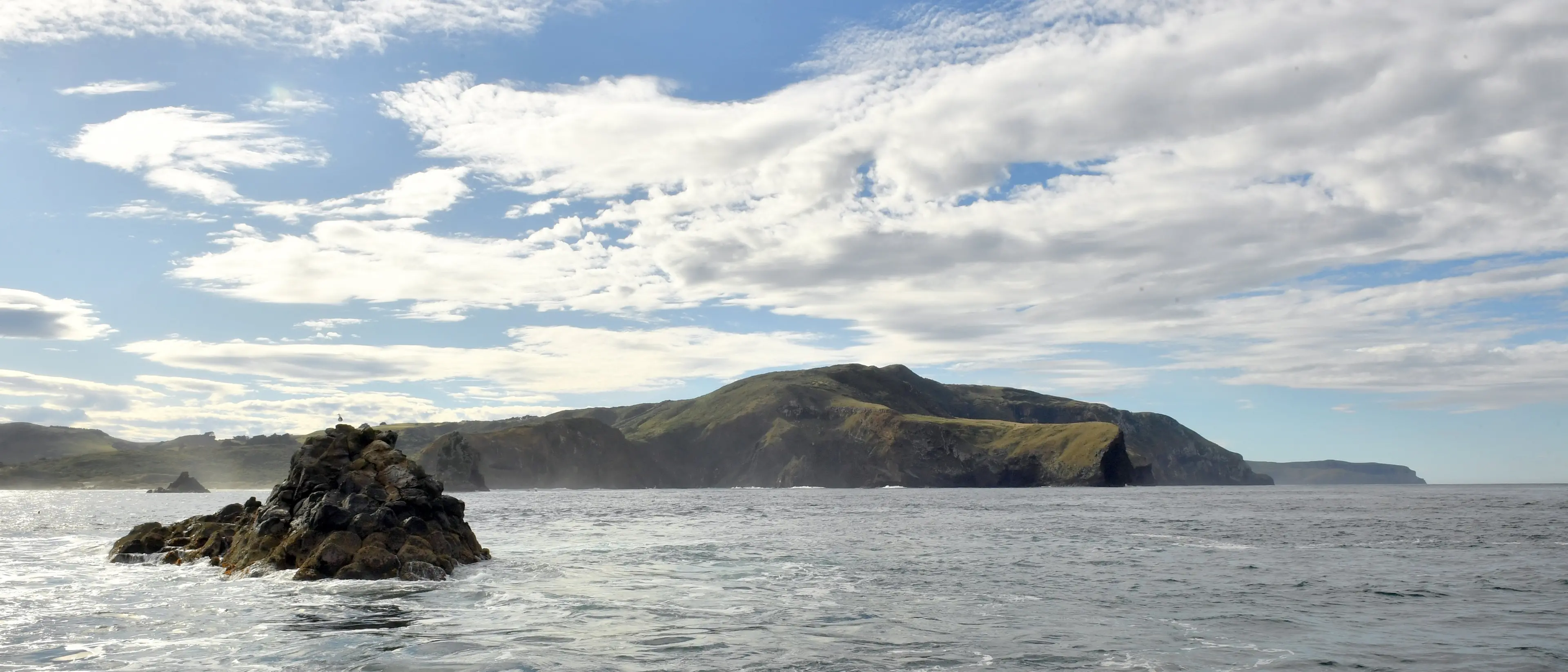
The Otago coast is special to those of us who live here, whether we go down to St Clair to watch the surfers while having an ice cream, hide in the sandhills to watch penguins, dig a few cockles for the barbecue, take our visitors to Nugget Point, fish off the wharf, bird-watch the coastal lagoons or fossick around the rock pools of the Catlins.
We know that it is variable, beautiful and biodiverse.
Otago’s coastline is unusually diverse, mainly because of the many various kinds of rocks we have making up the shore. When you think about it, our inventory is remarkable: the cobble beaches of the Waitaki Fan, limestone cliffs in Oamaru, lagoons and river mouths along the east Otago shore, jagged rocks of the Dunedin volcano, fetching sandstones of Tunnel Beach, the ins-and-outs of the Catlins shore. We have sandy beaches, muddy estuaries, sheer cliffs and rocky platforms.
Our diverse environments lead to great marine biodiversity, some of which I have written about before in the ODT. Nutrient-rich and oxygenated waters travel from the southeast, colliding with warmer waters which have wound their way down from Australia across the Tasman and past Stewart Island.
The mixing of these two provides everything life needs, and we have abundant seaweed, plankton, invertebrates, fish, birds and mammals. This is true close to shore, where we notice it, but also further out to sea.
We all know it to be true — our sea and its life are special and worth taking care of.
Yet conservation and protection of Otago’s marine environment is minimal, local, and inadequate.
We have been crying out for 30 years or more for marine conservation. And recently it looked like we finally were going to get some.
What do we have to protect our special marine environment here in Otago?
After decades of planning, arguing, consulting and leaping legislative hurdles, a network of small marine reserves from Timaru to the Catlins were finally announced by government in October of 2023.
Yet here it is 2025 and they still don’t formally exist. In fact, the whole issue has ended up in the High Court. It seems like a tale worth telling.
Marine protected areas (MPAs) are like underwater national parks. They provide nature with a place to thrive and grow without being damaged by people.
They safeguard ecosystems, animals and plants that are under threat or even gone from other places. And, like national parks, they provide benefits far beyond their boundaries.
New Zealand led the way in marine protected areas when it established a marine reserve at Leigh, north of Auckland in 1975. Initially local fishing interests were dead set against giving up some of their fishing grounds, but within a decade they were among the biggest fans of the reserve.
It turns out that protecting some of the fish (and their babies) means that the wider population, outside the reserve, recovers in numbers, size and health. It makes sense really, like keeping a few of your chickens to make more eggs, rather than eating them all.
Meanwhile, the area has become a hugely popular destination for snorkelling and beachcombing, supporting local communities.
Having been early pioneers in MPAs, New Zealand continued to protect the marine environment — though usually only very small areas, over loud protests from fishing interests, both commercial and recreational.
Interestingly, customary fishers often seemed to understand the need to take care of kai moana, let some fish survive to reproduce, and were less opposed to marine protection. Lately, though, this country has lost momentum in marine conservation.
Our last marine reserves were created in 2014. Although we have signed an international commitment to protect 30% of our ocean by 2030, we have so far only protected about 0.5%.
Just as on land we have numerous kinds of parks and reserves, we also have numerous tools for marine protection. The strict no-take marine reserve (also known as Type 1) is the highest level of protection.
Type 2 marine protected areas limit certain kinds of fishing, while mataitai and taiapure are ways to regulate fishing bags and allow local communities a say in how their area is managed. In all these places, people can still swim, boat, snorkel and dive.
It’s been a decade of wrangling
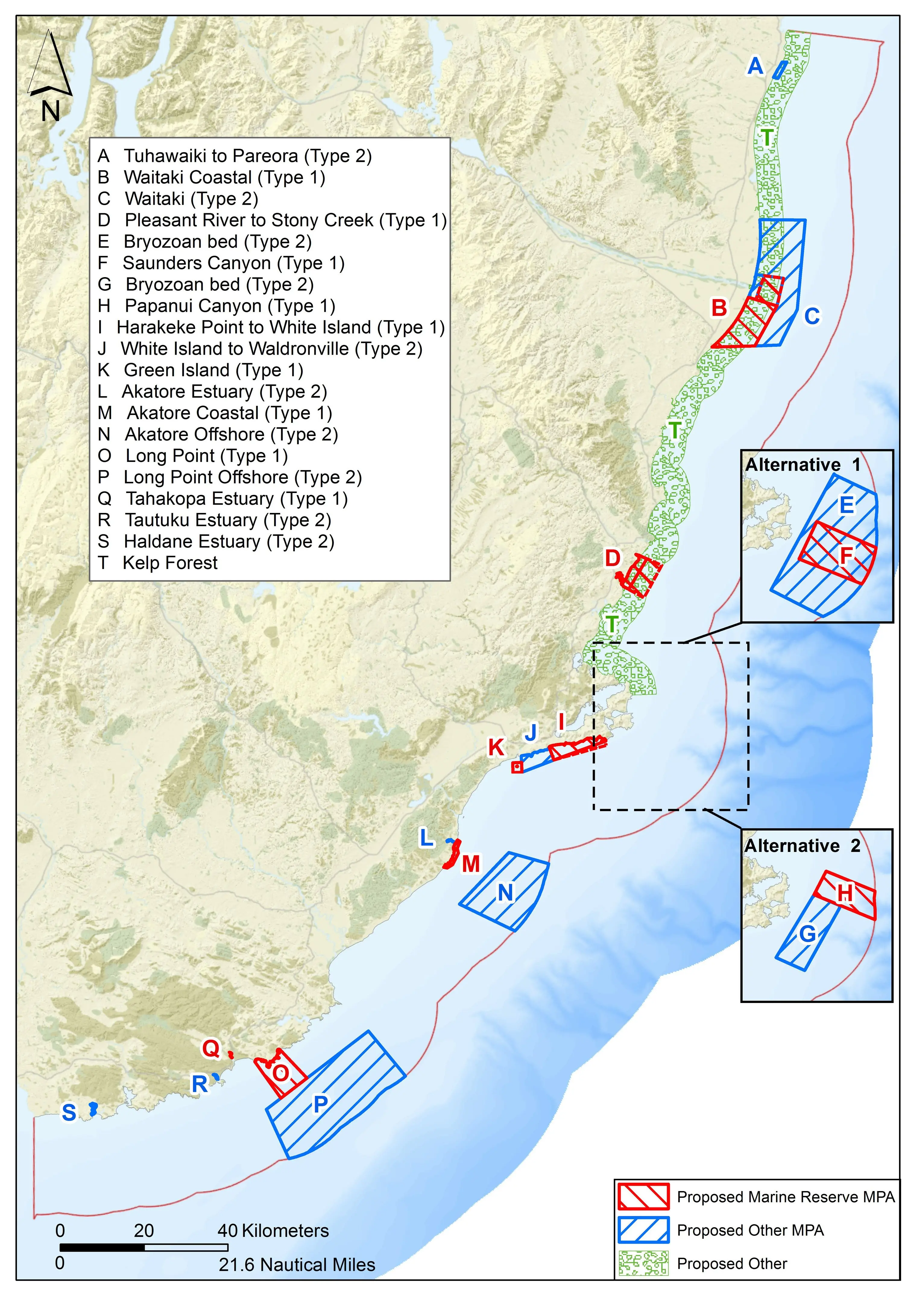
The southeastern South Island Marine Protection (Semp) Forum was established in 2014, consulted everyone and their dog for several years, produced a draft document in 2016 and a fully fleshed out proposal in 2018. Public consultation was started and then restarted in 2020, and there were negotiations with Ngāi Tahu through 2022 and 2023.
In 2018, two networks were proposed. Network 1 included six Type 1 marine reserves and five Type 2. This network was broadly supported by scientists and environmental interests. Network 2 was smaller, with only three Type-1 marine reserves and two Type 2, and was supported by commercial fishing representatives. The minister for conservation chose Network 1 in 2019.
Throughout this process, the public have been engaged and very strongly in favour of the reserves. Ninety percent of the 4056 submissions received were supportive.
At each consultation round, however, the major fishing powers have clawed back some of the ground.
In the end, our six Type 1 marine reserves have been whittled down to less than a third of the original area, just 397sqkm in total; less than 4% of Otago’s coastal marine area. The five Type 2 reserves allow limited fishing methods and gear, but are not closed to fishing, either commercial or recreational.
Also, there is the Arai Te Uru Kelp Protection Area from Timaru to Dunedin, which looks big but only applies to seaweed harvesting.
The six marine reserves were announced as "created" by the minister of conservation in October 2023 — and Otago celebrated. The Department of Conservation said the formal gazettal process would complete by mid-2024.
In an ODT article (24.6.24), Doc official Siobhan Quayle was quoted as saying that they were "finalising" some "largely administrative" tasks. And yet more delays.
The main hold-up now is down to the Otago Rock Lobster Industry Association (Orlia). They fish for crayfish from Waitaki to Long Point and they don’t want to lose any of their fishing areas.
Executive officer Chanel Gardner (just elected to the Otago Regional Council) has claimed they will lose $40million due to "key mapping errors" in the Semp process. Doc refuted that claim and provided evidence, validated by an independent review. Fisheries NZ disagreed with Orlia calculations, estimating the potential cost to be much less.
In June 2024, Orlia filed a judicial review in relation to the marine reserve network. They argued that the process was flawed and that their own submissions were not regarded properly. They wanted the six marine reserves and the kelp protection area to be set aside.
At the same time, Orlia is working to change public perceptions. They have produced a poster, operate a Facebook page, and have launched a Change.org petition which claim that access to recreational fishing and customary fishing will be closed in wide areas that are not in the marine reserves and describe the MPA network as "locking fishers out", "no touch — no take".
None of that is true. People can go into marine reserves, and the Type 2 reserves allow various kinds of fishing.
Orlia describes the network as the closures of "huge areas" and have developed a map that essentially shows the whole of coastal Otago as being protected.
Let us be clear: only about 4% of Otago’s coastline area is proposed to be a Type 1 marine reserve.
Orlia claims that the process was not adequately consultative. After a gigantic effort by the Semp Forum to visit and listen to everyone, the process included at least three episodes of consultation and each time the size of marine reserves went down. They have had at least three bites at this cherry.
Fishers talk about fishing as if it is a God-given right. As if the natural world’s job is just to sustain humans. As if we can just make more fish if we need them.
Well, if you fish all you like, one day there won’t be any fish left. Every fisher talks about how there were more fish when they were young. Their dad said that, and their grandma. And it’s true.
There are indeed fewer fish every year. You can’t just ignore the long-term effects of overfishing because you personally want to go fishing today.
Here’s how we make sure there will be fish and lobsters and clams and all kinds of kai moana in the future, sustaining jobs and food and fun: by protecting some of them.
Nobody is saying you can’t catch and eat some of them. Marine conservationists and scientists are suggesting that you don’t need to catch and eat them all.
We all know what’s going to happen now. People who want to fish anytime, anywhere, with no regard for the future will attack me.
But, maybe, could the rest of you contact your MP and ask: where are our marine reserves?
We want them now. We need them now.
The stunning splendid ocean off Otago needs your help. Please.
— Abby Smith has retired as professor of marine science at the University of Otago.