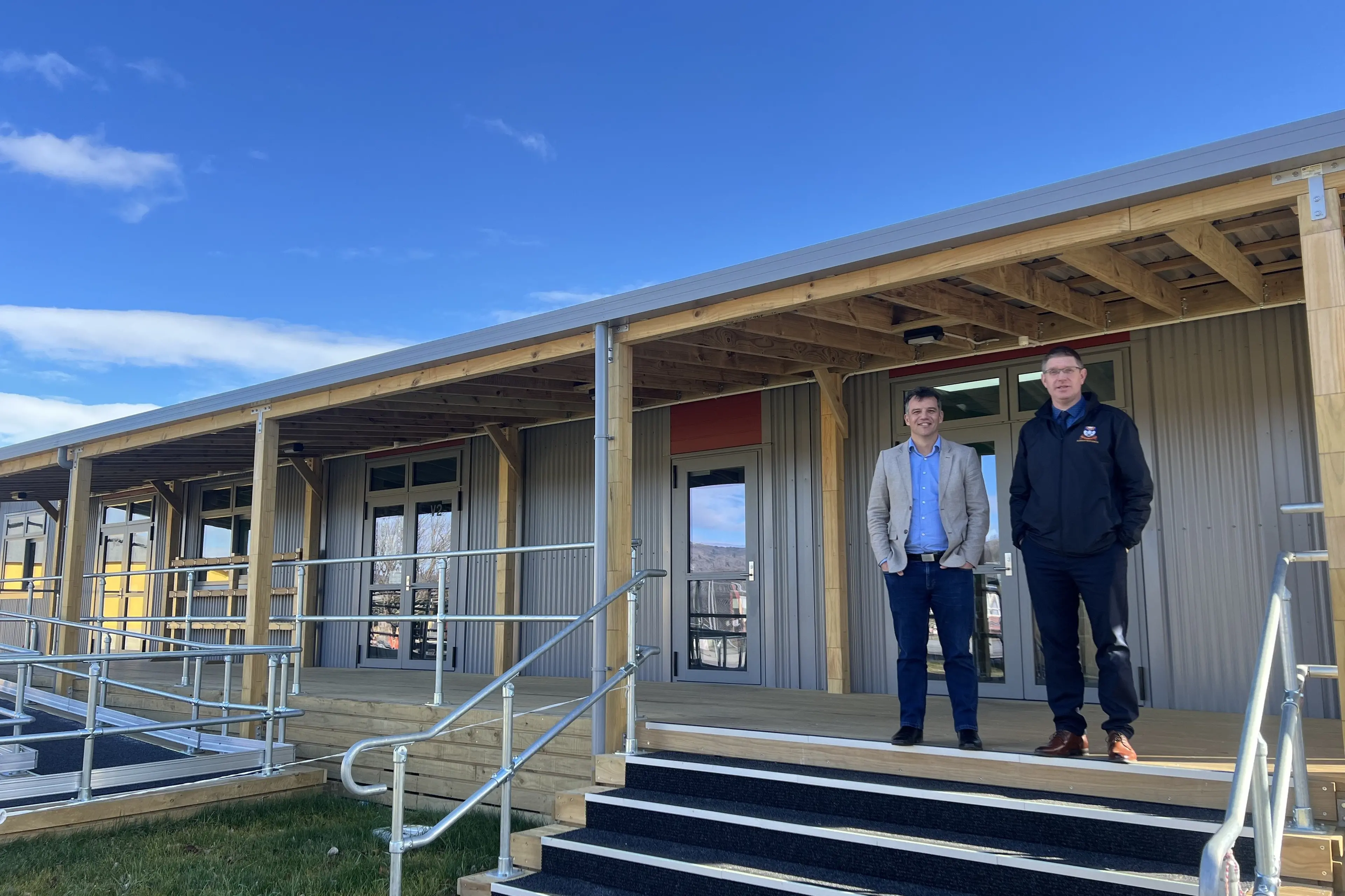
“Specialty” classrooms and expanded offerings are part of a significant upgrade to future-proof Dunstan High School, the principal says. Principal Andrew King said the project was about preparing the school for future growth. “Being able to future-proof the school is one of the biggest focuses of this project.” Often these new developments relied not on how many classrooms were added, but what type of classrooms were introduced and what benefited the students and community most, he said. The recently completed $360,000 project included a purpose-built visual arts wing, known as Vincent Block, featuring two new art rooms and a dedicated photography room. Lauder Block had added a new design and visual communications (DVC) room alongside two general-purpose classrooms, he said. Southland MP Joseph Mooney, who toured the new learning facilities, said it was clear how much care and time had gone into the new buildings. “It’s phenomenal,” Mr Mooney said. “It’s always a really great outcome for the school and the community if this means more opportunities are available to more students. “That’s what it’s all about.” The new spaces were already making an impact in the classroom, DVC and technology teacher Vai Tuhoe said. Mr Tuhoe, who teaches in the new classrooms, said the hands-on learning tools available, such as facilities for sculpture and carving, made a real difference for students. Having access to a range of learning and educational resources benefited students significantly, he said. The new facilities had also enabled the school to expand its trade-based offerings. Students could now work toward level 2 and 3 credits through projects run in partnership with Breens Construction, giving them “practical, industry-led standards” as part of their education, Mr King said. Providing students with more concentrated and hands-on learning opportunities tied into the broader focus of the developments focusing on speciality rooms. “The school and board made the decision to future-proof the school for roll growth, and one of the biggest things around the roll growth for school management is around speciality rooms.” That focus reflected growing local demand for trades and hospitality training, with hospitality and construction being two of the “biggest employment sectors” in the area, Mr King said. The school believed it was important to support those industries directly, offering students a higher level of training in areas where local jobs were readily available. The school saw its facilities as a genuine community asset, he said. As part of that push, the redevelopment has also allowed the school to repurpose its old art room to become a second woodwork room, given the growing demands in the industry, and provide a dedicated training space. For the hospitality sector, the school is working in conjunction with Otago Polytechnic, which uses the school’s food room for its Wednesday level 2 hospitality classes. Mr King said the school was in the design phase of creating a second food room, which it was hoping would be used by the Otago Polytechnic to run its hospitality programmes moving forward, which would “benefit both students and the whole community,” he said. Several cost-effective solutions had also been found during the project’s development, including repurposing the polytechnic’s old equipment for the new cooking room, with hopes the room will be ready by Christmas. One of the most exciting parts of the hospitality development was the two new barista coffee machines being added to the space, which both staff and students would greatly appreciate, Mr King said. The classroom project formed part of a wider period of development at the school. A whare development, driven by the Whare Trust and the work of Russell Checketts, Louise Mackenzie and Francie Diver, had been extended to include a Whare Kai, with its official opening set for August 26. The school recently received two pou, carved by local carver Tim Riwhi, in a ceremony held to mark the gift, a taonga the school would be forever thankful for, Mr King said. Work also began this week with the Molyneux Trust on a new full-size hockey turf, with fencing already under way. In conjunction with that project, the school is working with Football South and FIFA to install a futsal turf on its existing tennis court area. “I am very lucky to run this school in an amazing community,” Mr King said. “Our community is so invested in their young people and providing the best possible resources.”