

PHOTO
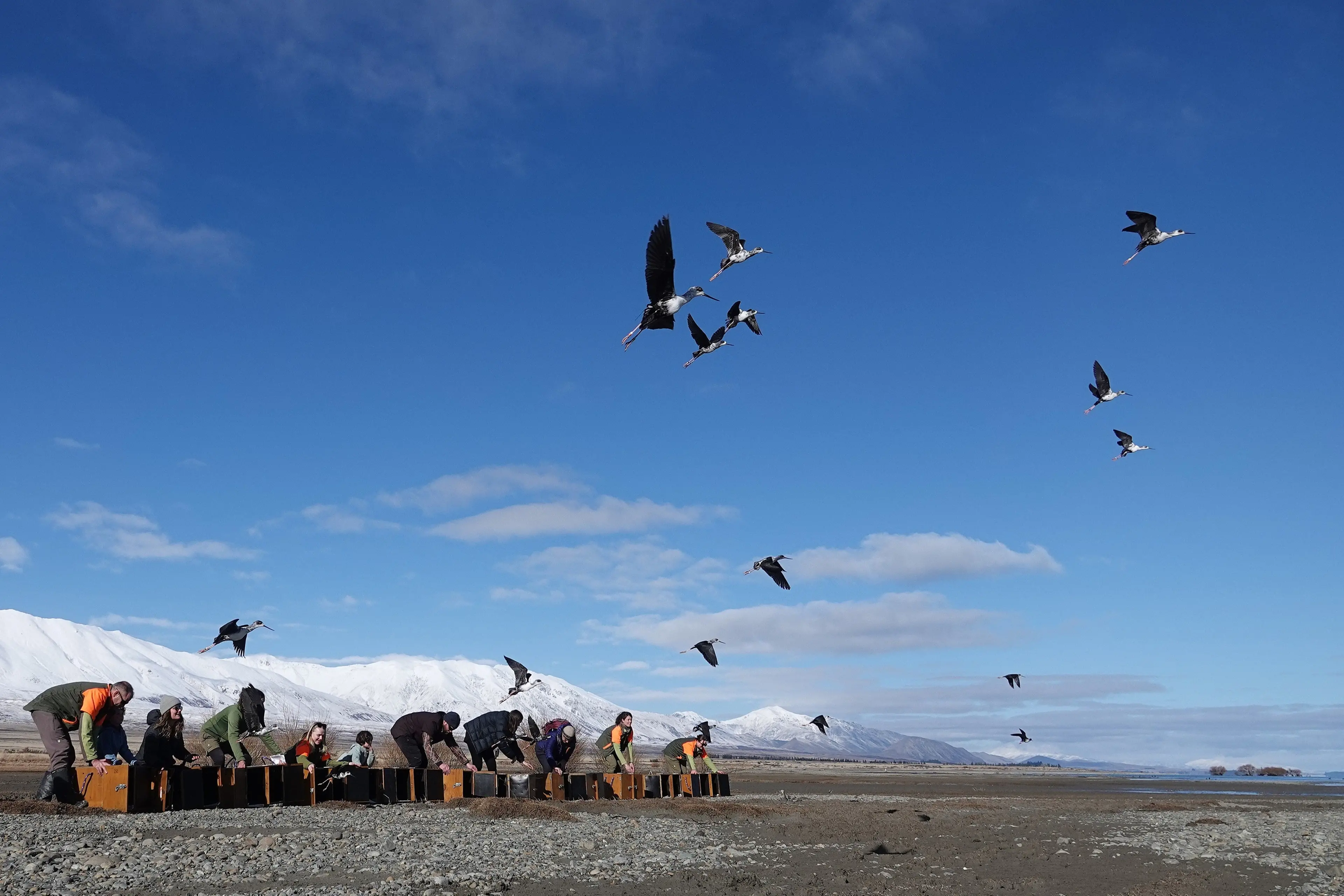
In a “vital” step for the survival of one of the world’s rarest wading birds, more than 100 black stilts (kakī) were released into the wild.
Sixty-seven captive raised kakī were set free on the Godley River in the Mackenzie Basin last weekend.
The endangered birds are released when they are sub adults, aged eight or nine months, after first being given a fighting chance at the Department of Conservation captive breeding facility near Twizel and at the Isaac Conservation and Wildlife Trust, near Christchurch.
Further releases took place on Friday and Saturday along the Tasman River, bringing the total released this year to 134 birds.
Project lead, Doc biodiversity ranger Liz Brown, of Twizel, said the releases were “vital for maintaining wild population numbers and genetic diversity”.
“Releasing large groups of young birds together also increases their chances of finding future breeding partners.”
Despite the risks posed by H5 bird flu, which is now in New Zealand, the releases "needed to proceed” because captive breeding facilities had reached capacity.
Black stilts were among the prized native birds to receive vaccinations to protect them against bird flu.
With the aviaries “now mostly empty, we can begin preparing for the next cohort of young kakī”, she said.
Dedicated kakī rangers would now be “closely” monitoring how the waders got on in the wild.
And supplementary feeding would continue for the next six weeks to give the released birds “the best possible chance of survival”.
The important six-week period gave the birds the best possible chance to establish themselves in their new Godley River home.
The efforts of rangers, landowners, volunteers, Te Rūnanga o Ngāi Tahu, The Isaac Conservation and Wildlife Trust, Alliance Group and the Dunedin Wildlife Hospital were praised by Doc.
Mt Gerald Station also provided both accommodation and access at the release site.
Dunedin Wildlife Hospital general manager Suzanne Stephenson called the releases a “massive achievement” which followed “a lot of mahi [effort] from a lot of dedicated people”.
It was a privilege for the team at the hospital to care for such “amazing birds”, she said.
"It’s really nice to see that species increase and go out into the wild.”
The kakī in Doc’s captive breeding facility were kept fed with 5000kg of ox hearts provided by Alliance Group, based in Pukeuri in North Otago, and this would also be given as supplementary feeding in the wild.
Conservation efforts over the past four decades have brought the wader back from the brink of extinction, following a low of just 23 birds.
charley-kai.john@odt.co.nz