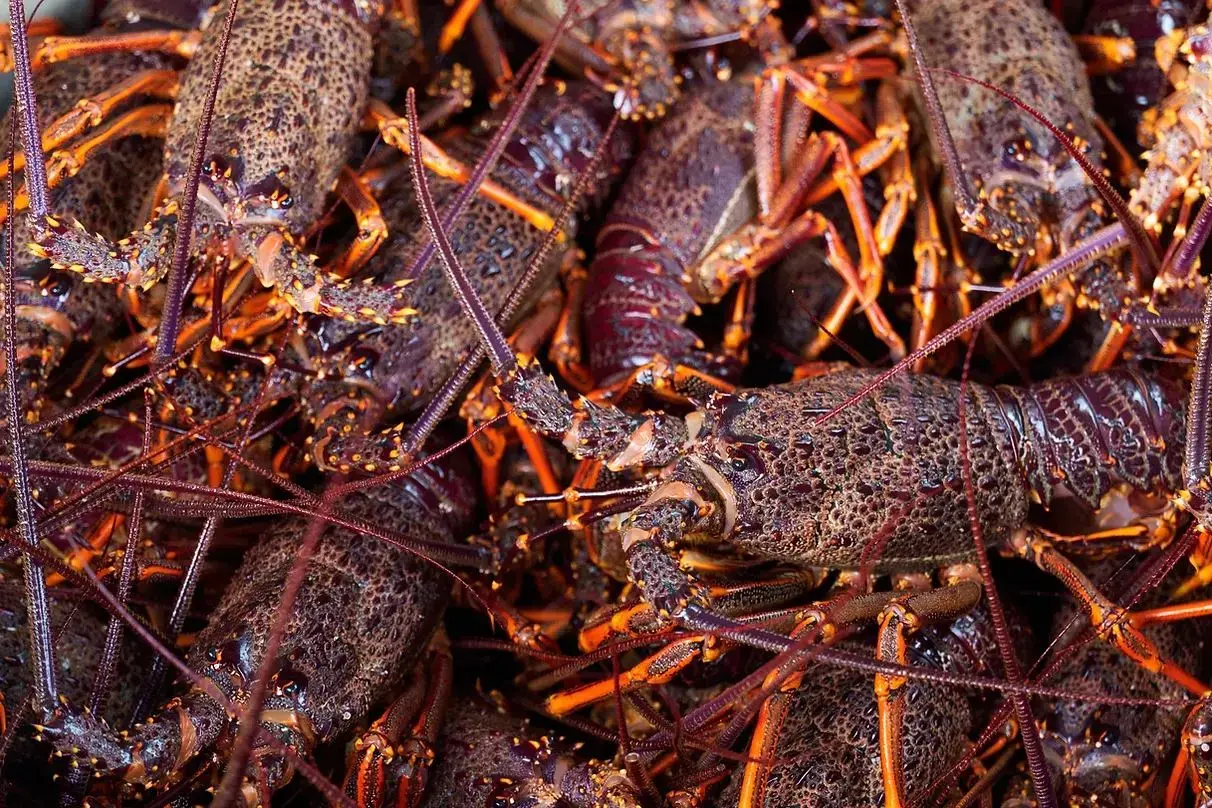
An Invercargill man employed as a diver on illegal heli-crayfish excursions for guests at Queenstown’s five-star The Rees Hotel has been fined for breaking fisheries rules. David Brian Casey, 35, a sheet metal engineer, was sentenced in the Queenstown District Court on Wednesday on a representative charge of unlawfully possessing crayfish taken for the purpose of sale without a permit. The charge relates to three trips in 2022 — on July 11, July 25 and October 15 — for which he was paid $800 in cash each time by resort flight-seeing company The Helicopter Line (THL). In a collaboration between the two companies, THL charged the hotel between $2541 and $4650 per person for the trips, in which they flew guests to remote locations in Fiordland, the summary of facts said. After landing on shore, Casey would dive for up to six crayfish — the recreational limit — before giving an educational talk and posing for photos with guests. A promotional video for THL described the excursions as including a diver catching the crayfish, which would be taken back to Queenstown — via the company’s base at Queenstown Airport — and served for dinner at the hotel at a cost of $100 a person. Neither Casey nor THL held a fishing permit or an exemption that allowed the taking of crayfish as part of the company’s commercial operation. The summary said on the night of the July 11 excursion, THL’s agent sent Casey a photo of the crayfish meal served at the hotel, along with a message saying ‘‘they did an OK job on the crayfish tonight’’. Casey replied: ‘‘Can’t get any fresher than that.’’ After the Ministry for Primary Industries (MPI) began investigating the excursions in 2022, Casey told an interviewer that on arrival at THL’s base, he would put the crayfish into a chilly bin inside the hangar. He claimed he didn’t know where the crayfish went after that, and wasn’t aware of any illegalities with the excursions. The summary said Casey took no steps to ‘‘ensure his actions or activities were compliant with fisheries legislation’’. Judge Ali’imuamua Sandra Alofivae said her sentence had to reflect the fact that fisheries offences were difficult to detect, and there was a need to maintain deterrence against such offending. A key purpose of the Act was ‘‘ensuring sustainability’’ of fisheries resources. However, she accepted a submission by Casey’s lawyer, Jono Ross, that his personal circumstances justified a discount in sentencing. ‘‘You have a young family, you work really long hours and you’re doing your best to get by.’’ From a starting point of $5000, she applied discounts for his guilty plea and personal circumstances to arrive at an end fine of $3750. THL has admitted four charges of unlawfully possessing crayfish, for which it has applied for a discharge without conviction. The matter remains before the court. The Rees Management Ltd was convicted in March 2024 for illegally selling recreationally caught crayfish and failing to keep records. It was fined $22,000. guy.williams@scene.co.nz