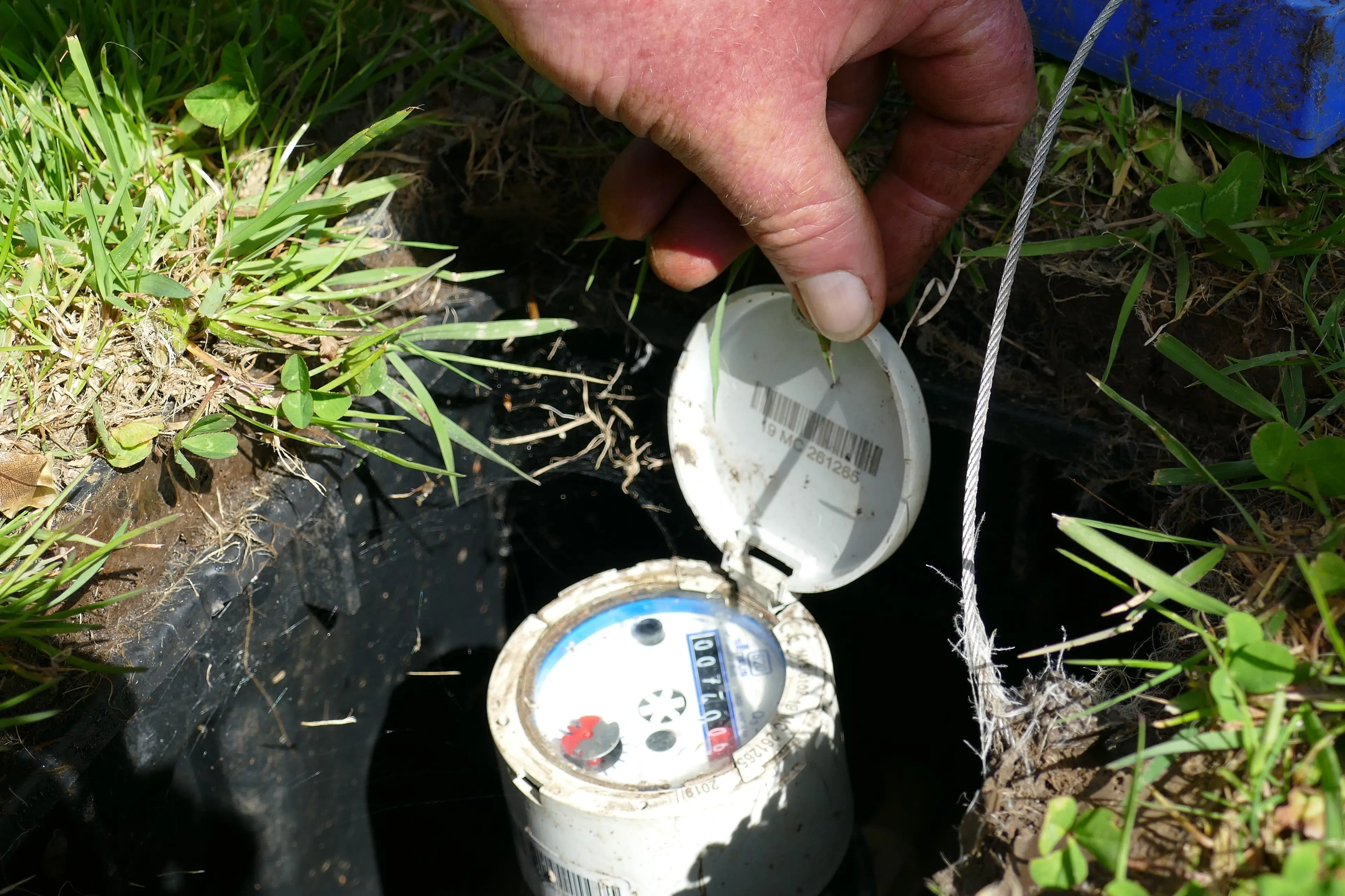
The Queenstown Lakes District is joining the nationwide shift to user-pays water. The district council has unanimously approved an indicative business case for managing water demand that includes the universal rollout of water meters and “volumetric” charging from a yet to be decided date. Subject to future decisions by the council’s water services company, which becomes operational on July 1 next year, 17,500 water meters will be installed across the district in the five years from mid-2028. Many of the district’s roughly 28,000 water connections already have meters. In her report to a full council meeting in Wānaka on Thursday, Three Waters strategy and planning manager Helen Beaumont said the meter rollout was part of a 10-year programme that included water audits for irrigators, penalties for excessive water use, and a ramping-up of leak detection and repair. Before volumetric charging was introduced, customers would receive “mock bills” so they could better understand their water use. There would be public consultation on the exact charging structure — the split between fixed and volumetric charges — before charging began. The district had one of the highest rates of water use per capita in the country, yet was one of the last councils to move to volumetric charging, Ms Beaumont said. Modelling showed it would reduce demand by 20-30% and save an estimated 4 million cubic metres of water a year. The business case was commissioned in response to “escalating pressures” on the district’s water schemes caused by peak summer demand, largely caused by irrigators, and leakage, population growth and tourism. The pressure on water infrastructure was jeopardising the district’s ability to supply safe drinking water to all communities, she said. Until now, the council had responded by adding infrastructure — more intakes, reservoirs and pipes — but the costs were not being fairly distributed across all water users. The infrastructure was now funded with a fixed annual water charge in rates bills — which gave consumers no incentive to use water efficiently and was “increasingly out of step” with what other councils around the country were doing. Metering would provide the council with the data it needed to understand and manage water loss and consumption, allowing it to detect and repair leaks, penalise excessive users and audits high users, she said. The programme’s estimated capital cost over the next 30 years was estimated at $132m, of which $60m would be spent over the next decade. Cr Cody Tucker said the programme was “long-awaited” given the council was one of only seven in the country still relying solely on fixed water charges to fund its water infrastructure. Meter-based charging was similar to how people paid for electricity, with a fixed cost for a connection and a variable cost for how much they used, Cr Tucker said. The information in the report needed to be communicated to property owners in a way that showed the council was taking a “sensible” approach to the issue. Cr Niki Gladding said she supported the programme in principle, but was concerned about the tight timeline for rolling out meters. “This is a really sensitive issue for our communities, and I don’t want us to compress the timeline in such a way that it undermines really good community consultation.” guy.williams@odt.co.nz