PHOTO
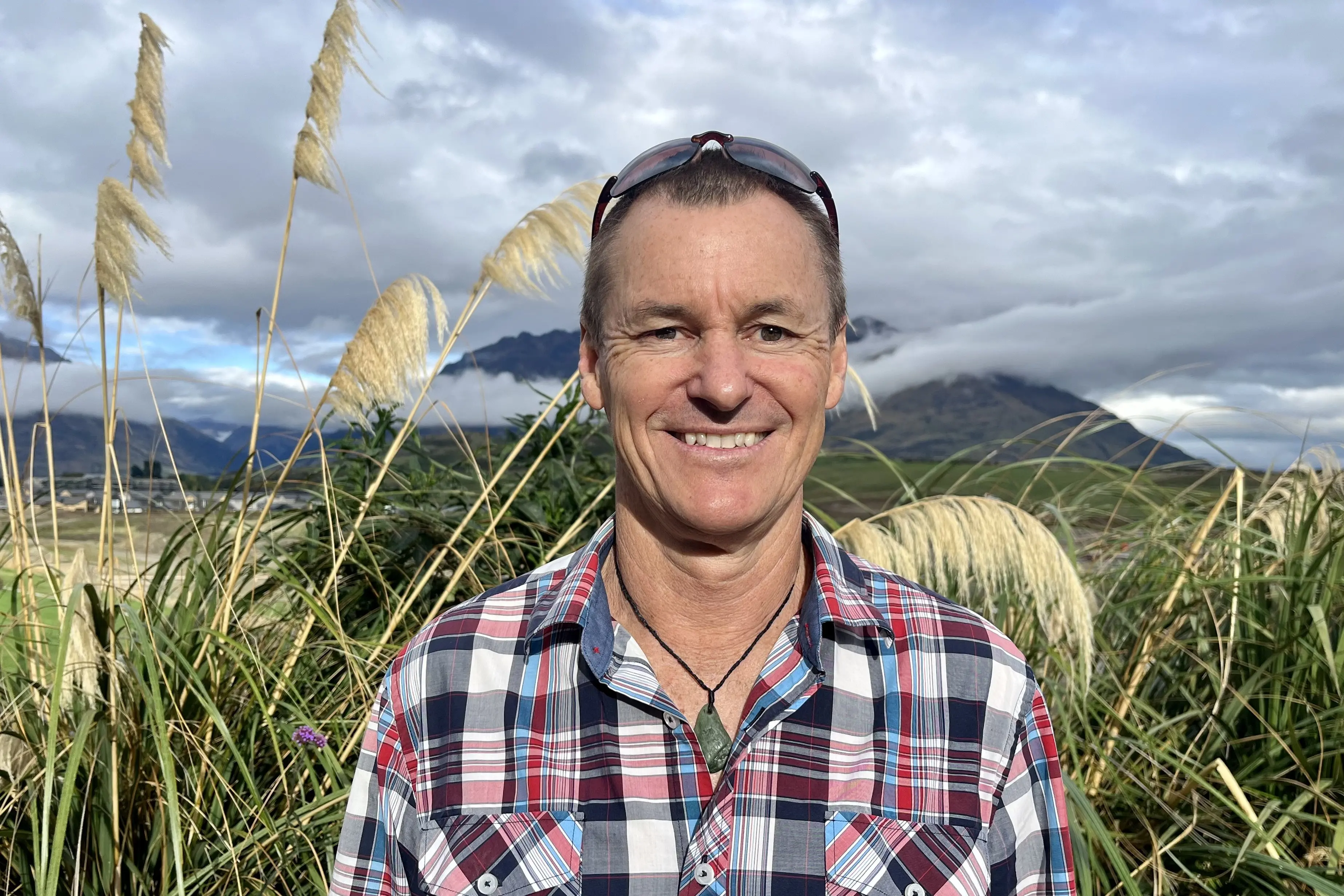
Guy Hughes is a long-time Queenstown resident, who chaired the Shaping Our Futures transport taskforce a decade ago
Traffic armageddon.
Brutal language for a brutal failure and every organisation or person who had the ability to do anything — and didn’t for the last 20 years — is to blame.
Normal cities grow organically and according to demand.
Roading is created and it assimilates with existing roading to facilitate transport.
Growth is planned, analysed and approved, if appropriate, without negative environmental outcomes.
Here, there has been none of this.
I sent an open letter to Chris Bishop on the matter, and copied on our local MP on Facebook, last month.
There has been no answer from either.
But to other submitters on the fast-track process, they have made the point that not a single fast-track house has been built, therefore the fast-track process is not to blame for our current situation.
That’s correct.
But how many have been approved, or are in the pipeline?
What we face is a tsunami.
Each house that comes on line brings one to eight cars on to our woefully overwhelmed roading network.
Well it’s not really a network is it?
It’s one skinny bit of a state highway.
And nothing has been done.
Don’t think around $250 million spent on the BP roundabout will have an impact.
It won’t.
The bottleneck will move from point A to point A +\- a few hundred metres.
When all the arteries are clogged up, the beast withers and dies.
When I was chair of the Shaping our Future Transport taskforce, I suggested we need to identify and finalise two numbers:
- The final and finite population of Queenstown; and
- The final and finite number of annual visitors here.
Only when we do that can we plan for a future city which functions well and provides quality of life to its residents.
Arrowtown did it.
Aspen, when facing our challenges on a grand scale, said “stop” and imposed a blanket ban on development until the community made some lasting decisions about the shape of the place.
We need to have the guts to do it, too.
Instead “they” continue to attach 600, 1000, 2000, 2800-house subdivisions on to one skinny bit of state highway and say “minimal environmental impacts”.
The developers sing from the same song sheet, as always.
“Creating jobs” and “fixing the housing crisis”.
The two are self-perpetuating.
Build more houses, create more jobs, bring in more workers to build the houses, who need more houses to live in.
So, here we are.
Stuffed in paradise.
There’s currently about 1.3 million hours’ lost productivity due to our traffic congestion — Arrowtown regional-based economist Benje Patterson earlier this month estimated across the district’s workforce, just 10 minutes stuck in traffic equates to about $93m of disrupted activity annually (MS, Aug 6).
Any solution will take years, as it has taken years of inaction to get to where we are.
Gondolas may help and may only be three years away, which is quicker than the BP fiasco.
So that’s a glimmer of actual hope on an actual horizon.
A suggestion is around a $1 billion cost to double-lane SH6 from Nevis Bluff to the Devil’s Staircase.
Big numbers for a big problem.
Perhaps we need a $10,000 roading fee for each and every new section connecting to local roading — a realistic contribution to the real cost of development.
The government also needs to wake up and step up.
Just because we’re a popular destination and a significant contributor to national GDP doesn’t mean we will continue to be so.
What will the Aussie ski visitors say about their recent holiday here?
“Two hours stuck in traffic. We’ll go elsewhere.”
The Shaping our Future Transport Report 2017 offers real solutions, including strategic integrated planning so people can live, work, study, shop and enjoy activities, without generating a vehicle movement.
A high school each at Lake Hayes and Homestead Bay, with associated community sports facilities, shops, and office space, is part of a solution and would, or will, reduce the need for bridge crossings and load on the roads.
The time for action was 20 year ago, but better late than never.
The alternative is total system failure.
It’s here already, morning and night, and it’s growing.