PHOTO
Low-profile, high-net wealth Kiwis are competing with international buyers spending millions of dollars on property through off-market deals.
Patrick McAteer and Suzanne Browne have sold nearly $150 million worth of residential property across some of Auckland's priciest suburbs in the last financial year.
Surprisingly - especially for people who were expecting overseas investors to snap up luxury properties here when changes to the golden visa scheme started in March - 50 percent of their buyers have been Kiwis.
McAteer says these buyers, known as High Net Worth (HNW), or Ultra-High Net Worth (UHNW) individuals, fly under the radar.
“We call it surprise and delight. We meet people we’ve never even heard of before."
Who are the wealthy Kiwis?
McAteer says it shocks some people to find out there are many ultra-high net worth individuals in Aotearoa who can compete with international buyers.
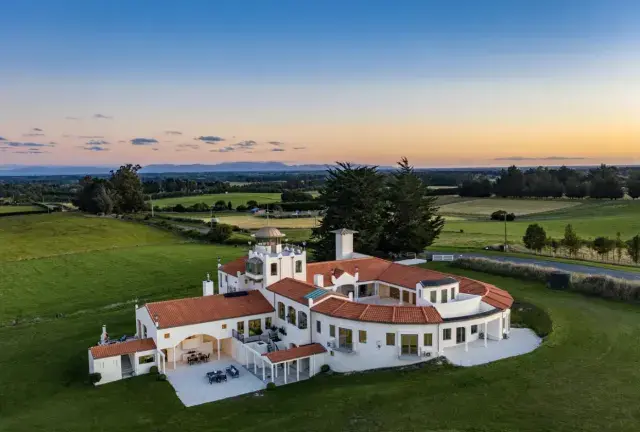
“There are a lot of people who live in New Zealand and have never left and are quite happy here that are also classified as high net worth and ultra-high net worth.
“And we deal with them every day.”
But it’s not who you’d think.
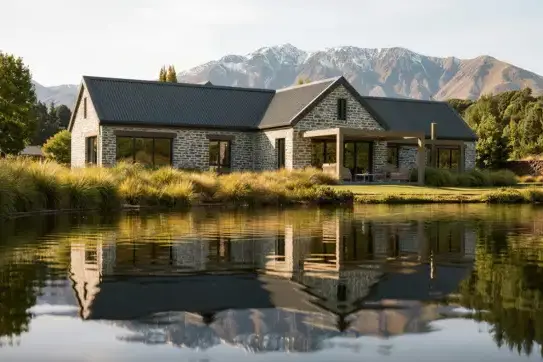
“They're not in the tabloids. They're nowhere and they have considerable budgets to be able to buy something, in the millions and millions of dollars.”
He says people immediately think about well-known families on the NBR Rich List, but that is all New Zealand declared wealth; the clients he works with might have sold their companies overseas.

“We've got one person that we know, he's a New Zealander, but made a tremendous amount of money in offshore, but he's not on that list.
“And believe me, if his wealth was declared, he would be.
“He's just bought a significant home in New Zealand, upwards of $30 million. “
McAteer says anonymity is a key component of the job. He's just done a $26 million deal where the buyer’s identity couldn’t be revealed to anyone, but more often it’s a concern for the vendor than the person from Hong Kong buying their third holiday house.
Who are the international buyers and why are they coming here?
Six months after the visa changes, only 25 homes have been sold under the scheme with over 370 visas approved out of more than 800 applications.
McAteer says buyers are people looking to either move to New Zealand, have a second or third residence here, changing the quality of their life long-term plan - or just simply to have another dwelling in another cool country.
“We are a pretty desirable country to be in.”
He says safety is at the top of the list of New Zealand’s desirable qualities. While globalisation has made Aotearoa more reachable, it’s also remote enough to charm a bolt hole buyer.
“A country that is far enough away but globally connected is a really key component for these people.”
Data collected from the Golden Visa Advisory says Americans have made the most applications, followed by China, Hong Kong and Germany.

McAteer and Browne, who work for Sotheby's International, say their experience matches the data with leads from the US rising nearly 40 percent.
“China's always been a popular in-bounder for us... but mostly the real needle turner for us has been Germany and some other countries in Europe.“
McAteer says most of their clientele are very successful and prominent businesspeople.
“And generally, the sort of people that we're dealing with... they're based in Germany, but they'll have property in Portugal or Spain and they're looking to New Zealand for a third residence.”
Australians - who don’t need a visa - have also been big purchasers for Sotheby's. McAteer says they’ve sold 10 houses above $5 million in the last four months – mostly to our neighbours across the ditch.
“If they're coming out of Sydney, they're moving to New Zealand and generally they're looking for schools.”
Allyra McGrath, another Sotheby’s agent in Queenstown, has been fielding calls from Australia "nearly every day" following a tax change.
“Traditionally they'd want to buy something completed, whereas now they're looking more at the off-plan or new build.”
She’s also just had an AIP family from the US settle on a holiday home in Queenstown, just eight weeks after they started working together.
She says other clients have never been to New Zealand and have started the AIP process anyway while doing a full recce from top to bottom.
McGrath says AIP buyers usually look in the $7-10 million dollar mark.
“They're also quite particular, these buyers as well... so once you then go to that level, there are even fewer properties that are suitable.”
‘It's very thin air when you start getting up above 20 million’
Cotality’s Chief Property Economist Kelvin Davidson says luxury property is a hard market to track because many deals are off the books.
“What you tend to see as you move up through the value echelons is that a lot of the really top end property is never even listed. It's never put on the market.
“It's word of mouth. It's done sort of behind closed doors in some ways.
“All the records eventually hit the official files, but in terms of the listing, in terms of that negotiation, the sale process, a lot of it can be fairly secretive.”
Cotality estimates there are about 7000 $5 million properties in New Zealand, mostly spread across Auckland and Queenstown. McAteer says almost 80 percent of New Zealand’s $5 million-plus homes are between Ponsonby and Herne Bay or Greater Herne Bay and Remuera in Auckland.
“Maybe about five percent of properties turn over in any given year. So that suggests we might only expect 200 or 300," Davidson says.
But even then, McAteer says New Zealand can be seen as a bit of a bargain bin for international shoppers.
“Our property prices are quite high in New Zealand, but we look pretty reasonable when you're, standing in Germany or you're standing in Hong Kong or you're standing in the US looking down at us and they're looking at the Euro or the USD against our dollar... we look pretty affordable."