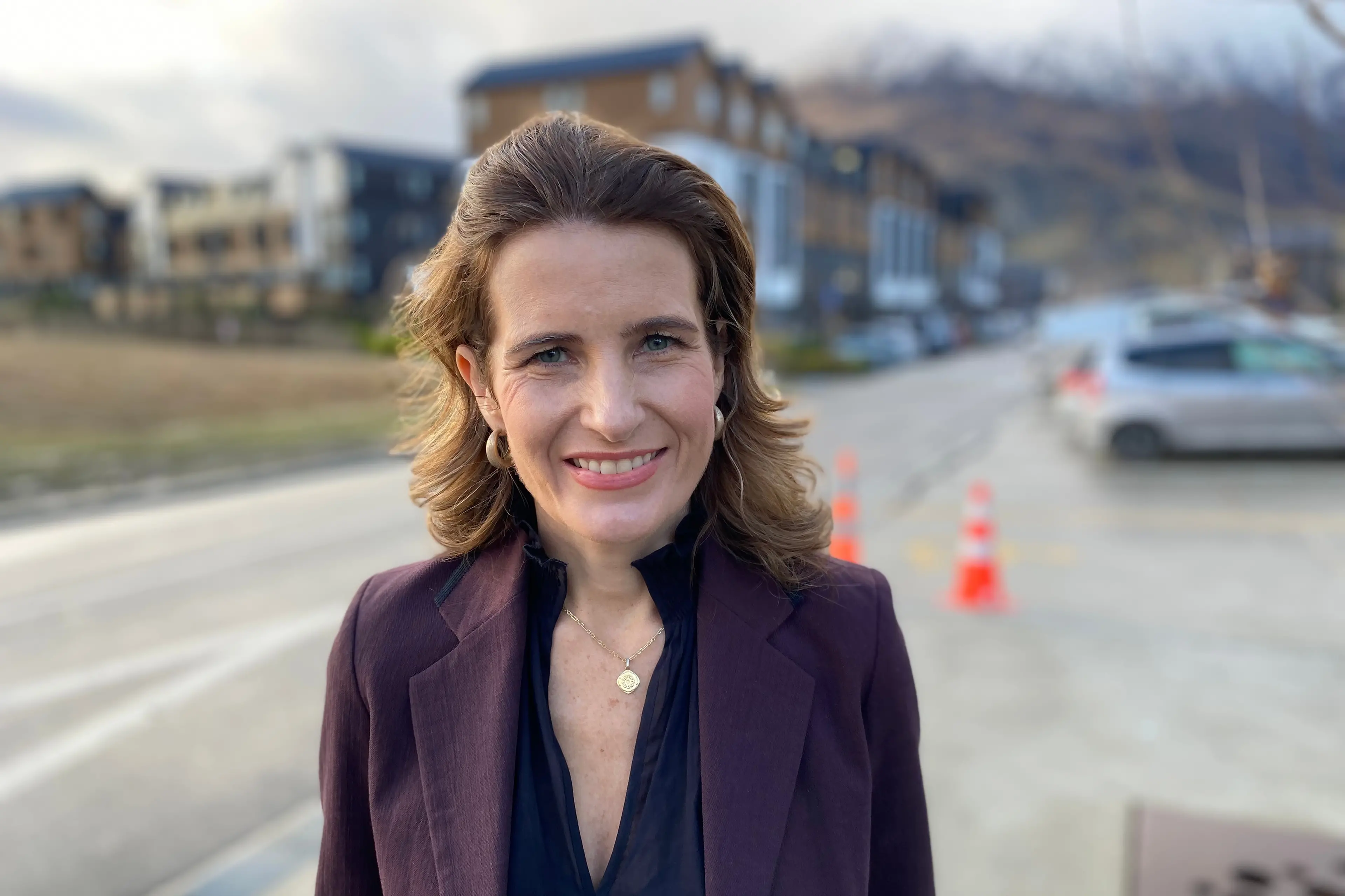
Finance Minister Nicola Willis says the Otago Central Lakes regional deal has delved into “far more detail” than others so far, hinting a long-desired form of bed tax may be on the table. Speaking to members of the Queenstown Business Chamber of Commerce at the town’s Pavilion Bar & Kitchens on Friday morning, Ms Willis said the “critically important” deal being done between the Queenstown Lakes District Council, Central Otago Regional Council, Otago Regional Council and the government was “on track to be announced very shortly”. The Otago Central Lakes deal is one of three announced at the beginning of last July — the others were with Auckland City Council and Western Bay of Plenty. Auckland’s was finalised in April and Western Bay of Plenty’s in May. The South Island’s only joint infrastructure and growth partnership has three key areas of focus — infrastructure and transport, alternative funding and “core pressures”. Ms Willis said the deal would ensure there was a plan for the anticipated growth throughout the region, and an agreed approach to funding and financing essential infrastructure. “I think that the deal will provide much more of a blueprint for … where we’re going and how we will get there. “Of course, like all blueprints it’ll be subject to revision, change and responding to new developments … but fundamentally it means that we’ll have a new way of working together, which is much more integrated … “I don’t want to get ahead of myself, but I will point to the fact that when we did a regional deal with Auckland, we committed in that deal that we would explore our potential for accommodation to be there.” Ms Willis said the Queenstown Lakes District, home to more than 11,500 businesses, was one of “New Zealand’s great growth stories”, where the economy had grown by an average of 5.2% per annum, more than twice the national rate, and was generating almost $2.5 billion a year in exports. However, she also acknowledged the challenges associated with the seemingly incessant growth, including from tourism, “a major export industry and driver of national prosperity”. She recalled a conversation with her taxi driver in Queenstown on Thursday night, when she commented on how busy the town was and asked how local residents felt about “all this tourism”. “And he said to me, ‘well, that’s a bit of a stupid question … all of us in Queenstown in some way rely on these tourists for our businesses, and so we all know which side our bread is buttered on, so you’re wrong to think we resent the tourists — we know what they represent … we all just want to ensure we have the infrastructure to support the growth’.” That infrastructure included a sufficient road network network to handle increasing resident and visitor populations. Last Saturday the Otago Daily Times reported it was taking some Jack’s Point and Hanley’s Farm residents an hour and a-half to travel about 16km to and from Queenstown’s CBD at peak times. Ms Willis said the “frustrating” gridlock demonstrated the need for a better transport network plan, particularly when factoring in future growth related to fast-track projects. “I’m hopeful that by working together, the government and the Queenstown community, we can ensure we achieve the two things we all want — we do want more housing for this district … we also want to ensure that when that housing is built, it comes with the infrastructure that is needed to support sustainable growth.” She said Infrastructure Minister Chris Bishop had been “furrowing his brow” over Queenstown’s fast-track proposals, and was “rapidly” doing policy work to create more mechanisms to levy the projects to ensure they paid for “discrete” local infrastructure and made a contribution to the wider network infrastructure. “Even though he’s introduced a range of new development and infrastructure mechanisms and legislation to Parliament, he realises the urgency of the needs here and is looking at what specific instruments can be used to support those projects.” Ms Willis also spoke briefly about the $250 million “Queenstown Package”. A ground-breaking ceremony was held in April 2024 for the project, which would replace the BP roundabout with traffic signals, signalise two other nearby intersections and double the size of the Frankton bus hub. At present, it was not expected to be complete for another two years. Ms Willis said she was “very aware” of the community’s concerns over how long it was taking. “I’ll have you know that in terms of roundabouts that are being built around the country, I reckon that one has occupied the most time in the conversation between me, the Minister of Transport, [NZ Transport Agency Waka Kotahi], and, in fact, has become a case study for how to ensure faster delivery and better value for money.” tracey.roxburgh@odt.co.nz