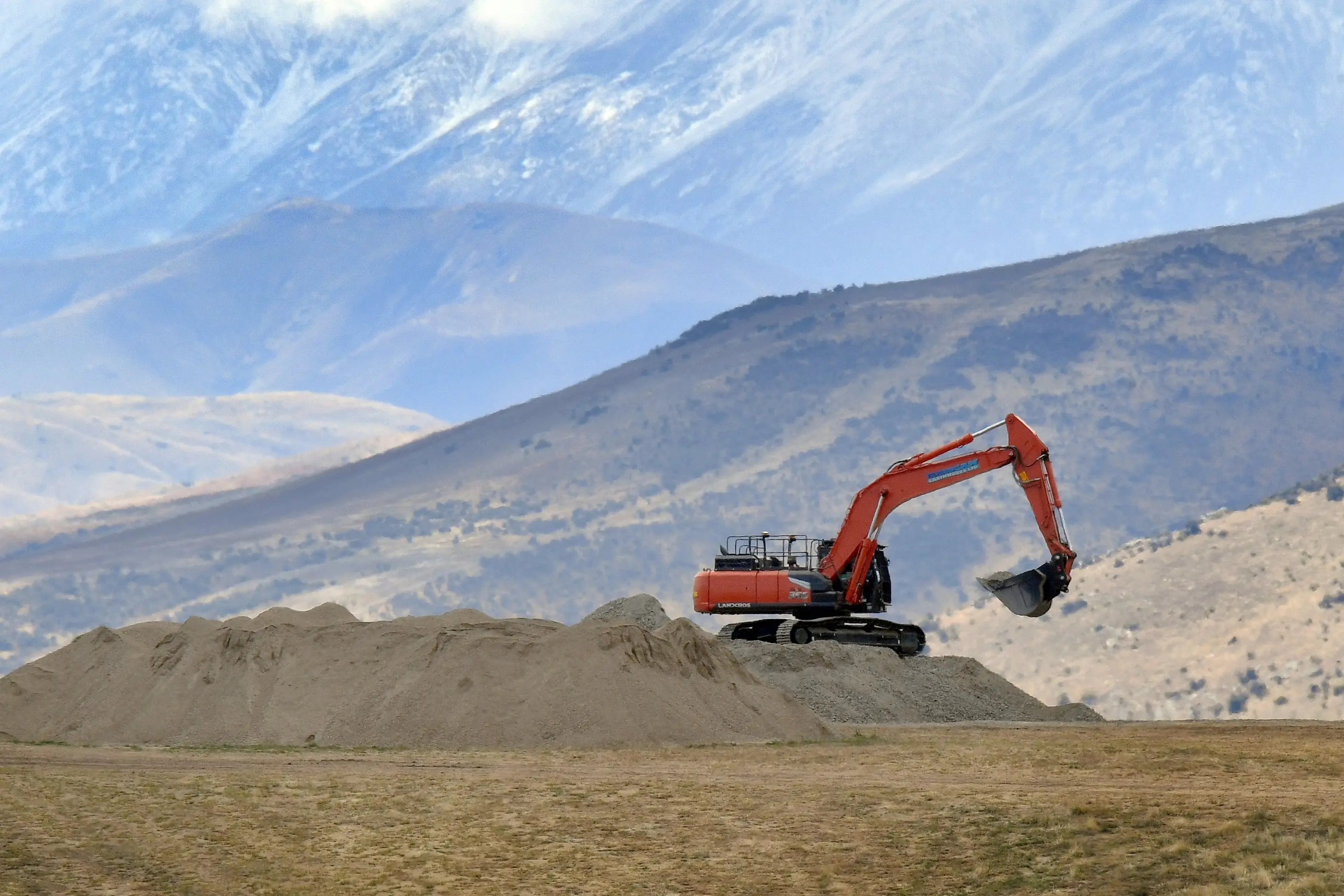
Santana Minerals has released a report opponents of its proposed Central Otago gold mine have accused the company of trying to hide. The report, released following a request by the fast-track panel, found the mine would have a “low negative” impact on its surroundings in the decade during its construction and operation. Upon closure of the mine — a 20-year process unlikely to be completed before 2057 — it would ultimately have a "moderate positive” impact, the report concluded. A spokesman for community opposition group Sustainable Tarras said the report, now released, did not offer comfort. “Santana tried to hide this social impact report from the fast-track panel and local community because they didn't like the results, and if it had not been requested by the panel it would have never seen the light of day. “The report relies heavily on Santana provided information, and has little detail on the 20 interviews with locally affected people, or what detailed concerns local people have expressed to Santana. “The hiding of negative data reinforces that we simply cannot trust this overseas company to do the right thing if they were to get approval for this mine. “There remains a huge amount of uncertainty about impacts to water quality, ecology and long term risks, with Santana proposing to deal with these through ‘adaptive management’. “This is a recipe for disaster for our local environment and local community.” The social impact assessment, undertaken by global construction and engineering firm GHD, is dated October 2025, but was not submitted as part of Santana Minerals’ fast-track application. The Otago Daily Times reported in April that when questioned about the assessment’s omission at the fast-track panel hearing, Santana legal counsel Josh Leckie said it had not been submitted because the company had concerns about its methodology. [Missing Credit]The Social Impact Assessment considered the mine's impact on six themes, and on two time-scales, the construction and operation phase of the mine, and the 20-year closure and rehabilitation period. In correspondence in June, the panel requested the social impact assessment, saying that it was “unusual for a project of this size not to include one”. The assessment found that the proposed mine would have predominantly negative social impacts, outweighed by its long-term economic benefit. It considered the project’s impact across six themes: access and connectivity, amenity and character, livelihood — a measure of the economic impact — environment, social and recreation infrastructure, and the fears and aspirations of the community. The report characterises the impact of the mine as negative in both the short-term and long-term on all but two of the themes, with a “high positive” impact on livelihood expected in the short and long-term. It would also have a “moderate positive” impact on access and connectivity upon the closure of the mine. For people in the communities surrounding the mine, the report suggested that short-term pain was outweighed by long-term economic gain. Overall, in the decade in which the mine would be constructed and operational it would have “low negative social impacts on the local and regional area”, with livelihood the only theme experiencing a net benefit. Upon the mine’s closure — a 20-year process unlikely to conclude before 2057 — there would be a “moderate positive” outcome overall, with the area experiencing “some benefits through the new access road and improvements to recreation facilities”, the report said. The social impact assessment said the appraisal of the mine’s short-term impact as “low negative” had been made on the assumption that recommended mitigation efforts were made to reduce the mine’s impact. These included a range of recommendations proposed on topics such as transport, air quality, noise, landscape and other factors. The social impact assessment made additional recommendations including the creation of a community liaison group, a shuttle service for workers from regional centres, a drug and alcohol policy for staff and visitors, and the preparation of a mine closure strategy that focused on mitigating the impact to livelihoods when employment created by the mine ends. Santana Minerals did not respond to a request for comment. ruairi.oshea@alliedmedia.co.nz