
PHOTO
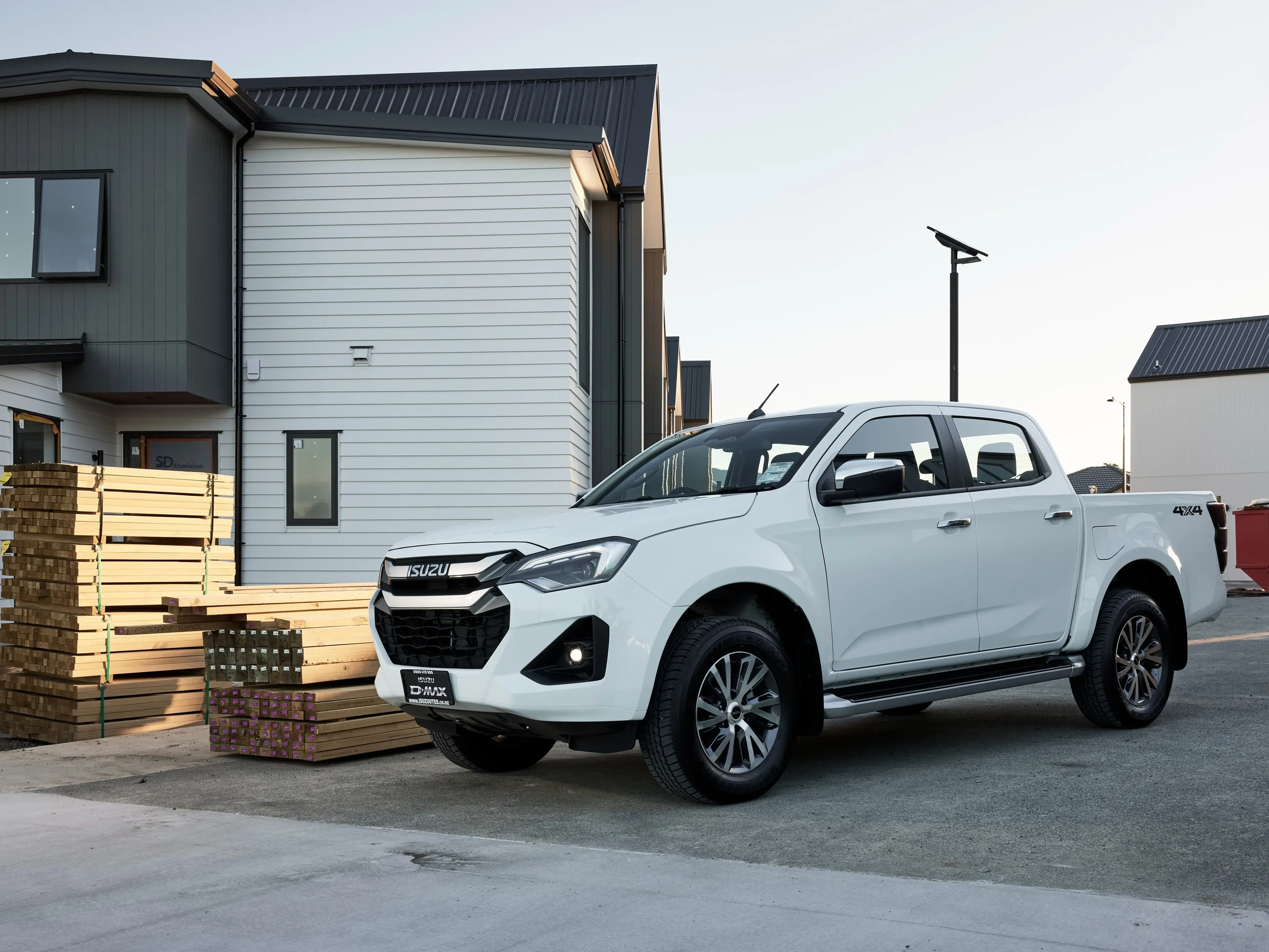
Isuzu had high hopes for its D-Max to take the sales fight to its rivals, but those ambitions haven’t been realised five years on from its New Zealand debut, while its twin, the Mazda BT50, exited our market several months ago.
Both models remain on sale in Australia, where the robust D-Max has a strong following, with sales of almost 27,000 last year, enough to make it the third-best-selling ute there last year. By contrast the BT50 sold well under half that number. D-Max owners both here and in Australia tend to remain loyal to the brand, and are believers in its built tough mantra.
That may be, but it has slipped behind many of its rival on refinement and power, and is more expensive than several of the models it trade sales blows with.

The current D-Max bristled with premium features and advanced technology when it first arrived here, providing it with some initial sales impetus. They got off on the front foot with a strong offering of standard equipment including the latest convenience and connectivity features, such as Android Auto™ and wireless Apple Car Play. Scoring the maximum 5-star Ancap rating when tested against the then new stringent 2020 Ancap crash rating gave the D-MAX bragging rights in the safety space.
However, the competition, especially the bigger brands with greater resources and monetary muscle, soon put the pressure on a smaller player like Isuzu, enabling them to reassert their sales dominance in our new-ute market.
Toward the back end of 2025, Isuzu Utes announced what it described as a significant update of the D-MAX, but it was all a bit too little, a bit too late. The headline item in the upgrade was offering Stop–Start Technology across the range. However it wasn’t big or bold enough to really move the sales dial in favour of the D-Max.
The system automatically shuts down the engine when the vehicle comes to a complete stop, such as at traffic lights, and restarts instantly when the driver moves off. This reduces fuel consumption at idle, and lowers CO2 emissions. With diesel prices hovering at record levels, it uses 10% less fuel, providing some welcome fuel pump pain relief for owners.
The six-strong D-Max catalogue opens with a workhorse single cab chassis auto at $48,990, a figure that would buy some 4WD double cabs, making the D-Max seem a bit costly. The LS 4WD double we reviewed retails for $63,990, again comfortably above several newer and more powerful competitors. You pay a steep $10k premium over its LS 2WD sibling. Ouch!
Powered by Isuzu’s familiar 140kw 3.0-litre turbo-diesel engine, and 450Nm of torque, is unchanged. Those were decent enough numbers five year ago, but now comfortably shaded by a swathe of competitors with motors generating 150kw or more, and around 500nm of torque.
RESPONSIVE
The Isuzu-designed and built 3.0-litre turbo diesel isn’t the most powerful ute in its class, but in everyday real-world driving it’s strong and responsive. It earns large ticks from me for its smoothness, refinement and strong throttle response. It’s a particularly effortless performer over long distances as it rolls back the kilometres with car-like ease. The six-speed automatic is all composurewith its accurate and timely gear changes.
A spacious cab with good leg and headroom both front and rear is a big plus, along with comfy and supportive seats. The LS is well appointed with a 9’’ infotainment display with DAB+ radio, SatNav, Android Auto and wireless Apple CarPlay, and dual zone climate controlled air conditioning.
The D-Max was the first Isuzu ute fitted with a driver’s knee airbag and far-side air bag for a tally of eight air bags. Anti-whiplash front seats reduce the severity of neck injuries in a rear end impact. Other active safety features include autonomous emergency braking with pedestrian/bocycle detection, attention assist, adaptive cruise control, blind spot monitoring, and lane departure warning.
This all underlines Isuzu’s commitment to raising the safety bar for this model. Good on Isuzu for having the courage to make a quantum safety leap forward — a remarkable step up for a brand that up until now wasn’t exactly a safety trailblazer.
The ride and handling strikes an agreeable balance between comfort and road holding, without compromising Isuzu’s strong and durable suspension, primed for all manner of road scraps. It loves the challenge of traversing rough terrain, where you can experience just how good it is when asked the hard questions in this sort of environment.
It’s ready, and, more importantly, able to front for the most demanding towing tasks, from transporting materials to muddy building sites, to moving plant and equipment to a remote forestry block. The test ute was easy to wrangle through tight corners, and did it with a surprising amount of balance and composure. It would be even better with a steering set up that isn’t so light and devoid of road feel. It’s an easy enough fix, but one that may go on the backburner until the next D-Max update rolls around.
Without the weight of a load on the deck, the rear suspension can be bouncy and noisy over rougher undulating surfaces.
Overall the D-Max is a good honest hard-working ute that rolls up its sleeves and gets stuck into whatever chores are asked of it, and that’s a mighty appealing quality.
Isuzu D-Max LS
Rating out of 10:
Performance 7
Handling 7
Build quality 8
Comfort 6
Passenger space 7
Styling 6
Fuel economy On-road test average consumption 8.9L/100km
Value for money 6
Safety Five-star 2020 Ancap crash rating
Price $63,990
Warranty Three years or 100,000km, which ever comes first
Overall points out of 10: 7.5