PHOTO
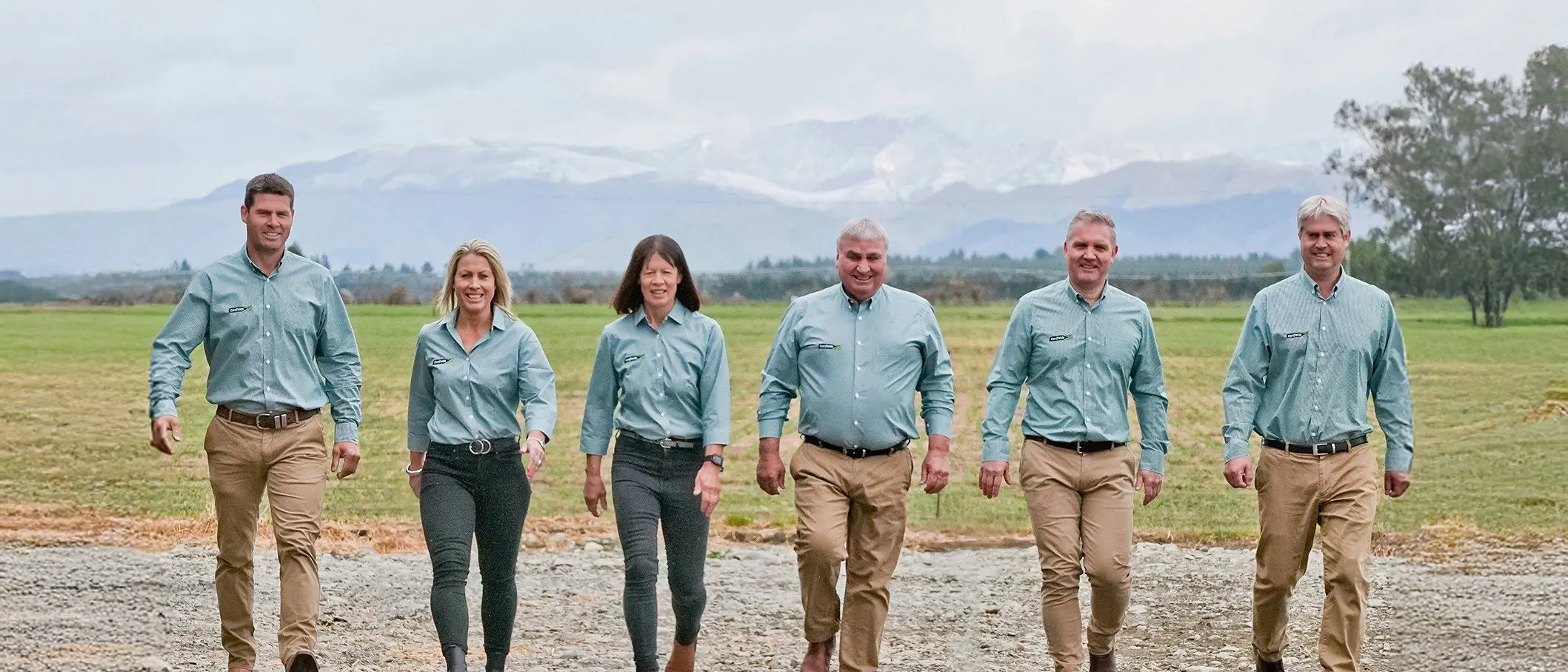
Big calls have paid off for the Carr family in its 50-year rise from weekend hay carting to a major national agritech company.
The three-generation Canterbury business, Carrfields, has responded to many opportunities and challenges — including refusing to let the 1980s world financial crisis trip them up — to reach the half-century milestone.
Along the way, there have been hard decisions to sell a company or subsidiary or invest heavily in another business.
The family takes the view that nothing stands still forever and is always evolving to stay relevant for the farming community.
For a long time, they flew quietly under the radar until reaching a size their work could no longer go unnoticed.
Today, privately-owned Carr Group has diversified into agribusiness with divisions of livestock, grain, seeds, machinery sales and finance, alongside farming, property and private capital investments.
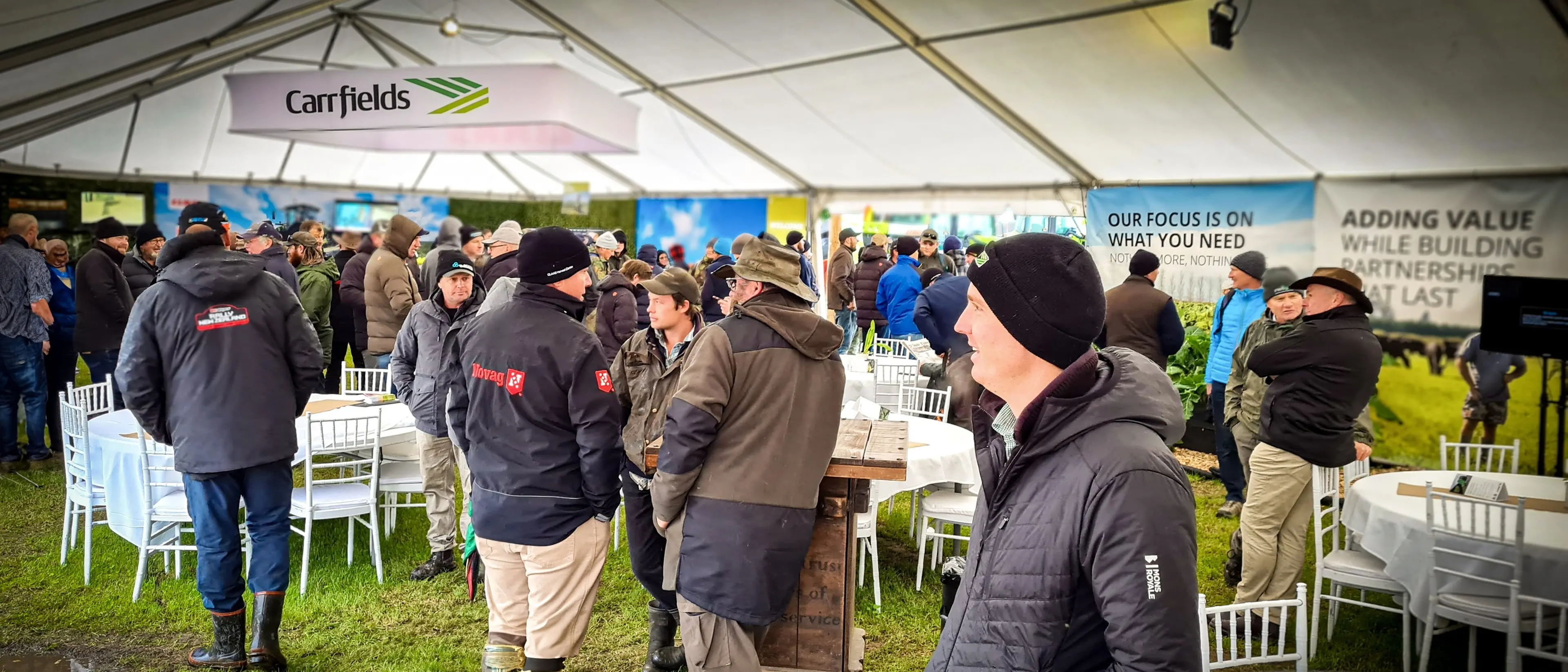
Group managing director Craig Carr walked through its progression to an audience of more than 400 people at the Out the Gate conference in Christchurch.
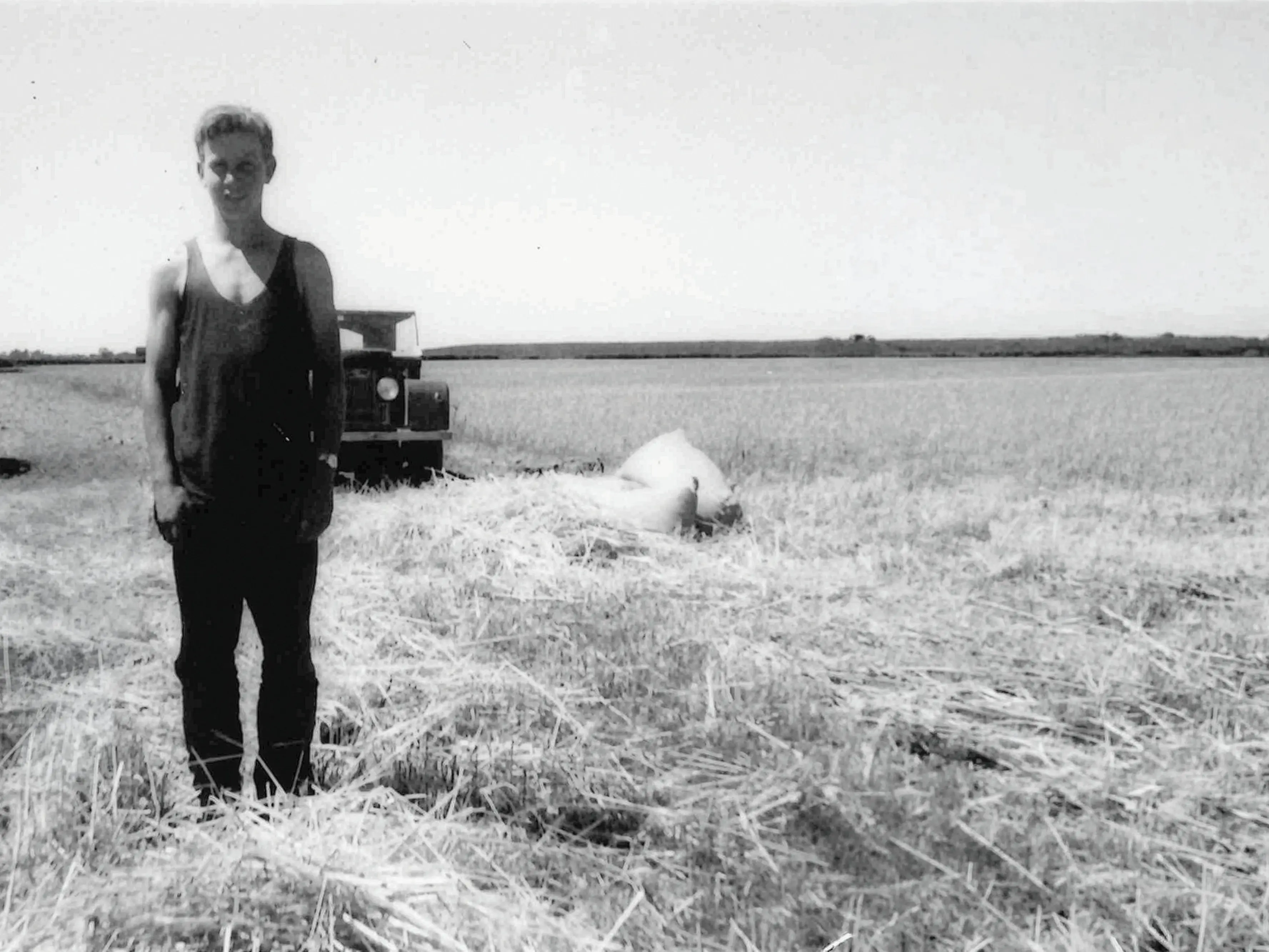
He told the story of his father, founder Greg Carr, leaving school at 15.
With no room on the Mayfield family farm, the youngest son got an apprenticeship at the local machinery dealer, AIS, in Ashburton.
Starting on $16 a week, he soon realised this was not going to cover all his costs and through a few connections started carting hay bales after work and at the weekends.
The dream was to get enough money together to buy a farm and contracting was combined with importing second-hand combine harvesters.
In the early 1980s, this goal was achieved and soon after that he bought 160ha of the Mayfield family farm from his brothers.
"I think a number of you will know what happened in the mid-1980s," Mr Carr said.
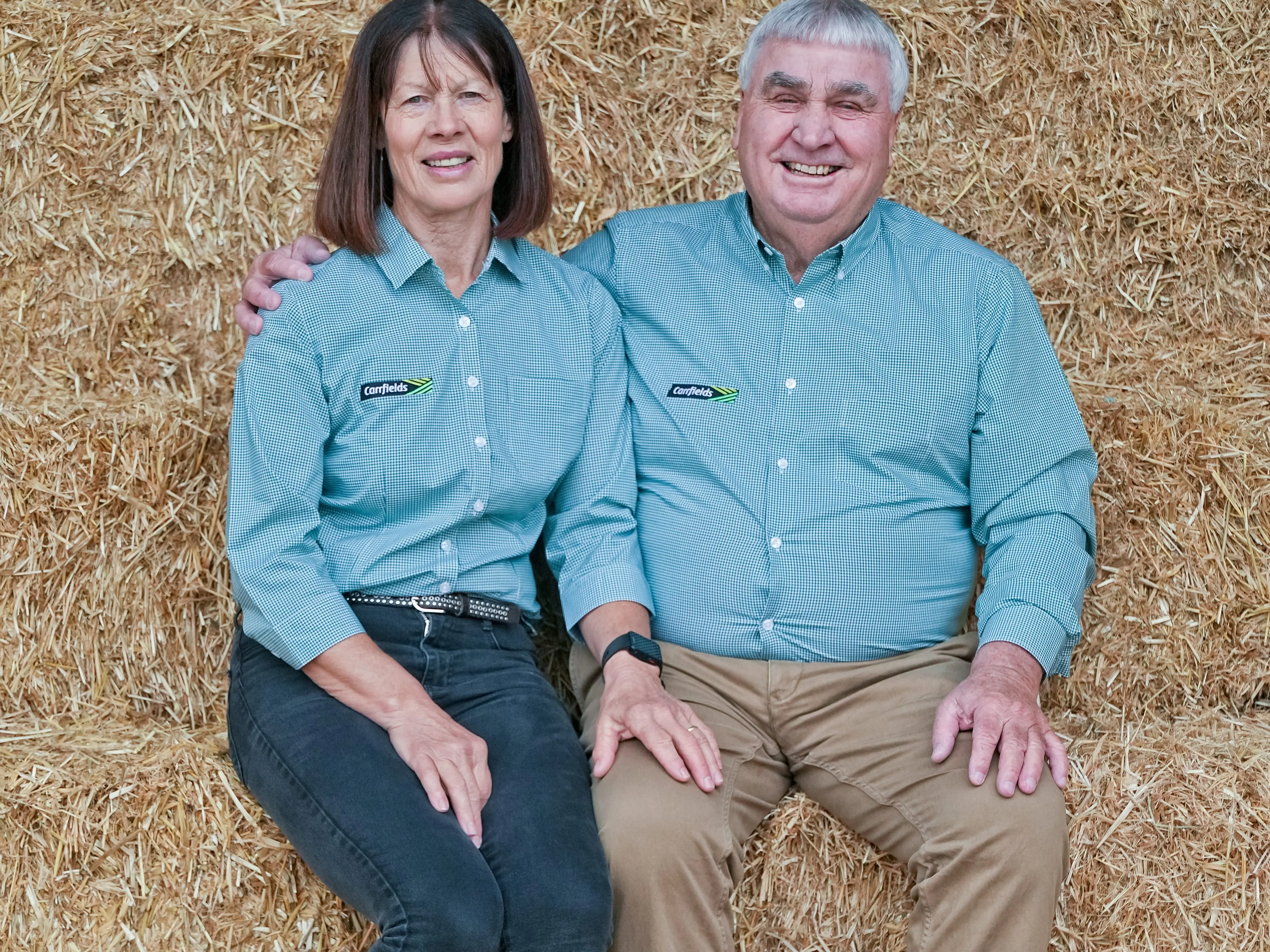
"The country deregulated, subsidies were stopped, there were droughts and interest rates were 7%-8% to 23% to second mortgages close to 30% and Dad and Mum were caught up in that. We were all pretty young kids back then and at that time there were banks selling farmers up, good farmers, to say you need to go from the land and take a house in town and we will deal with the farm.
"Obviously being a farming family, putting everything in to save the farm which included, farming, contracting, farm stays and so on, there was no way Greg and Glenys were going to let that farm be sold. So somehow, some way they managed to get a few more thousand dollars and bought a big baler and in 1986 he started turning little squares into big squares."
In the Mid Canterbury foothills a large business began to unfold with Mr Carr senior having the knack of being at the turning point of big innovations, this time in hay making.
A few years later, the local service station at Mayfield was bought as he was struggling to get mechanical servicing for his contracting businesses.
As the largest customer of Fiat Agri he was in a good position to take over the franchise for Ashburton and Timaru in 1991, when that opportunity arose.
"It was in the mid-1990s . . . that my mum, Glenys, had enough of the contract business being run out of the family home, so Greg set out to buy a quarter-acre paddock just down the road from where the machinery business was located in the corner to place the contracting. It was called Ashburton Seed Cleaning and in 1995 the owner said ‘why don’t you just buy the whole lot?’ So we did."
Craig Carr was leaving school when his father asked him if he wanted to work at the family business for a year before going to university and put him in the seed store.
"My university became seed cleaning, but what I and my brothers and sister would say is that we were very fortunate our parents gave us the opportunity to be involved and to give us our own space and room where we could actually grow and make decisions and not sit on top of each other."
Brothers Ryan and James entered the business, and later hockey Olympian Stacey, and the 2000 to 2010 years were an expanding phase.
"What we saw was a huge amount of land-use change in Canterbury. We saw the dairy industry start to grow, we started to see the specialist seed industry start to grow. That created more contractors and created more opportunities and for us that was a big growth period."
Winslow Feeds was bought in 2000 on the back of the dairy growth and extended into a nutrition business. Contracting continued and the business expanded.
In 2005 the Carrs parted with the seed store — the first time in 10 years of building businesses they had sold anything.
"A lot of people thought ‘why are these guys selling a business they had just built up?’ Well, it was an opportunity to roll together, to exit and to recycle capital and go again."
Come 2010, the company started pursuing several acquisitions such as Canterbury Seed.
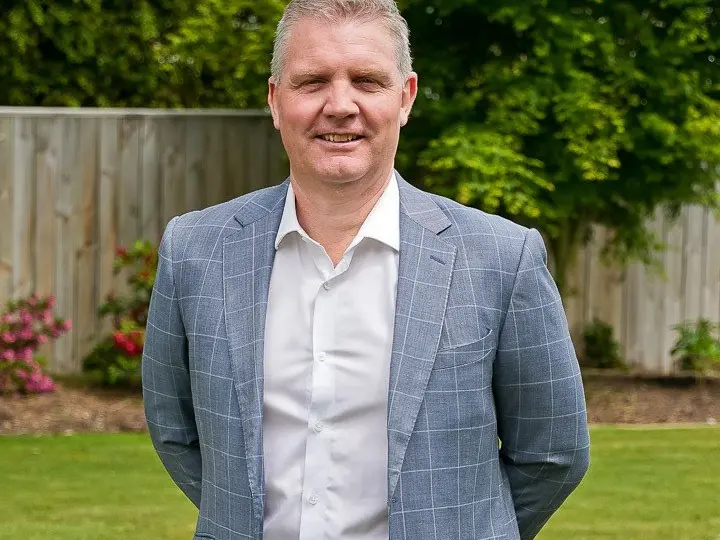
Other investments took them into automotive, honey and irrigation directions.
"Then we had the opportunity to exit the Winslow Feeds business which got merged with Seales and was obviously sold to Ballance [Agri-Nutrients] in 2011. But the big change for us and the big growth for us was in 2014 we had the opportunity to buy Elders NZ. So Elders came in on my radar as I was reading the newspaper and I picked up my phone and rang the MD at the time and said to him ‘Is there any opportunity to collaborate?’ At that point we were 100 to 150 people and Elders was super 300 people and Elders Australia was in pretty bad shape. I remember saying to Dad, gee, this will be hard work. At that point we were Canterbury based, knew all of our staff and most of our customers, but Elders took us to another level."
The merger took them to 450 staff and down a hard road to restructure the business.
Within a year of changing the brand and the creation of Carrfields, they had sold off farm supplies and insurance interests, merged Elders’ seed business with their own and made more changes with the head office shifting from Auckland to Ashburton.
Still eager to expand, the Carrs bought Farmlands Livestock in 2016/17 and in 2018 Farm Source’s livestock business from Fonterra.
That took Carrfields’ livestock team to 150-plus livestock agents across the country.
Meanwhile, farmers were coming out of a regulation and red tape period and the Carrs took on a project to map out the next five to 10 years.
Then the borders closed with the onset of Covid-19.
"I couldn’t imagine we weren’t going to be travel overseas because the year before I had done something like 150 plane flights. But when the borders closed and all of my flights got cancelled and we had to think and do things differently. It gave us an opportunity as a family to stop and think about what next."
The Carrs looked deep into the business to see where they could grow and where growth might be limited, where their passions lay and where they could put a "moat" around the family business.
A succession plan was drawn up taking it from a Mum and Dad operation, family trust and sibling business to a multi-generation enterprise.
Automotive and irrigation interests were divested.
NZ Yarns, which came with the Elders acquisition, became NZ Natural Fibres.
Primary Wool Co-op, as known today, merged with Wools of NZ (Wonz) and took the wool logistics arm, while the Carrs took the yarns business as they were developing a natural fibre hemp strategy.
"The big two decisions for us were really around our machinery business and contracting business. As we looked forward and where we could grow, and our ability to grow, there wasn’t that opportunity within our machinery business at that time, being five Claas Harvest Centres in Canterbury, to grow outside of that."
Contracting had been their founding business and good to them, but there were no family members involved and areas such as safety risks and capital to continue to drive it weighed on them so they made the decision to sell.
Landpower Group bought back the Carr’s five Claas Harvest Centre dealerships.
"So by 2022/2023 a lot was going on and I suppose a lot of people were thinking ‘why did these guys make those decisions?’ A lot of those decisions were driven off that work we did in 2020 about ‘where do we want to be’ and ‘who do we want to be’. So this year, as we turn 50 years, we have put a lot of thought into how we not only structure the business, but how we brand and represent the business."
The Carr Group now has four main operations: agribusiness, a property group, a private capital group and a family foundation.
Agribusiness employs about 350 people with a focus on farm machinery, seed, livestock and finance divisions.
The livestock division has 130 agents around the country, while the machinery arm represents Fendt IDEAL combines, MacDon, Manitou, Horsch, Krone and other brands in five dealerships in the South Island and Feilding and is continuing to expand nationwide.
Today, Carrfields exports to 40 countries around the world.
The seed business, Carrfields Seeds, continues to focus on the production of seed crops in Canterbury, Southland and lower North Island.
Agronomy offered to arable and pastoral farmers also brings in genetics and seed varieties for companies.
The finance division continues to grow particularly so farmers can access money for buying livestock.
The Carrs’ global vegetable seed marketing company, Winseed, was developed out of the Canterbury Seed business and centres on plant breeding of carrot, beetroot, peas and radish grown in Canterbury.
Part of this is a subsidiary with 40 staff in India and the company has the leading beetroot variety in the big country.
The group’s many sites, initially bought to operate businesses, have been bundled into a property group, while other businesses have been put into a new private capital business.
They include Rubisco, emerging from Christchurch Yarns and NZ Natural Fibres, which over the past eight years has been developing natural wool and hemp fibres into future materials for homes, apparel and bio-composites. A capital raise is being staged to invest further into natural fibres and materials.
The honey business based in Blenheim mainly produces in Wānaka and plays a large role in pollinating cherries, fruits and seed crops as well as producing mānuka and other honey types.
More lately, a new company, Carbonfields, was launched in a joint venture with Geoff Ross of Lake Hāwea Station and venture investor Kerry McIntosh. Mr Carr said it was born from seeing good country lost to pine trees the past five years.
Regenerating bush is identified on farms so they can generate passive revenue from the Emissions Trading Scheme.
A family foundation, led by sister Stacey, and operating for five years, includes a rural health and wellness initiative providing free, confidential health checks by a registered nurse in a touring van. Last year more than 750 health checks were carried out.
"When you come out of one of those days and see there’s 30% of those people need to urgently see a doctor you feel you are really making a difference."
Future plans are to add a doctor to the van service, while other programmes are wrapped around the community and education.
Mr Carr said the family was always monitoring future trends. He was looking at how they could further control the supply chain for supplying beetroot seed to India, from breeding through to processing and packing seeds to customers.
The increasing costs of farm inputs had him thinking about machinery, agrichemicals or seed variety solutions to keep farmers profitable.
India excited him the most as a major growth market.
For the past 15 plus years he had been there many times, attracted by its entrepreneurial and educated population demanding more agritech, health and wellness, and horticultural and meat products.
Mr Carr reflected on whether the family would be where it was today if they had stayed on the family farm at Mayfield and not diversified into business. He said the heart of their multi-generational operation was about being deeply passionate about farming and agriculture.
"This year the first of the third generation entered the business, which was pretty special for us."
Their values such as authenticity, service and the handshake and integrity foundation initiated by his father, Greg, had been cemented into the business.
The Carr Group had been shaped by innovation, not to reinvent the wheel, but to adapt and take responsibility for the land, customers, their people and generations to follow, he said.