
PHOTO
Referees and controversy are never far from each other in rugby.
This has certainly been the case in 2013 as we have had a number of coaches voice their concerns about the standards of officiating in the Super 15.
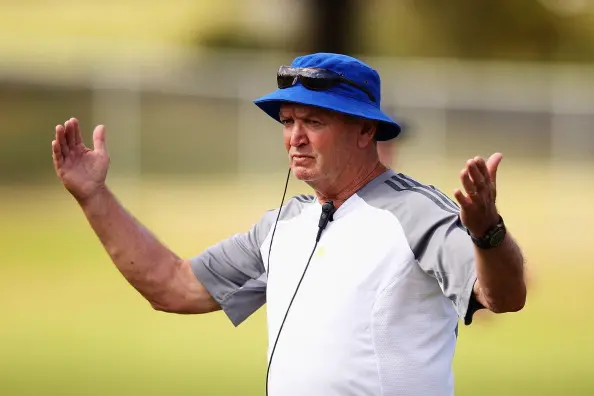
In New Zealand we have seen Dave Rennie, Jamie Joseph and most recently Sir Graham Henry have their gripes with referees so far this season.
The most recent attack, by Henry, following his Blues side's loss to the Crusaders last week, certainly sparked plenty of controversy. Should coaches be able to publicly question match officials in this way was the question on the tip of everyone's tongue? How far is too far?
Perhaps referring to a referee as ‘blind' or calling a decision ‘bullshit' is crossing the line somewhat.
But no one could deny that in his comments Henry was right on the money. The officiating in Super 15 this year has been poor. But if people are not allowed to voice their concerns, nothing is going to change. Especially when SANZAR referees boss Lyndon Bray continues to support his men in decisions that to everyone else seem to have been questionable at best. This suggests that to them, they are doing their job well and if outsiders do not voice their concerns, we do not get the improvements that are required.
Of course, refereeing is not easy. Anyone who has tried to referee anything could tell you that. But there are some areas of the game that do need attention, areas that should not be that hard to police if done correctly.
Offside lines were one area that Henry mentioned as being problematic and there are few rugby fans who would argue with him there. This is not a new thing, as for much of the past decade we have seen defences being allowed to continually creep up past the hindmost foot at the breakdown.
The emphasis now seems to be put on pinging the man who comes up out of the line, or penalising a team for coming up too early, without looking at whether or not the team got back in the first place. It cuts down the space the attacking team has to work with and acts as a great disadvantage to playing expansive rugby, or to getting go-forward.
The trouble is, if teams are not getting penalised for it, they will keep doing it. Just because they have been getting away with it for a number of years now, does not mean that they should continue to.
The key thing here is to realise that it is not necessarily the referee's responsibility to pick this up. He has enough on his plate trying to police what is going on at the breakdown. It should be the job of the assistant referees, who are in a far better position to see whether the defensive line is back far enough. Rather than picking up minor fragrances of foul play, they would be far better employed to focus their attention on the continual offside play of nearly every team in the competition.
Another area which has been of great controversy and mentioned by a handful of coaches has been in the TMO decisions. While the referee has to make a split-second decision and has the hardest job on the field, the TMO is in a far less demanding position. He is able to look at a play as many times as he needs to get the right decision, he has access to multiple angles and can slow the play right down.
Undoubtedly it becomes much harder to make a decision under pressure as they are, as opposed to making the decision from home. But surely they should still come up with the right decision most of the time. These guys are professionals after all.
The main controversy has come over the forward passes that have been referred in the lead-up to tries. In many of these instances everyone has seen the forward pass, the players, the fans and the referee, but the try has proceeded to be awarded.
The instance in the Highlanders game last week against the Bulls was perhaps a great example. The players had actually gone back to the spot for the scrum, while it was clear from the after-match comments that the fans had seen the forward pass. Indeed the referee must have seen this too, as he obviously saw something to go back and refer it.
It must be asked though; if he saw a forward pass, why did he not just call it initially? Was it another case of a referee being reluctant to make a call due the security of having someone else to make the decision? As a rule of thumb in general, when something looks wrong, it usually means there is something wrong. In this case there was clearly a forward pass, as the ball crossed the 22 metre line in the process of the ball travelling from player to player.
Another controversial decision was the one in the Chiefs versus Rebels game a few weeks ago. This being the one which led to the Scott Higginbotham try being awarded following an alleged forward pass. SANZAR backed up its referees in this case, claiming that the players' hands had gone backwards and therefore it was okay. If this was indeed the case, then to the letter of the law the decision was the right one.
It makes you wonder who comes up with some of these laws. The ball went five metres forward. If that was not a forward pass, then it is hard to know what is. Think of it this way. If the TMO had have ruled the ball had gone forward, or the referee had done so, and the try had not been given, would SANZAR have come back and said it was the wrong decision? Would there have been such controversy and most telling, would the Rebels have tried to claim the pass was legal? It seems unlikely, does it not?
Of course the officials are allowed to make mistakes, as they inevitably will. But they need to acknowledge these mistakes so everyone knows that they are on the same page. If they are not going to do this, then of course the teams and the fans are going to assume that they need to get their point across, which will lead to outbursts such as the one by Sir Graham Henry.
Whatever you think of Henry's comments, you cannot deny that they had an impact. Maybe this is what is required. It seems unlikely Henry is going to be too worried about any sanctions, being now in the twilight of his coaching career with his status as a legend confirmed. Some will call it sour grapes. Fair enough. But he raised some good points and caused SANZAR to take notice. If this leads to improvements in the game, will anyone be complaining?