
PHOTO
Cantabrians have long been known for their staunchness and determination, maybe that’s why so many world record attempts have been made in the region.
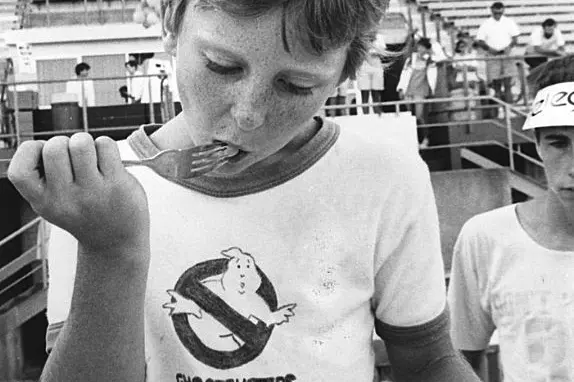
Theo Stewart was 9 when he joined thousands of Cantabrians chasing Guinness World Records at QEII Park’s World Beaters Weekend in 1989.
His photo appeared in The Star on February 10, trying to break the world record time of 2min 24.5 sec to eat 100 jellybeans with a fork.
He and others didn’t manage the feat, but 37 years on his and other world records attempts are being showcased in a new exhibition at Tūranga library, Did they really do that? Cantabrians’ quests for world records.

The event featured 50 world record attempts, with several officially recognised by Guinness.
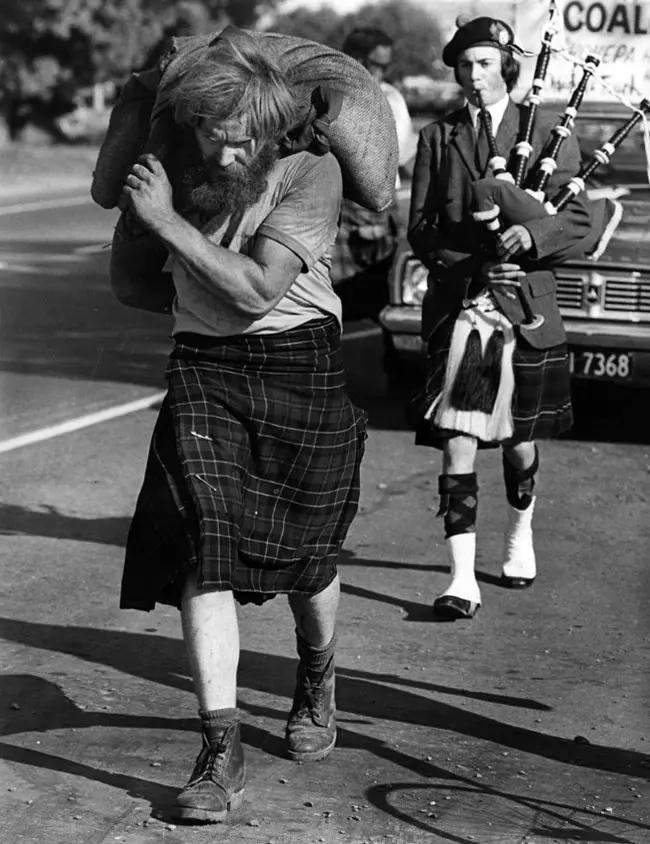
The exhibition looks back on other successful feats including 31 people balancing on a 44-gallon drum, smashing the previous record of 25 and Wayne Forsyth’s 1979 charity crawl around Hagley Park.
Forsyth was the last of five participants still crawling, setting a new world record by covering 20.43km on his hands and knees.

This week Stewart, 46, recalled his jellybean eating attempt.
“I remember it clear as day. We were told we had to stab the jellybeans with a fork before we could eat them, which made it pretty hard,” he said.
He said the events at QEII appealed to him: “You didn’t have to be insanely athletic to try for a world record.”
Stewart and some friends recreated the jellybean eating competition two weeks ago. But they did not fare that well.
“Jellybeans have changed over the years, they’re bigger and so much more chewy,” he said.
Stewart says the pop-up exhibition at Tūranga is a great idea.
“It’s really great to be able to look back at our history,” he said.
Exhibition organiser and librarian Fiona Allison said the 1970s and 1980s were peak decades for Cantabrians attempting to break a world record.
“From feats of endurance to quirky stunts, come and explore the bold endeavours that captured imaginations and made headlines” said Allison.
In 1989, 62 people managed to cram both in and on top of a classic Mini.
Participants were packed floor-to-ceiling inside the cabin, stuffed into the boot, and piled onto the roof, bonnet, and bumper of the tiny car during the failed attempt.
The official Guinness World Record of 27 people required everyone to fit completely inside the cabin, with all doors and windows fully closed.
The digital exhibition will display some of the history behind the record attempts, and includes interactive items.
Records featured include Joy McCrackens becoming the first female blade shearer to shear 137 sheep in nine hours; Cookie Time making the world’s largest cookie; the fastest time to change a car tyre using standard equipment, 2min 44sec.
Allison hopes the new exhibition will encourage more world record attempts.
The exhibition runs until August 30.