On a drizzly Thursday, Christchurch couple John and Ange were in Auckland's Sylvia Park retail centre on a mission - to visit New Zealand's IKEA store for the first time.
They were in town for a concert, but decided to take the opportunity to also visit IKEA, "to see what all the fuss is about", said Ange.
Panmure local Nana was also visiting for the first time, he said.
"We're local but it was [always] too busy, we'd pull up in the car park and go 'nah'. I'll just look around but I'll definitely be buying a hot dog."
Sharlene van Dijk came to IKEA for the first time in May and spent four and a half hours "just browsing each level and every display. It gives you great ideas, you can go home, think about what you saw, do the measurements and come back".
Van Dijk, from Orewa, said she was back again "just to browse", although she would "possibly" look at getting some storage for her daughter.
"I've come all the way from the North Shore, a 45-minute journey, just for IKEA. It gives you inspiration and it's affordable. The quality is great, absolutely phenomenal."
IKEA six months in: 1.8m visitors and a whole heap of meatballs
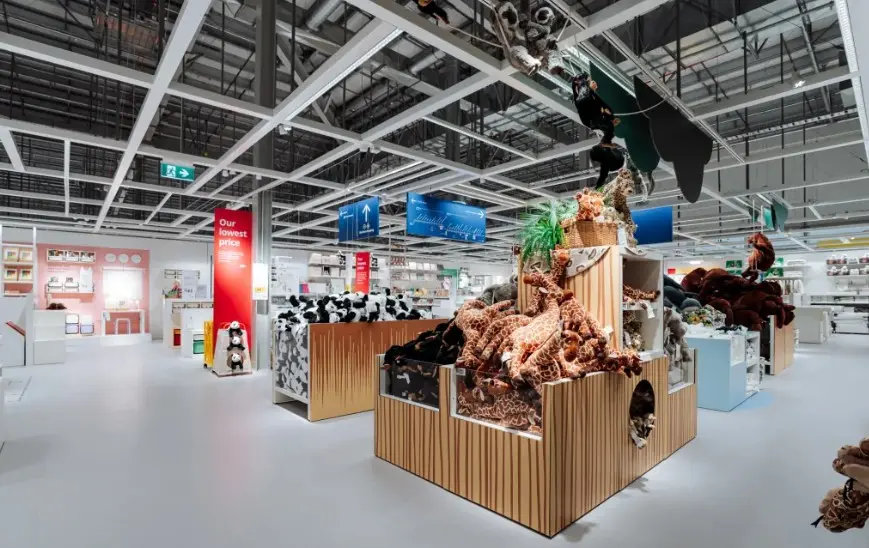
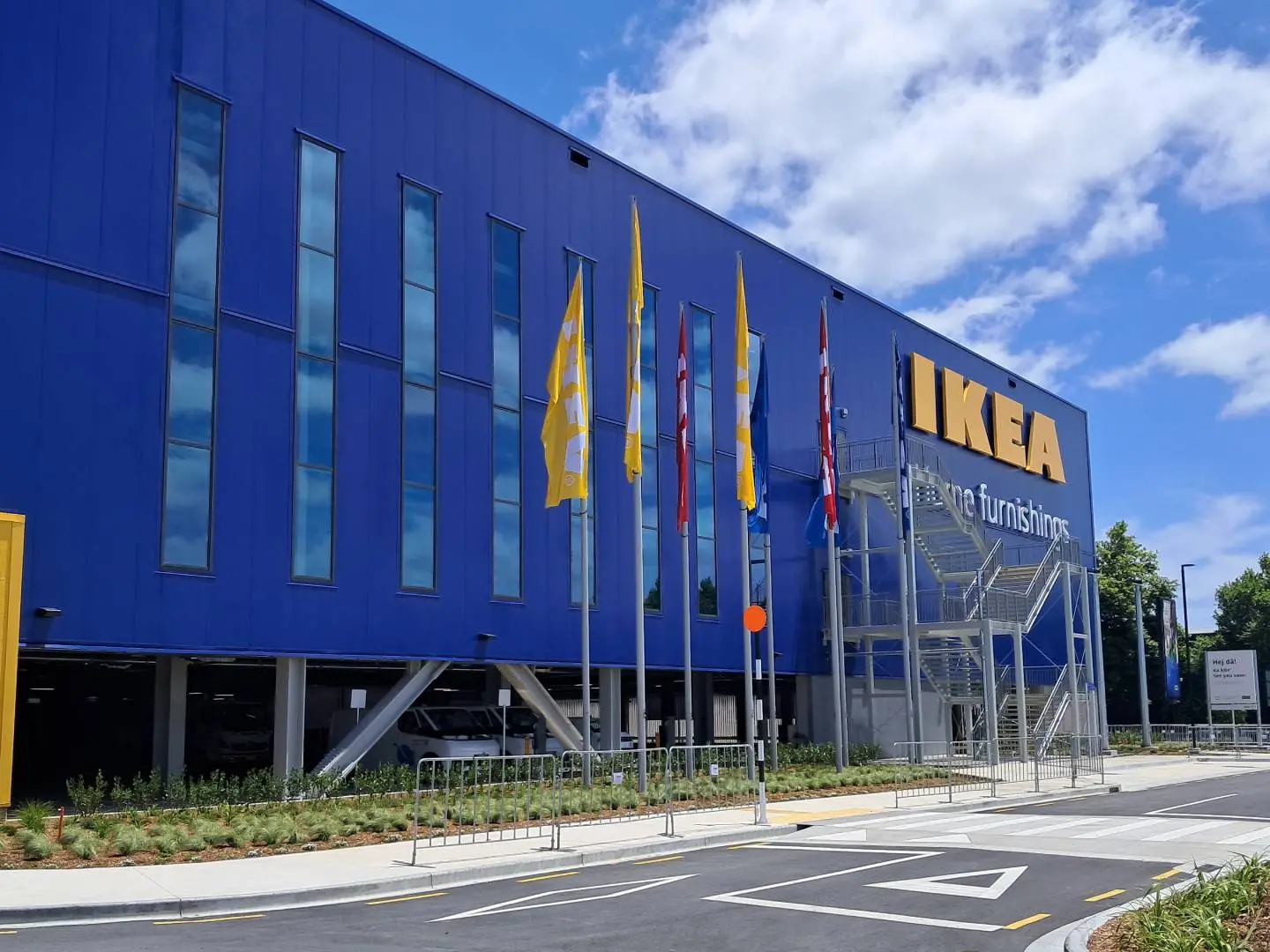
It's six months since Swedish flat pack furniture giant IKEA opened its first New Zealand store to much fanfare on 4 December.
The dancing meatball mascots have moved on and the throngs of thousands who turned up that first weekend may have abated but Kiwi shoppers continue to flock to the big blue box retailer in Mount Wellington, despite the ongoing cost of living crisis and economic pressures from the Middle East war.
IKEA said its Sylvia Park store had 1.77 million visitors in its first six months with 9.54 million visits online to its website and app in the same period. Its loyalty programme, IKEA Family, had 273,000 local members.
Meanwhile New Zealanders could not get enough of its famous meatballs, with the Sylvia Park store's food sales ranking 12th worldwide.
Overall spending on furniture and homewares remained on the up, with Stats NZ's latest retail trade survey showing New Zealanders spent 4.3 percent more on furniture and homewares in the first three months of the year compared to the same time as last year.
ANZ card spending data for April, via analytics consultancy Dot Loves Data, showed Aucklanders spent $54m on furniture and homewares, up 6 percent on the same time last year.
IKEA's Australasian chief executive Mirja Viinanen would not say exactly how much of that spend was at IKEA, but told RNZ it was exciting to see the local home furnishing category had been "stimulated" by its arrival. "We have always said we want to exist alongside other furniture retailers and recognise that competition in the market is healthy for us all and ultimately creates more choice and affordability for New Zealand customers.
"Yes, some of this uplift in spending has been with us at IKEA, but we truly believe it is the overall inspiration and solutions which IKEA provides to create a better everyday life at home which has prompted New Zealanders to consider their home furnishings in a different way, and consider and purchase with both Ikea as well as our competitors."
Photo: IKEACompetition 'not always a bad thing'
Retail NZ chief executive Carolyn Young said conflict in the Middle East meant a lot of people were travelling less, and spending money on their homes instead.
She said many retailers had benefited from the so-called 'IKEA effect', with part of the uptick in spending in the first quarter down to the Swedish global furniture giant opening.
"People would have been holding their spend until they could see what they could get in the IKEA store, and [be able to] experience the store… it's been an area that has performed well. We believe that both IKEA and stores outside IKEA have done okay."
Nood chief executive Jo Randall said the local furniture and homewares chain had "continued to perform well" since IKEA opened, seeing growth both nationally and in the Auckland market, while Nood's Sylvia Park store had seen increased sales on last year.
"IKEA has been positive for Nood. Competition is not always a bad thing."
Randall said there had been "a lot of apprehension among many retailers before IKEA as a big global player came to town", but she was confident that Nood would be okay. "Nood provides a different offer and in-store experience to IKEA, our stores by comparison have a more compact footprint."
Chief executive of Australasian flat-pack furniture retailer Mocka, Cat Williamson, said the arrival of IKEA had brought "attention and an energy" to the homewares and furniture category.
"It's given a real appreciation of flatpack furniture design, so the clever design that goes into that and what that means for accessibility for trends and design. [Many retailers] can absolutely co-exist with IKEA and we have, in Australia, for many years, and thrive. But for others, I can imagine that this might be a change that they are watching very closely."
Prior to IKEA's opening, Mocka's New Zealand sales grew 8.2 percent in the last six months of 2025, she added.
Founded in Christchurch in 2007, Mocka was, arguably, the 'New Zealand IKEA', selling on-trend but affordable flatpack furniture.
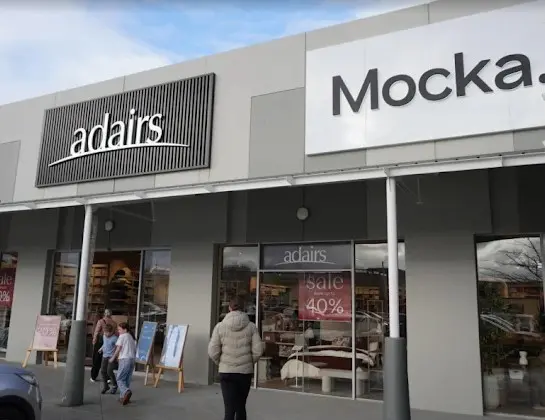
After nearly two decades, the online business is opening its first physical stores this year. Along with two Australian stores, its first New Zealand shop would open at the city's Tower Junction retail centre in July.
At 900sqm the Addington store is twice the size of the Australian shops, both around 450sqm, Williamson said.
"It will be our biggest store [and] it's super exciting we can give New Zealand customers a full range. For us it's very lovely to say our first standalone store is in the city where we were born and bred, where we started, in Christchurch."
Photo: Mocka Tower Junction
As an independent furniture retailer, Dan Eagle, who runs mid-century vintage store Mr Bigglesworthy and design furniture brand Good Form, said his businesses did not compete directly with IKEA on price, but it's still worrying in the cost-of-living crisis.
"IKEA opening here wasn't immediately a concern, but it sells beautiful products and everyone's being careful about what they spend, so we've definitely got our eye on that."
Eagle worried that IKEA, like fast-fashion brands, was capable of producing designs that look high-end but cost a lot less.
"The New Zealand market is a certain size so if things get cheaper, with clothing, maybe you buy a few more T-shirts. But you don't buy three dining tables, you don't buy furniture that often."
Eagle said he was not against IKEA, but said he worried that, while global retailers gave individuals access to cheaper goods, they were not always best for the wider community.
"Smaller, unique retailers can end up closing and you get these large, monocultural businesses and you don't really know where the tax money's going."
Carolyn Young acknowledged there could be tension between local retailers and global players but thanks to the internet, consumers could see what's available overseas, and they wanted it here.
Global brands based in New Zealand was preferable to online behemoths like Temu. "Buying online, offshore, where the money goes straight offshore [means] no jobs, no economic growth in New Zealand.
"A bricks and mortar store in New Zealand, even if it's owned offshore, does bring in some economic growth, it keeps the money in the country and creates jobs. But we also love those individual stores, because they bring that personal touch."