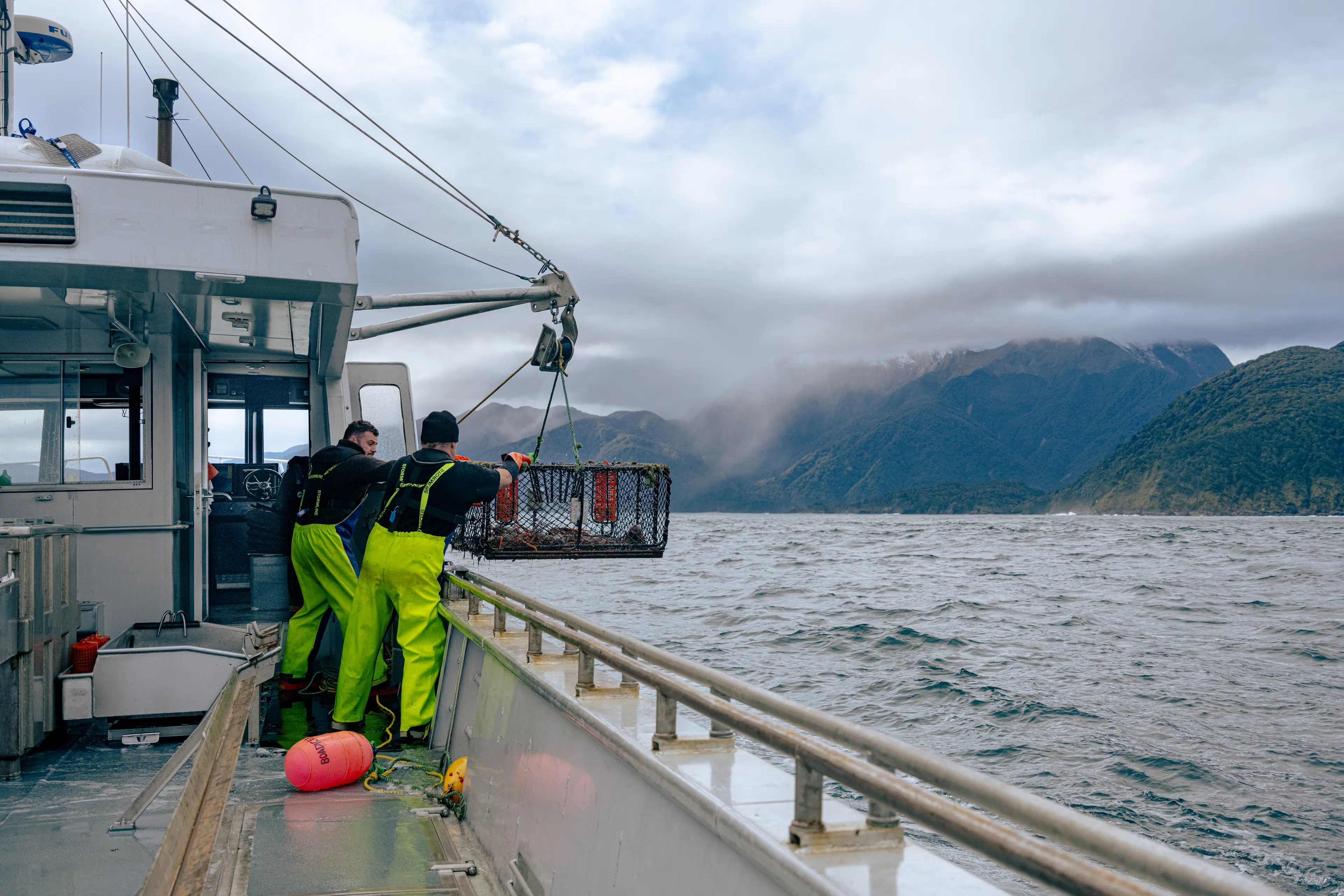
Fiordland Lobster Company plans to roll out new AI technology on the factory floor that can trace the crustaceans from the sea all the way to the plate. Researchers from the University of Tasmania’s Institute for Marine and Antarctic Studies (IMAS) have developed a new AI model capable of tracing the unique patterns of live southern rock lobsters through processing and export. The lobsters are digitally tagged using an image captured on a mobile device, effectively removing the need for physical lobster tags. The project, which involved capturing images of more than 1000 southern rock lobsters to train and test the model, was completed in collaboration with Fiordland Lobster Company and its wholly-owned subsidiary, South Australian Lobster Company. Fiordland Lobster Company chief executive Jason Judkins said the next stage would be bringing this technology into its factories with camera systems over the next few years. It hoped to use the technology to trace individual lobsters right through its supply chain. “As it goes through the process and into market, we can look at any one individual lobster and know exactly where it’s come from without any form of tampering being possible or any sort of alteration of product,” Mr Judkins said. “The guys just recently sampled 150 lobsters that were imaged off a boat, imaged through our factory, imaged arriving into Shanghai into the wholesale markets, and then imaged in restaurants, cooked in restaurants, and with 100% success in identification of those individual lobsters.” [Missing Credit]Fiordland Lobster Company chief executive Jason Judkins. Photo: Supplied Customers valued transparency and paid for quality, so knowing with total accuracy where a lobster had come from was of huge advantage to growing the strength of its brand. The more data they had on individual lobsters, the better they could run their factory processes. Early testing showed the technology could trace the same lobster even after several moulting cycles, Mr Judkins said. “If it gets to where we think it can go, we believe the value — not just to us, but to the industry — is huge, from a fisheries management perspective all the way through to the market.” Fiordland Lobster Company runs depots and factories including in Auckland, Whitianga, Masterton, Kaikoura, Christchurch, Dunedin and Te Anau. Its lobsters are all flown out live, mainly to China, where southern rock lobster is considered the most valuable in the world. [Missing Credit]A freshly caught southern rock lobster. Photo: Fiordland Lobster Company University of Tasmania professor Quinn Fitzgibbon, who led the project, said being able to verify where a lobster came from and how it was handled and transported was key for creating transparency. It also improved confidence in southern rock lobster as a premium product for Australia and New Zealand. Customers’ willingness to pay increased up to 11% for meat products where there was clear traceability, but could increase up to 30% when combined with additional welfare certifications. “They’re reasonably significant numbers, particularly for a national export that’s worth in the hundreds of millions of dollars in a company such as Fiordland Lobster that is exporting large volumes of this premium product.” The AI lobster identification technology would be deployed via a website and phone app, which had the potential to support recreational fishers and citizen science, Prof Fitzgibbon said. tim.scott@odt.co.nz