
PHOTO
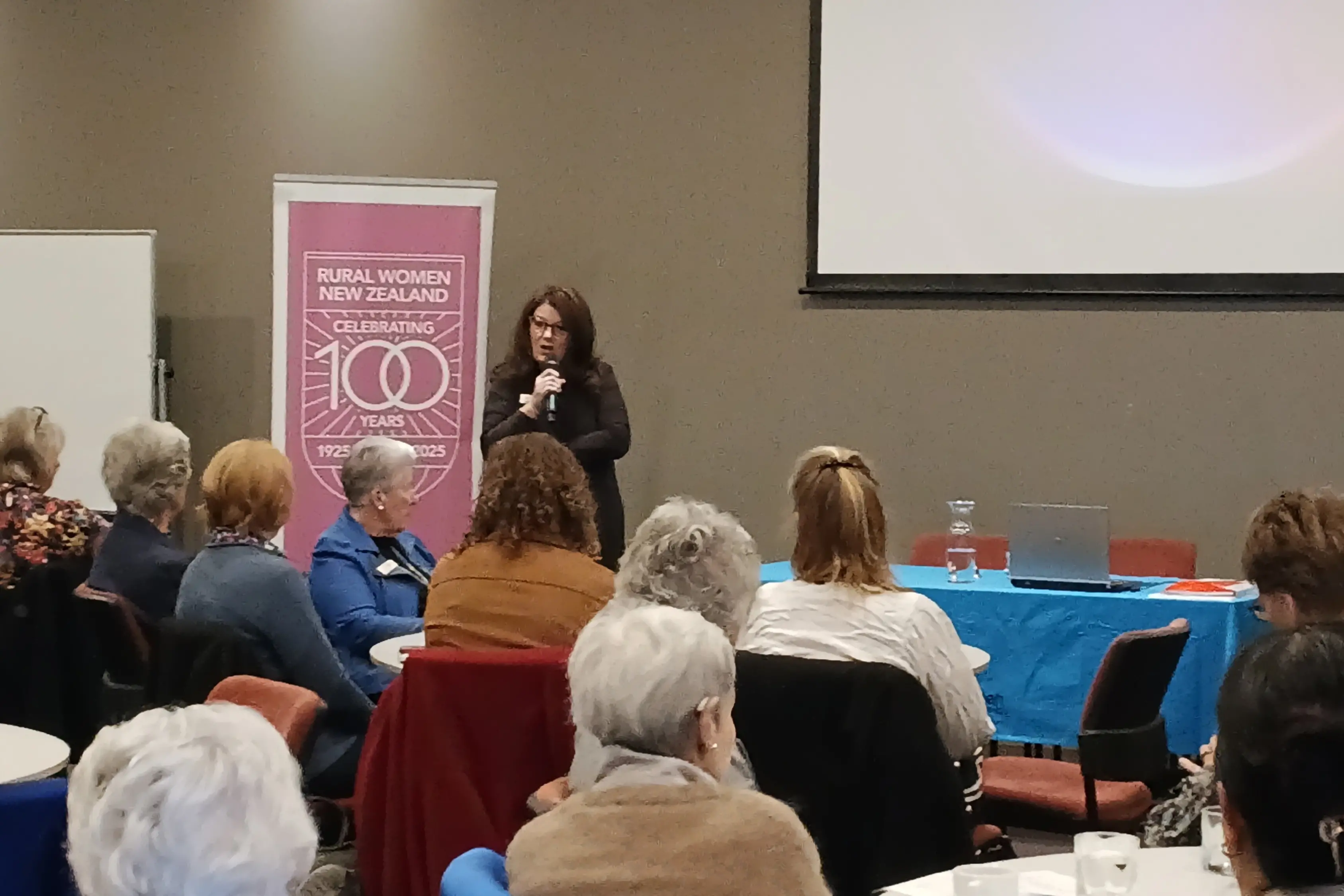
“The challenges that are facing our rural communities are going to need 30-000 strong,” farm safety advocate Lindy Nelson says.
She was in Ashburton this month as guest speaker to Rural Women New Zealand’s Canterbury Regional Conference.
She had an inspiring message about the importance of belonging.
Finding her passion, thanks to the support of her farmer husband early in their marriage, she went back to nursing which opened doors to community leadership, directorships and beyond.
‘‘One thing, I hand on heart believe in, is the power of women to make change.”
She said support of each other was vital.
It helped individuals get ahead, and find purpose and meaning in life.
Her talk started with attendees giving each other a pat on the back.
“100 years is really a phenomenal achievement,” she said of the organisation’s longevity.
But why aren’t you a 30,000-strong membership? she questioned.
She believed it was the number needed to support, the rural sector in farm safety.
After a quick show of hands, its obvious, everyone in the room has a connection to food and fibre.
And most, at some time, had been concerned about the safety of someone on-farm.
“To keep being a phenomenal food and fibre sector and producing world quality food we actually have to have world class places to work,‘‘ she said.
“And New Zealand currently, the agricultural sector in New Zealand, is the most dangerous place to work.
“That is not great, because farmers deeply care about one another and we care about our communities and yet we hurt, harm and kill people in the production of food.”
Nelson said four hours after meeting her future husband - a dive instructor - he saved her life.
It was during a diving incident.
He gave her diving advice she ignored.
And underwater, at 60 feet with burst ear drums and needing to vomit, she went against her training and removed her regulator.
“I was a second away from being a fatality,’’ she said.
“But luckily for him, he recognised something had gone wrong.”
He returned the regulator back into mouth, checked her air supply and got her to the surface.
It was a safety system - that he followed - that saved her life.
“This is the type of stuff we see on farm every day,” she said.
“We cannot judge our own judgement, or our ability to see things in the moment or respond.
“We have to have these inbuilt safety systems.”
“And as New Zealand farmers we’re actually not very good at putting those in place.”
They were in everyday tasks; driving machinery, spraying, moving livestock.
They were avoidable tragedies.
“Our story of harm and fatality is not a good story.”
In 2016, she was made an Member of the New Zealand Order of Merit for services to women and agriculture.
Five years ago, Nelson had the chance to do something about it.
She took it.
Nelson chaired Safer Farms for six years from 2020 and was instrumental in the formation of the first-ever sector-wide plan, ‘Farm without Harm’, designed with farmers and industry. She also helped develop a partnership with ACC.
She played a key role in the development of campaigns including ‘Half Arsed Stops Here’, and ‘Safer Rides’, which offered farmers financial incentives to offset the cost of purchasing and installing crush protection devices and other products on quad-bikes.
It saved one audience member’s husband’s life.
“Farmers trust other farmers. We know that,” she said, of the campaigns.
“They are sharing their journeys of learning about safety.”
“We are trying to build a network of farmers around New Zealand who talk to farmers about safety.”
It can only be done collectively, together, she said.
And feedback from people, such as members of Rural Women New Zealand, gave inroads into those rural communities about what was working well.