

PHOTO
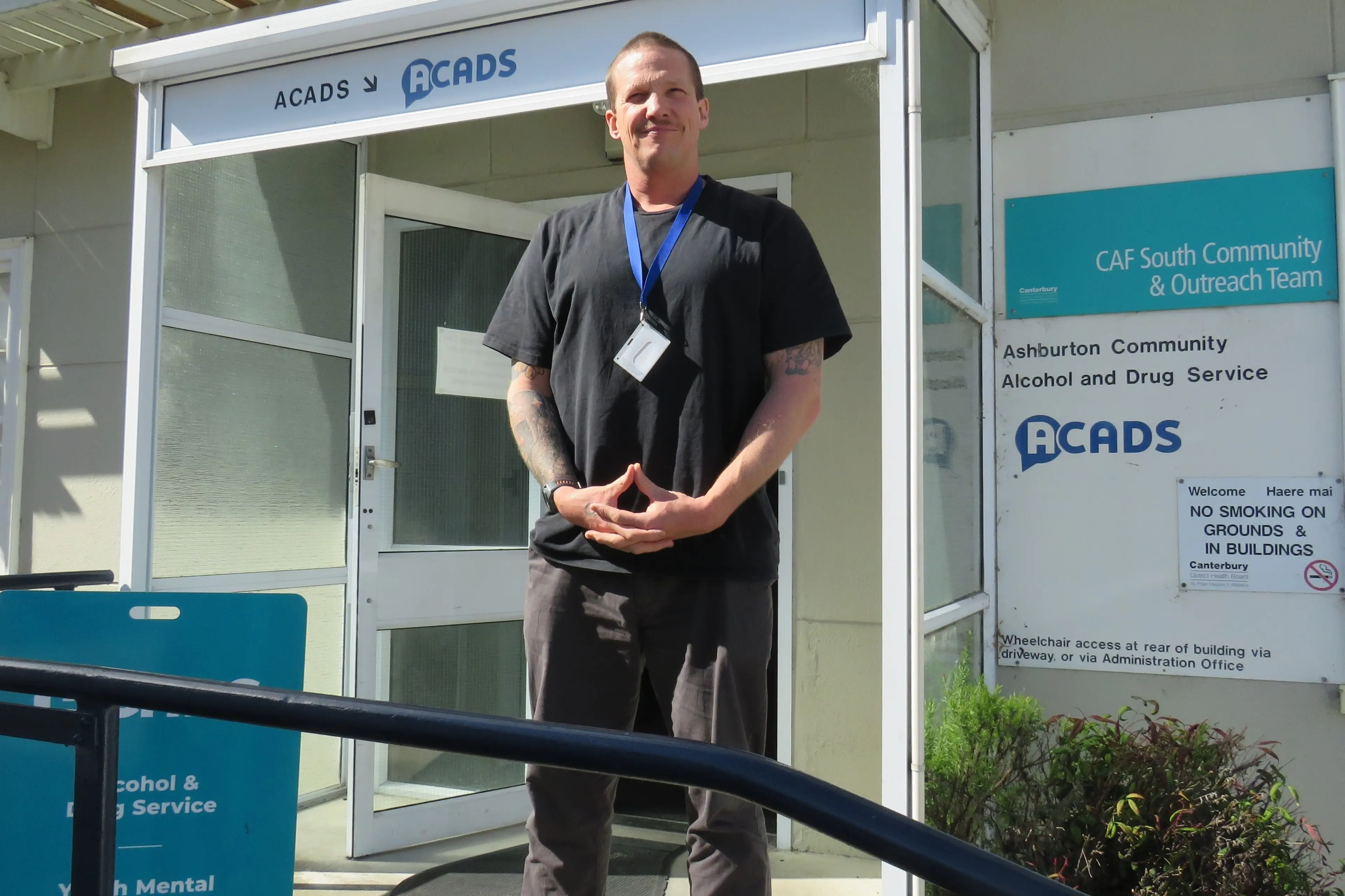
Leif Hansen is gearing up for Ashburton Community Alcohol and Drug Service’s annual summer campaign.
Six months into his new role as chief executive officer, Hansen is supporting health promoter and community connector Steph Poole who is managing the campaigns.
It’s not a new experience for Hansen. He has been at the organisation for the past four years.
He grew up in the North Island and began studying for a psychology degree before deciding it wasn’t his thing at that stage of his life.
A car accident saw him return and finish it.
Then a friend offered him a job in his practice.
It opened new opportunities and helped him fulfil a promise to his wife, who is from Mid Canterbury, that they would one day move south.
Four and half years ago, Hansen and his family moved to Ashburton to be closer to family and he began as an drug and alcohol clinician with ACADS.
He progressed to team leader.
In March this year, with the departure of longtime leader Chris Clark who had been with the service for 34 years, Hansen stepped up into the role.
“It’s a great team of people here (at ACADS) to work with,” Hansen said.
He credits the success and longevity of the organisation on the quality of work the staff do, and the support of the community who enable them to do their work.
The service is free to clients and there are few barriers to people accessing the service, he said.
It is funded by government and contracts as well community and organisations.
Outside work, Hansen has been an active martial artist for 20 years and 10 years with Brazilian Jiu-Jitsu.
This week, filming is scheduled in Mid Canterbury for this year’s social media campaign where ‘stars’ are invited to talk about the social media influence on drink driving.
Poole said this generation of young people had the ability to end drink driving so they wanted messages on their videos to empower people to do that.
She said one of its spring campaigns asked people to send in screenshots of 'boozy' content on social media feeds. They can be emailed to steph@acads.co.nz
However their latest campaign, although aimed at teenage drivers, was really for all generations.
"We are the generation that can end drink driving” aims at educating drivers into how much influence media advertising has on the consumption of alcohol,” she said.
"While there is advertising that is clearly states is advertising there is advertising that isn’t so clear that’s what its doing.
"Influencers like Kendall Jenner and Dwayne ‘the Rock’ Johnson, who both have their own their own brands of tequila, can include them anytime they want without saying its advertising.”

Notably, due to the cost of living crisis people, especially youth were not going out to clubs and restaurants to drink.
"That doesn’t meant they aren't drinking,” she said.
"The youth statistics for drinking have dropped but only by about one or two per cent in the last two years,” Poole said.
The latest statistics nationwide, showed there were 350,000 hazardous drinkers age 15 years or older.
That is people who consumed six drinks in one sitting at least once week.
And 18 to 24 year-olds males make up the highest percentage of hazardous drinkers at 15.9 per cent.
While overall drinking was decreasing, hazardous drinking was not.
She said there was evidence the alcohol industry was 'green-washing' (health-washing) their products to appeal to a more health conscious consumers.
“This has led to a rise in the consumption of RTDs (ready-to-drink) which are being promoted as low carb, no sugar and natural,” Poole said.
There is also a rise in amount of 250ml cans of drink being consumed.
The size of drink is smaller but not necessarily the amount of alcohol in the drink.
In fact sometimes it’s higher, she said.
Hansen said Ashburton was a great community but like other small communities around New Zealand it wasn’t without its challenges.
Drugs continued to be a problem, he said.
The nature of the drugs had changed over the years as had how people sourced them.
According to He Ara Oranga 2018, the government’s inquiry into mental health and addiction, 50 to 80 per cent of the population will experience mental health or addiction challenges in their lifetime.