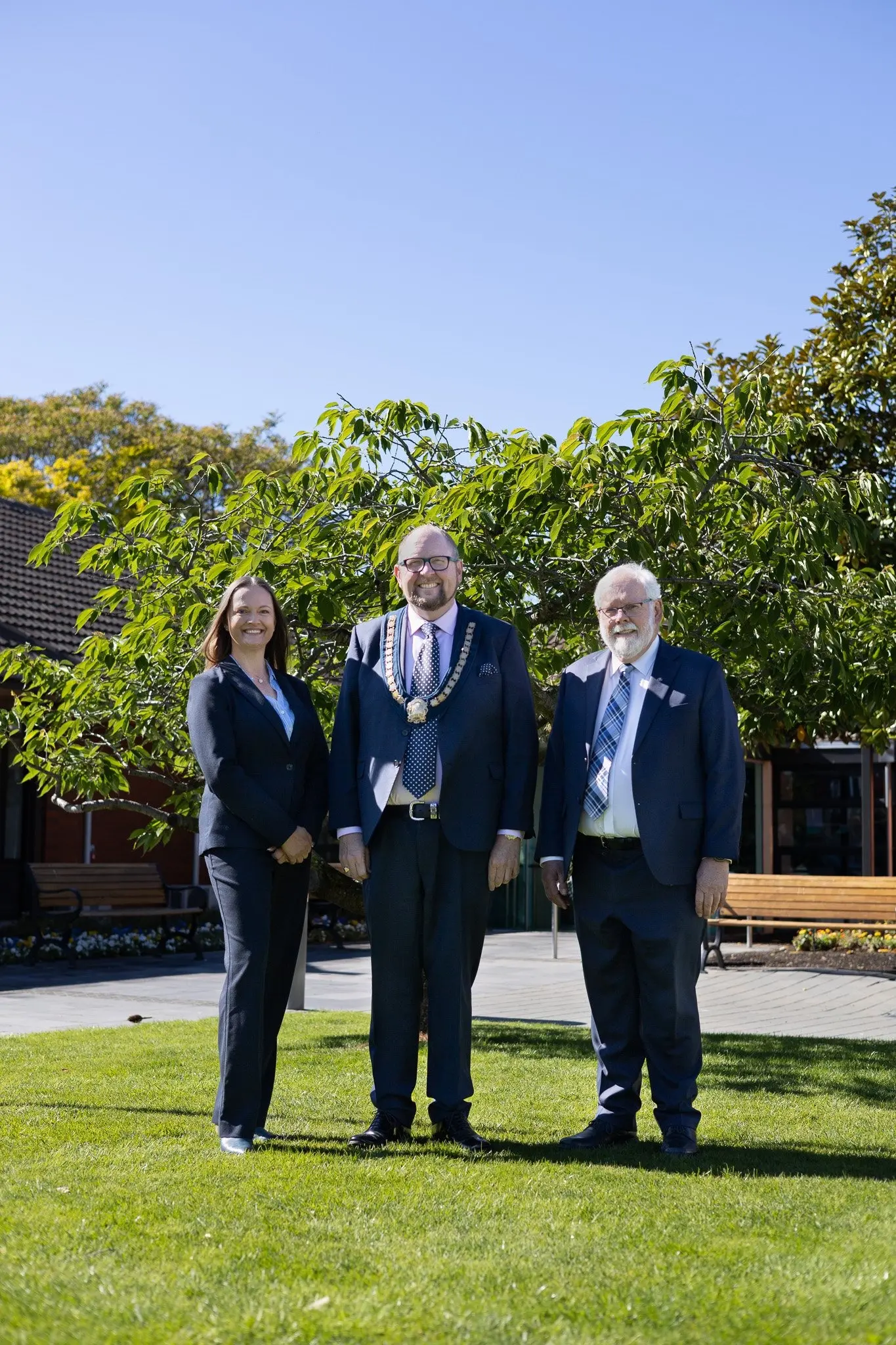

PHOTO
The Government should foot the bill for a planning document it is forcing councils to produce, Waimakariri Mayor Dan Gordon says.
Councils are required to work together on a regional spatial plan as part of the Government’s proposed Resource Management Act (RMA) reforms.
Producing a Waitaha Canterbury Regional Spatial Plan is expected to cost up to $10m, with the Waimakariri District Council’s share being up to $1.07m, representing a rate rise of 1.38 percent.
Mr Gordon says this is another example of an ‘‘unfunded mandate’’ from central Government which will ultimately fall on ratepayers.
‘‘We need to consider this alongside amalgamation under Head Start.
‘‘This is another unfunded mandate and a significant work programme being forced on Canterbury councils.
‘‘It’s a 30-year plan that will likely need to be re-done when new local government structures are established by 2028.’’
Regional spatial plans will set a 30 year strategic direction, planning for growth, housing, transport infrastructure and environmental protection.
At the same time, the Government is planning to impose a rates cap of between 2% and 4% on to councils.
‘‘This project alone would constitute a 1.38% increase in rates for Waimakariri,’’ Mr Gordon said.
‘‘I know our ratepayers would prefer we focus on roads, water and community facilities.
‘‘It is only fair ratepayers know these costs are coming from Wellington with no funding.’’
Waimakariri Deputy Mayor Philip Redmond and Cr Niki Mealings said the work was important, but questioned the financial burden being placed on ratepayers.
‘‘This is a tax,’’ Cr Mealings said.
‘‘Every time the Government puts something on local government without funding attached, that is a tax.’’
The Waimakariri district was included in the Greater Christchurch spatial plan adopted two years ago, while the Hurunui District Council adopted a spatial plan for its south ward, including Amberley, in July 2024.
The Hurunui District Council’s share is 5.2%, meaning ratepayers could be required to stump up with around $520,000 over two years.
Council chief executive Hamish Dobbie said the mayoral forum’s funding model is based on each council’s population and land area.
‘‘This is a fundamental planning document and we all have a responsibility to be a part of it.
‘‘We have all encountered problems with the RMA process, so if we can transition smoothly into the new planning framework it will be good for all of us.’’
Mr Dobbie said Canterbury’s councils had a history of working together, including developing the Canterbury Water Management Strategy and the Canterbury Climate Partnership Plan, and their work through the Canterbury Regional Transport Committee.
RMA Reform Minister Chris Bishop said planning is core business for councils.
‘‘Spatial planning is intended to support better investment decisions, stronger economic growth and more efficient infrastructure delivery, while providing greater certainty about where development should occur.’’
Independent analysis by Castalia estimated it would cost councils around $870 million nationwide to prepare for the new planning regime, Mr Bishop said.
But the costs would be ‘‘more than offset over time through a simpler, faster and more efficient planning system’’.
The Government was investing in national digital planning, consenting and data systems to reduce costs for councils.
■ LDR is local body journalism co-funded by RNZ and NZ On Air.