
PHOTO
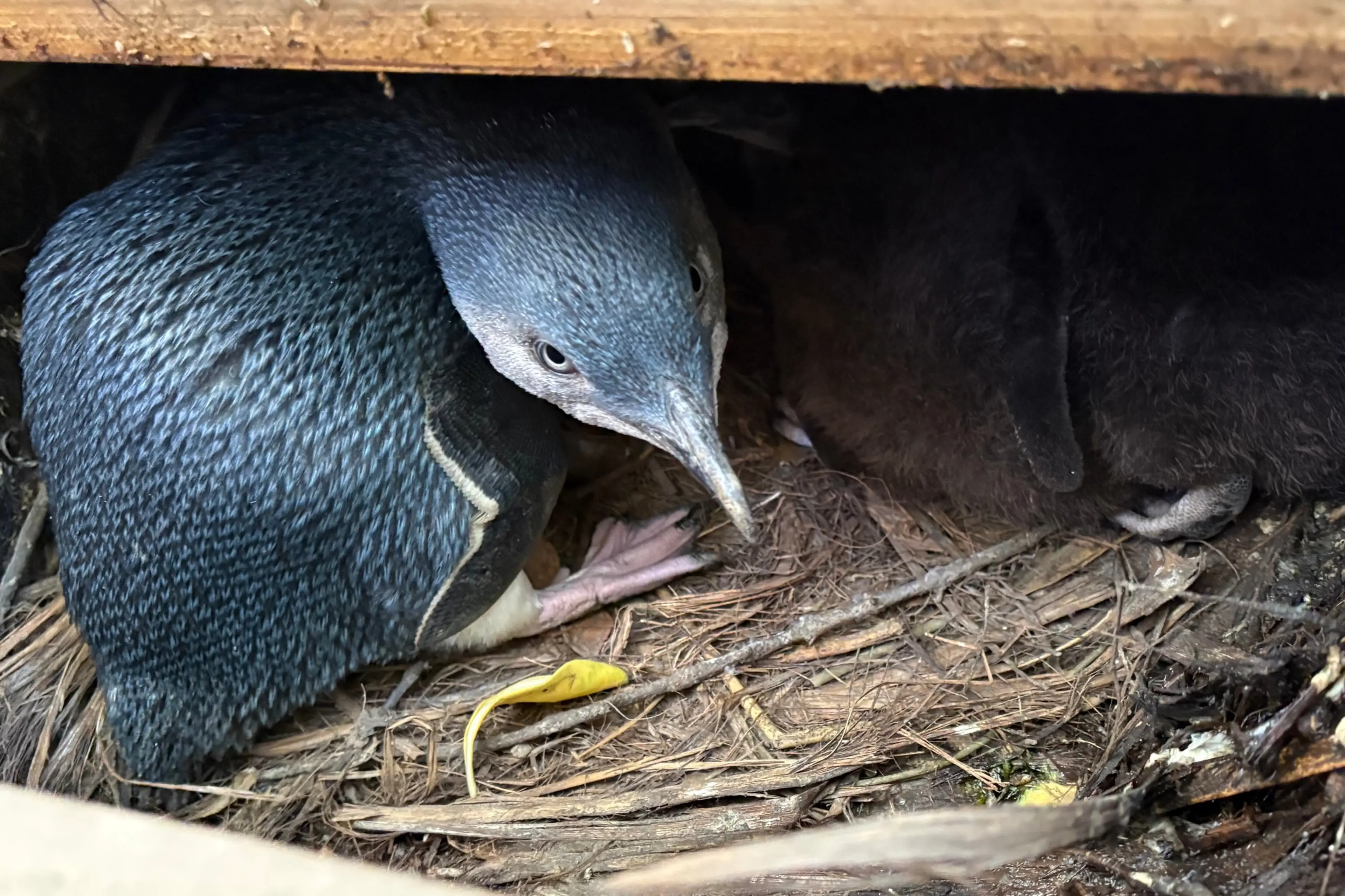
Volunteers have stepped up efforts to protect Kaikōura’s little blue penguins / kororā from an unusual threat: Curious humans.
The Kaikōura Wildlife Centre Trust has teamed up with the Kaikōura District Council, Environment Canterbury (ECan), the Department of Conservation (DOC) and community volunteers to develop new reserves at undisclosed locations.
Trust volunteer manager Sabrina Luecht said the reserves are being established on council and ECan land.
The habitat locations are being kept secret to protect the birds from ‘‘visitor disturbance’’, she said.
‘‘Human disturbance continues to be a major concern, negatively impacting penguins, with harassment and stress caused to the few kororā that remain.
‘‘There is a misconception that because we are a wildlife hotspot they are doing OK, but they are on the brink and they are reliant on us.’’
The reserves have been years in the planning and took four months to complete.
Grants from the regional council and WWF (World Wildlife Fund for Nature) and fundraising have helped the project, with the trust managing the sites.
The labour was provided by volunteers, with the exception of a contract fencer.
The final stage of the project is the planting of hundreds of natives across the reserve sites, which have been self-grown for planting projects.
‘‘The reserves focus on habitat restoration to facilitate wildlife corridors, as few suitable coastal sites with native vegetation remain,’’ Ms Luecht said.
‘‘The objective is to create urban safe zones to encourage threatened wildlife to return in predator controlled areas.’’
Signage is used to warn that the sites are not visitor attractions or viewing destinations, she said.
‘‘The trust facilitates daily volunteer reserve patrols to enable public education and mitigate visitor disturbance.’’
Raising public awareness remains a wider aim of the trust.
The reserves have been set up to prevent dog attacks on coastal wildlife, to mitigate human disturbance and restore habitat.
‘‘Dog control is a significant component of reserve management, and where signage stipulates, dogs are required to be on leads at all times year-around,’’ Ms Luecht said.
Kaikōura District Council animal control officers will monitor the reserve sites regularly to enforce the council’s animal control bylaw, which was updated last year.
‘‘Community guardianship is a critical aspect of long-term reserve success,’’ Ms Luecht said.
‘‘The goal is to showcase conservation in action to enable the community to protect, restore and enhance our natural environment, ensuring wildlife and people can thrive.
‘‘It is hoped that reserves inspire further initiatives of this kind in the district.’’
The little penguins face multiple threats, with latest being the prospect of avian flu arriving in the region.
The trust expressed disappointment recently after the little penguin was left off the Department of Conservation’s H5N1 vaccination programme, despite support from the Kaikōura council and ECan.
■ LDR is local body journalism co-funded by RNZ and NZ On Air.