

PHOTO
Serious concerns have been raised about a large subdivision south of Rolleston.
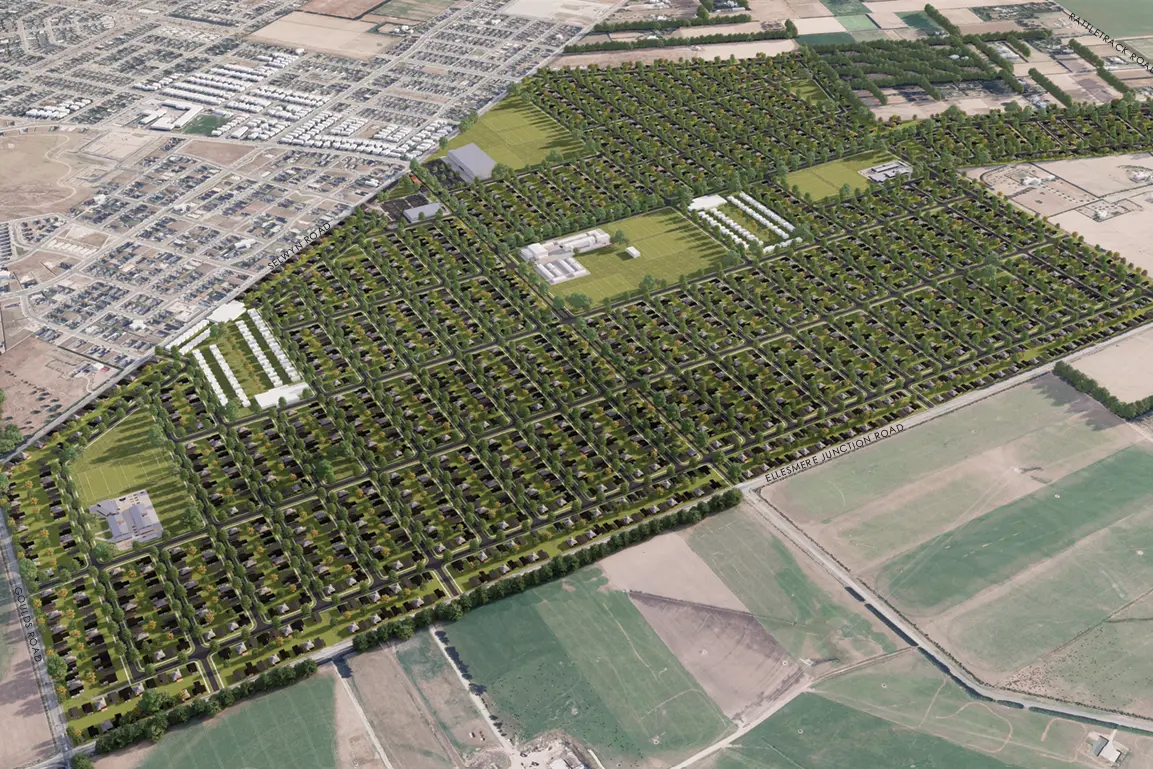
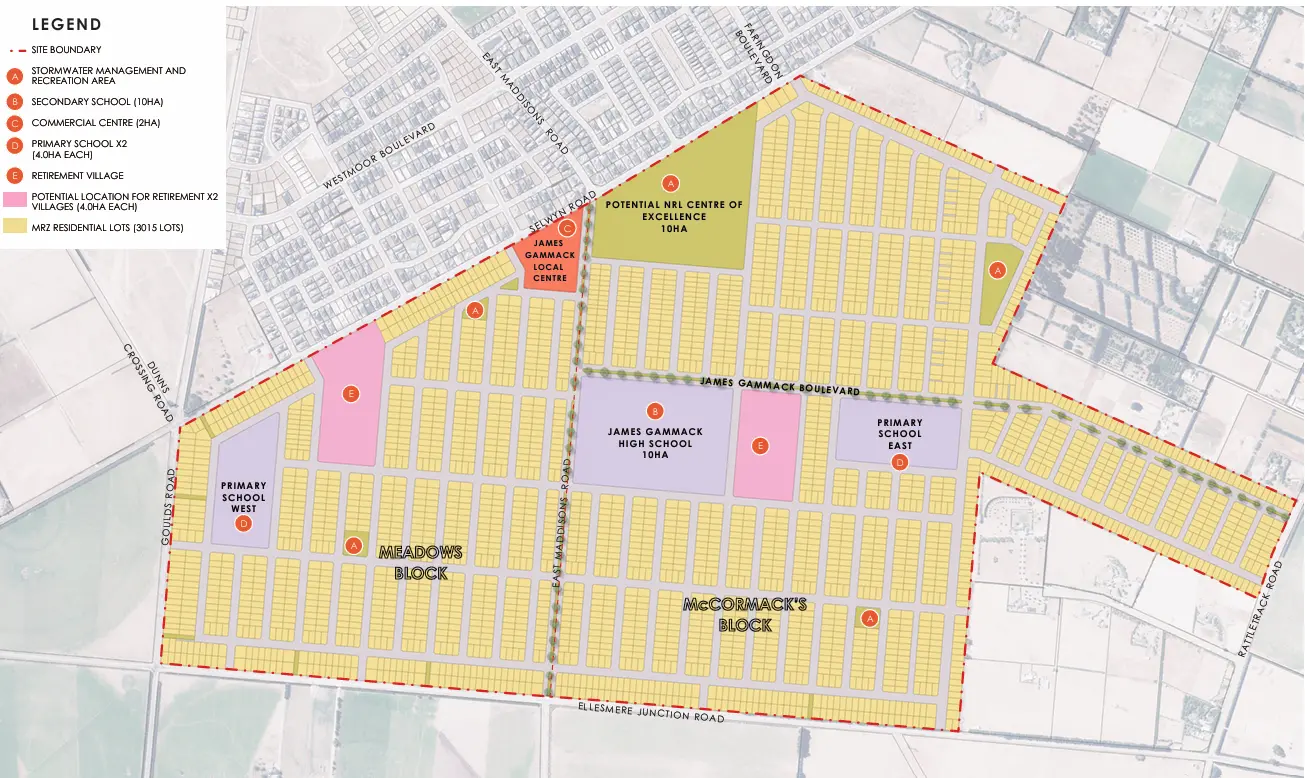
Carter Group plans to rezone 274ha of farmland between Selwyn and Ellesmere Junction Rds for 3015 homes, two retirement villages, two primary schools and a high school using the Fast Track Approvals Act.
The James Gammack Charitable Trust still owns the land.
The trust was established under the will of early Canterbury farmer James Alexander Gammack in 1896.
If the development proceeds, the trust will sell it to Carter Group and reinvest the proceeds in replacement farmland.
In its response to the Carter Group’s proposal, council principal planner Geoff Deavoll raised concerns about the development.
“This project represents out-of-sequence, unplanned development that is unlikely to be infrastructure ready, particularly with respect to wastewater servicing and capacity,” he said.
Deavoll said while the direct economic benefit of such a development may be able to be demonstrated as being significant, it may be “overstated” due to there being sufficient land capacity in Rolleston until 2049.
As part of the proposal, Carter Group has set aside 10ha for a future multi-sport centre. If the Southern Orcas are granted an NRL licence, the facility would become the team’s headquarters.
The NRL is Australasia’s premier professional rugby league club competition, but the Southern Orcas are yet to secure a place in the league.
The sale of the land could increase the funding available to Christchurch City Libraries and students at Lincoln and Canterbury universities through the trust.
Deavoll said Selwyn Water Ltd has advised there would be no capacity at the Pines Rolleston Wastewater Treatment Plant to service it and the Carter Group would be required to provide its own pretreatment infrastructure.
Carter Group director Tim Carter said the proposal would help meet the region’s need for more housing through a “carefully planned extension” of Rolleston.
He said the land is not protected by highly productive soil rules and can be efficiently serviced for water and wastewater through existing and planned infrastructure on Selwyn Rd.
As part of its evidence, Carter Group included a map showing the land sits within an area originally “earmarked” for Rolleston under Norman Kirk’s ‘new town’ scheme in the early 1970s.
While the Carter Group is seeking to progress the subdivision under the Fast Track Approvals Act it is yet to be approved into the system, which requires ministerial approval.
If the project is included, it still requires a further substantive application to be lodged, which goes before an expert panel which decides whether to approve it.
New images of the development were provided to Selwyn Times under the Local Government Official Information and Meetings Act and part of Carter Group’s notification letter to the council.
The notification letter also revealed the Carter Group sought to keep plans secret until it got approved into the fast track system.
The letter showed Anderson Lloyd partner Jo Appleyard argued the project was deemed commercially sensitive and current public interest is “limited”.
“That interest will be better served through disclosure once the project has reached a more defined and settled position, including once land acquisition and key commercial arrangements are sufficiently progressed,” she said in the letter.
Appleyard said public release would likely prejudice the commercial position of the project proponents, prejudice current and future negotiations, and give rise to premature market signalling and misinterpretation of an evolving proposal.
Land set aside for proposed NRL club’s headquarters
A high performance sports centre which would include a professional club rugby league franchise would be part of the Carter development.
The Southern Orcas are planning to be part of the NRL when the competition next expands, possibly as early as 2029, and be New Zealand’s second team in the competition after the Warriors.
If granted a licence, they would play their home games at One New Zealand Stadium.
They have been allocated 10ha of the land by the Carter Group to build training pitches, a gym, and the club’s headquarters. The facility would also be available for use by other sporting organisations.
The Southern Orcas bid is being led by former Kiwis and Queensland coach Sir Graham Lowe, who said Rolleston was an ideal location.
“It’s a fantastic go-ahead place, and the land was available there,” he said.
“It will have the the latest equipment and monitoring services, all the facilities that are required for modern-day athletes.
The Orcas will be the anchor team in it, but it’s going to be available for all sports and it will be a fantastic asset for the whole region.”
Director and owner of Carter Group subsidiary Rolleston Industrial Developments, Tim Carter, said the land would be perfect for the Orcas’ needs.
“The Southern Orcas were looking for a long-term home for a world-class centre of excellence. Through discussions with Carter Group, it became clear the (land) could provide an ideal location for a shared regional high-performance sporting facility, rather than a base for one team or one code.
“The intention is it would support a range of sporting organisations, academy programmes and education partners, with opportunities for community use to be developed as the proposal progresses.”
Gliddon raises alarm over fast-track housing moves
Mayor Lydia Gliddon has warned fast-tracked housing developments could outstrip the council’s ability to provide infrastructure.
The council was notified of four fast-track applications in May and June, which could see more than 8000 homes fast-tracked in Rolleston and Prebbleton.
But Gliddon said the subdivisions fit outside the council’s 30-year growth profile.
“We haven’t planned for infrastructure to go to those developments, and that is a real challenge because we can’t just continually fund everything everywhere,” she said.
Among the reasons developers have turned to the fast-track is that the District Plan has a two-year hold on any private plan change requests.
“A lot of land was rezoned through the District Plan to give us our growth profile, and we are constantly stepping outside that.”
Gliddon said it felt like developers are using the fast track to circumvent council planning processes.
Carter Group director Tim Carter said its application for at least 3015 homes is a long-term staged growth proposal, not a response to short-term housing demand.
“It aligns with the council's obligation to provide sufficient land for up to 30 years of housing growth,” he said.
Hughes Developments director Jake Hughes, who is behind a fast-track application for 800 homes in Darfield, said they chose it because it provides more certainty around consenting timeframes and removes the need to get individual consents from the council, Environment Canterbury and the Department of Conservation.
Urban Estates director Justin McDonald, whose company has three fast-track applications, also said it provided more certainty of timeframes.
He said the fast-track is a “different process, not a lesser one”.
“If planning only begins once a shortage exists, communities inevitably face constrained supply and higher housing costs.”
Gliddon believes rezoning land for housing in Selwyn did not align with the intention of the Fast Track Approvals Act, which is to facilitate the delivery of infrastructure and development projects offering significant regional or national benefits.