
PHOTO
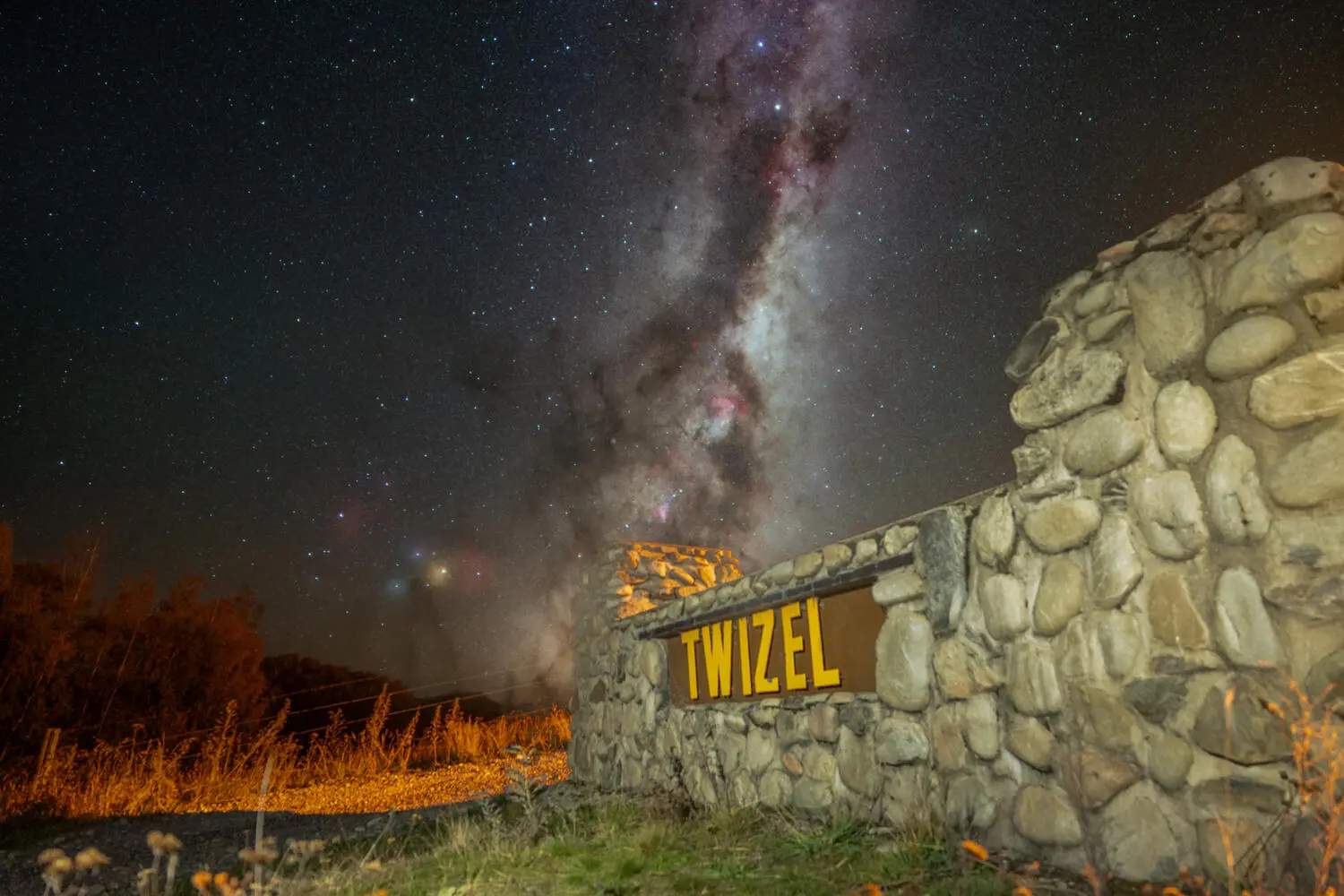
Fears are mounting a Canterbury district could become home to large-scale data centres, with one expert warning the area’s dark sky reserve status was at risk.
Twizel residents have demanded action from the Mackenzie District Council, after raising concerns about data centres, fast-track consenting, and the Government's new Natural Environment Act and Planning Bill at a public forum earlier this month.
Twizel Community Board member Zoe White warned the new laws, which replace the Resource Management Act, allowed ministers to set aside environmental limits without consulting affected communities, if they deemed the public benefit outweighed local harm and the "needs and aspirations of the community".
White pointed to the Datagrid project near Invercargill, where resource consent was not notified, after the Southland District Council deemed the environmental impacts were "less than minor".
Stargazing guide and NASA astronomer Daniel Gaussen told councillors data centres created light pollution, utilising LED lighting and operating around the clock.
"Our atmosphere is very good at scattering blue light, which means basically what we're going to see, if we have a big data centre in Twizel, is a huge sky glow."
He warned the sky glow could destroy the Aoraki/Mackenzie International Dark Sky Reserve's gold-standard status and impact his astronomical research for NASA.
"It's a big selling point for this region, it can be lost." he said. "If we continue to increase light pollution... we will reach a sky glow limit, which - if we pass it - we lose the dark sky reserve status."
Mt Cook Lakeside Retreat owner Kaye Paardekooper said the district faced a "perfect storm" for non-notified development.
"You've got the data centre push, the resource management reform, you've got the local government reform," Paardekooper said. "You've got fast track and I believe it's coming as a perfect storm."
As one of 28 New Zealand accommodation providers to receive a Michelin Key, Paardekooper said industrial developments would put employment, tourism and that status at risk.
"It's not just vacant land waiting to be developed. It's open space, it's natural quiet, it's dark skies, it's mountain and lake views... Mackenzie feels different, because of what's not here."
She said the Mackenzie's location within a basin meant the effects of industrial development would be felt across the district.
"It's like a big reverberating, echoing basin."
Geospatial analyst Jana Kaeppler raised concerns about potential noise caused by data centres, saying the question was not simply how loud they were, but how the noise would affect the district.
"Twizel is very different from the city or an established industrial area. We have a very quiet night-time environment and weather conditions can affect how sound travels."
Large data centres produced noise from cooling systems, transformers, backup generators and equipment handling, along with periods of low-frequency sound, Kaeppler said.
Accommodation providers, tourism and resident satisfaction would be impacted, Kaeppler said, as she called for enforceable site monitoring of any future development.
Twizel fishing guides Brad Snow and Ben Booth addressed councillors together, warning that data centres produced overflow that would impact the district's fishing and recreation.
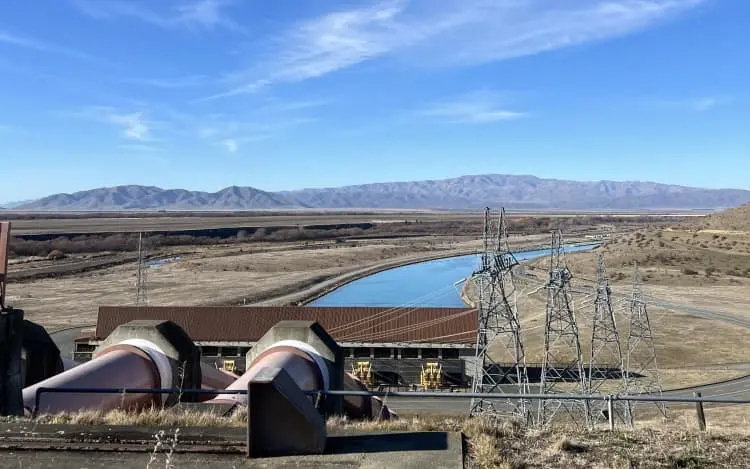
"The overflow goes into the canal or the lake," Snow said. "Fish will start dying as soon as that water starts going over 18 degrees."
Data centres used between 600,000-one million litres of water a day, he said, which would hugely impact water levels over summer, but that was just the start, with chemicals, anti-scaling agents and chlorine used by data centres entering waterways, such as Benmore, where families had gathered for decades.
"If this goes ahead, you can say goodbye to a lot of that and the both of us would probably leave," he said. "We're not going to be having people paying us to take them out to water I'm too scared to put my kids in."
Snow said their businesses contributed about $500,000 annually to the local economy, which would be lost, if data centres were built.
Pukaki Airport's Inflite Tourism general manager Gemma Parton urged councillors to consider the visual impact of developments on tourism operations, saying it was important to remember why people came to the district.
"Visitors come here for the vast number of unique experiences we offer. They're not just paying for a skydive, they're actually paying for a memory.
"When people jump out, they cherish the memory."
Mackenzie District mayor Scott Aronsen acknowledged the concerns, saying while recent legislation restricted council interference, he was in regular contact with the Waitaki District Council and government officials who were "looking at some changes".
Closing the public forum, Aronsen told Twizel Community Board chair Mary Murdoch she would need to lobby the government directly over the community's concerns.
"You guys are going to have to do some lobbying. We'll do as much as we can, but at the end of the day, they'll listen to people on the ground."
Murdoch had worked to educate the community on potential industrial developments in the district, forming a Twizel working group and holding a meeting in August to educate residents.
At the time, several applications for solar projects in the Mackenzie were progressing through fast-track, with the Haldon Station Solar Farm receiving approval in August.
Other projects included the Twizel Solar Project, which received resource consent in August, the Balmoral Station Solar Array and the Grampians Solar Project.
RMA Reform Minister Chris Bishop said the reforms aimed to make consenting faster, simpler, and more predictable, with fewer applications requiring public notification.
"This means communities can help shape the bigger decisions about growth and development, without unnecessarily revisiting those decisions through every individual consent application."
Bishop said where a consent application is not publicly notified, the legislation provides mechanisms to review notification decisions through the Planning Tribunal.
He said the Natural Environment Act provided the minister flexibility to enable activity through national standards, considering the cost and benefits, potential human and environmental harm, implications and mitigating conditions.
"The new system establishes enforceable environmental limits to protect human health and ecosystemsm," Bishop said. "This ensures decisions can account for wider public benefits, while maintaining appropriate environmental protections."
However, Bishop said neither the bill nor act contained specific provisions protecting dark skies.
While councils would continue to manage light spill through local plans, reserve protections would require a council justification report subject to public submissions, appeals and set standards.