
PHOTO
(Midden, Portobello)
Jess Nicholson (Waitaha, Kāti Māmoe, Kāi Tahu, Pākehā) was the Caselberg Trust’s Creative Connections Resident in 2025.
One of the outcomes of the residency is presented as a body of works on show now at Midden.
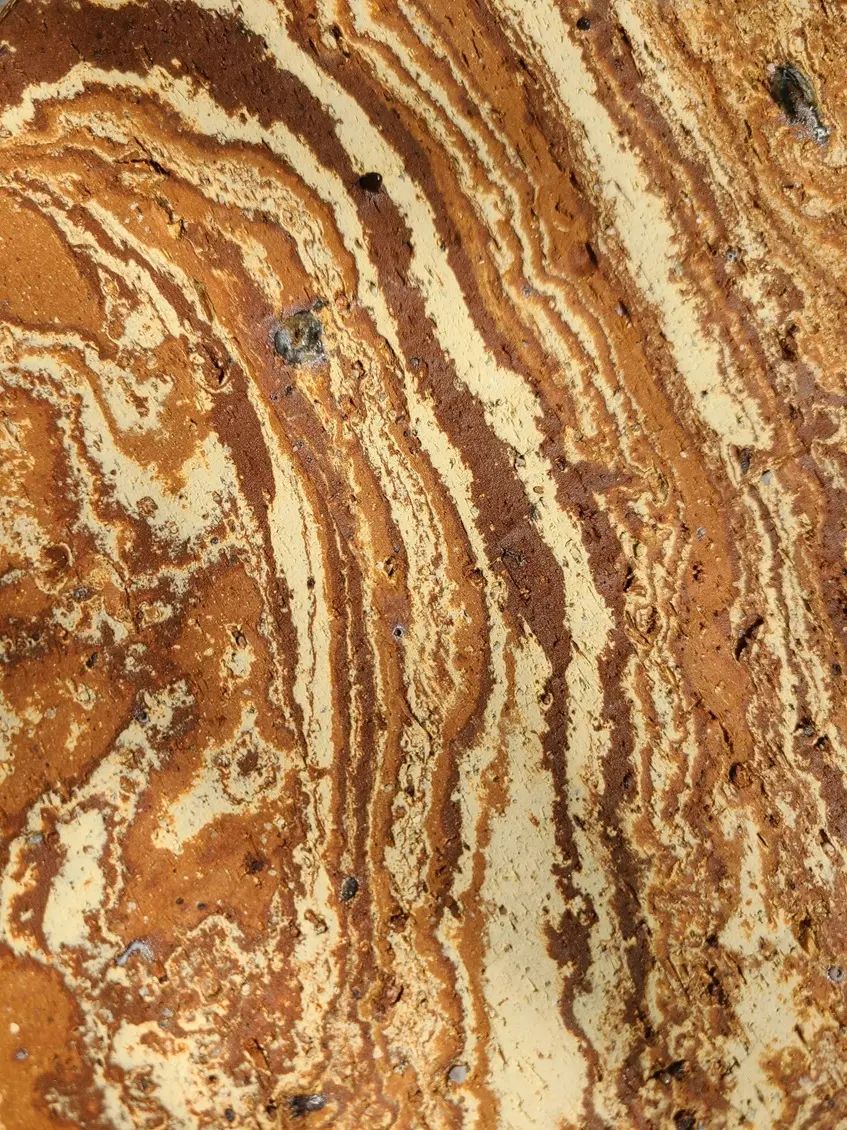
The ceramic sculptures feature local clay and what Nicholson refers to as salvaged materials, glass and ceramic pieces, gathered from the local Whaka Oho Rahi/Broad Bay area — the location of the Caselberg Trust residency.
Nicholson’s practice is grounded in environmental and cultural sustainability with te ao Māori and te taiao connections. A key feature of the artist’s work has long been site specific, with a focus on reusability; Ruapara, for example, means rubbish pile in te reo Māori, referencing the inclusion of found materials and recycled clay.
Small nuggets or shards of glass are speckled in forms that thematically reflect the night sky.
These materials are seen clearly in works titled after stars, like Whetū nui (2025), and more subtly in the two-part work titled after the moon, Marama (2025) and Marama hua (2025), for example. The treatment of the clay in these works is strongly redolent of the colour of the coastal areas in Whaka Oho Rahi/Broad Bay. Comprising a single disk and a small cut-out relief is a richly marbled combination of clay locations and associations — tactile and beautiful to look at.
(Amanda Shanley Studio)
In November 2025, 50 still life paintings by Eliza Glyn were shown at Amanda Shanley Studio.
Described by David Craig in the accompanying catalogue as a "tension of opposites", Glyn’s practice can be broadly divided into two bodies of work: the refined and spacious landscape and the "lively still life", as Craig puts it.
That exhibition in November featured an aesthetic and relational dialogue between Shanley’s and Glyn’s respective practices. The artists met over 15 years ago in Port Chalmers, where Shanley’s practice had a formative influence on Glyn.
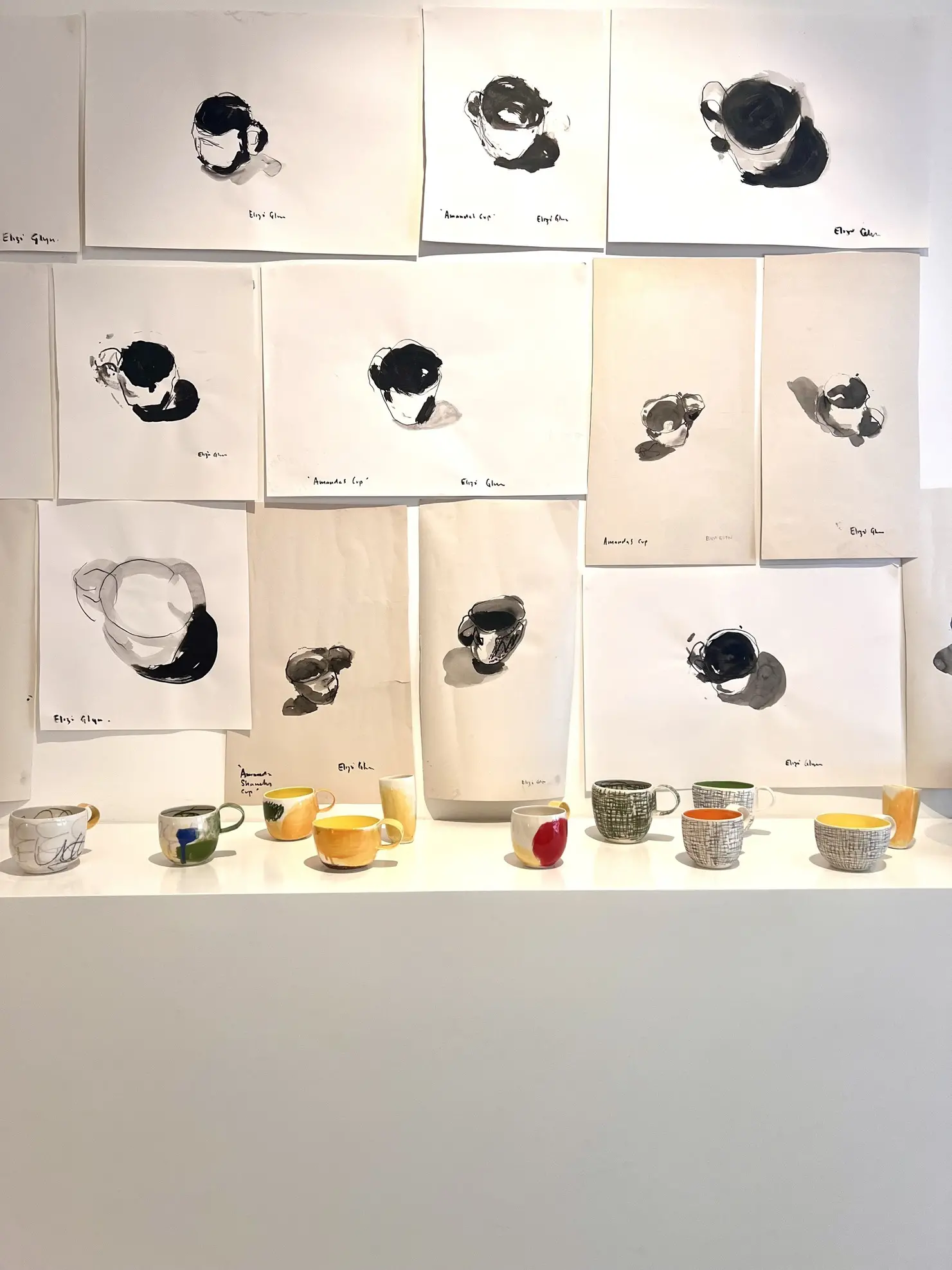
This month, an installation of 30 ink drawings of Shanley’s cups distils their conversation.
Glyn describes the work as a month’s cycle: the "same-but-different tea/coffee cup" and a gesture of friendship.
The work and installation is cohesive in the space with an aesthetic resemblance and acknowledgement of Shanley’s practice. Each work is unique and purposefully irregular.
Shanley’s minimalist yet energetic, colourful and finely wheel thrown ceramics are the focal point in this installation display. A series of cups and beakers cross-section Shanley’s signature work styles: the scribble, the landscape and the crayon. The exhibition space welcomes the visitor into an open plan working studio space and back garden: an integral and functioning element of Shanley’s practice.
(Pieces, Port Chalmers)
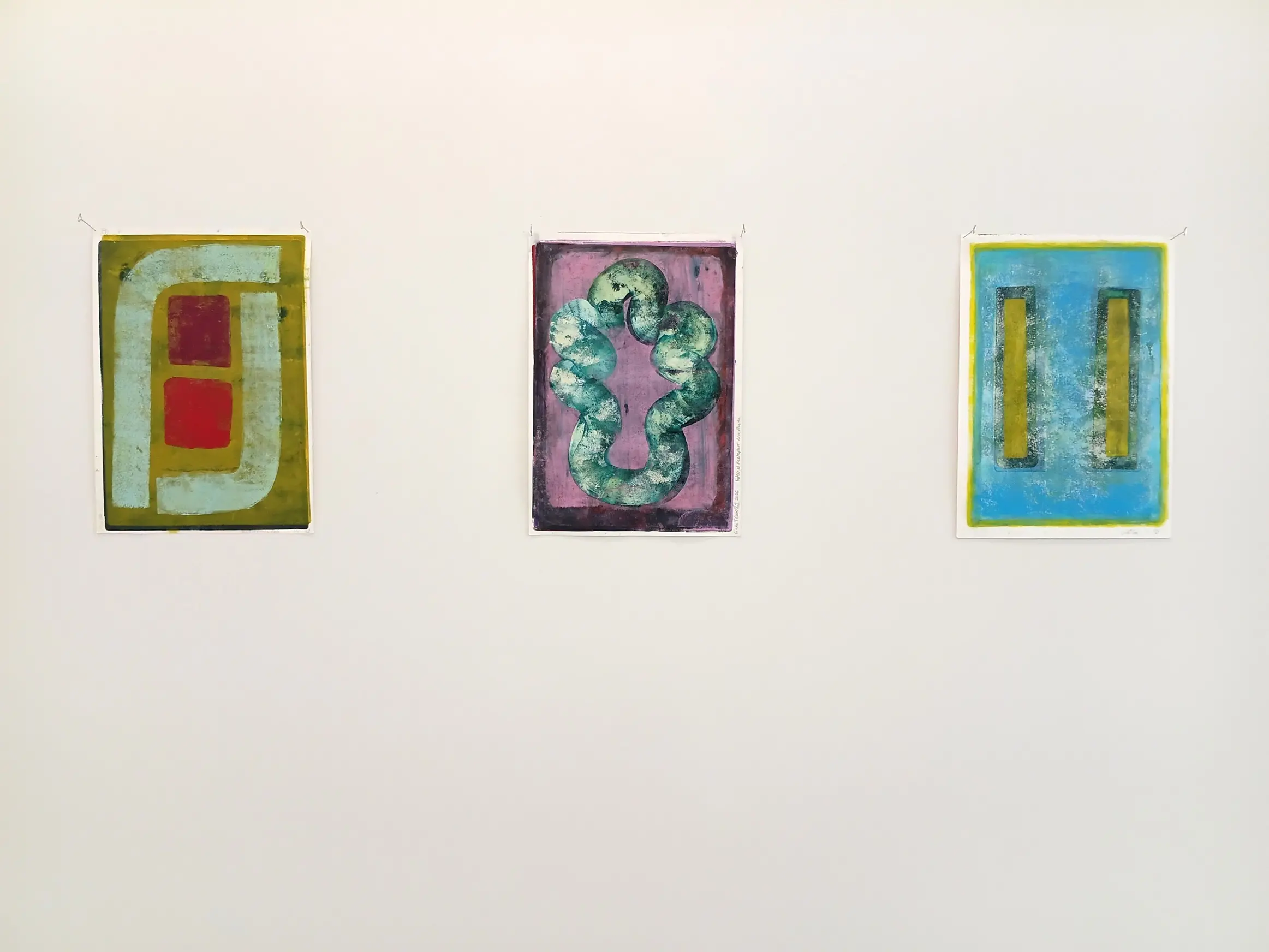
Comprising oil and mixed media painting as well as a series of monotype prints, Linda Cook’s exhibition "Arresting Matter" draws together an engagement with materials and colour in two quite distinct ways.
Referencing an established artistic process, "Arresting Matter" is described by Cook as being about the relational dynamic with materials in the studio.
This is a process that involves first being "stopped or held" by the found materials that make up the work, to an intentional form of re-engagement or co-operation with the materials, as Cook puts it.
The outcome of this process are works that are thickly layered, balanced and with a vibrant colour palette that seems to maintain an energetic synergy with earthy textured undertones.
The series of monotypes on show make a departure from the characteristically three-dimensional quality we see in Cook’s oil paintings. They are works that also make evident a sense negotiation that Cook talks about in terms of process: the viewer can see the discrete layers of colour that make up the work and the same uniquely unexpected approach to colour is equally strong. The series is titled "Internal Metaphors" and a calligraphic form of mark making is present among geometric forms.
A reflective text by Cook accompanies the show, describing the artist’s approach to making.
By Joanna Osborne