
PHOTO
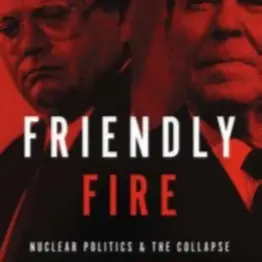
Gerald Hensley
Auckland University Press
What a wild roller-coaster ride New Zealand experienced during the years (1984-90) of the third Labour Government - politically, economically and diplomatically.
This book on nuclear politics and the collapse of Anzus is written by an insider.
Gerald Hensley had been head of the Prime Minister's Department in the National Government of Sir Robert Muldoon and continued to hold the post under David Lange's Labour Government.
The pressures for change built up during the Muldoon years could not be controlled after his electoral defeat in 1984.
New Zealand society became divided between the traditionalists and the radicals.
No common ground could be found between them.
Because Labour's managers were determined on profound economic change, diplomatic change tended to be left to a noisy minority within the party in the hope that economic change could be implemented without too much fuss. For a long time it was.
Many voters were heartily sick of the micro-management of the Muldoon years, so they elected a lawyer who was an advocate.
Mr Lange's enemies branded him a ''buffoon'' - the label used by Australian Prime Minister Bob Hawke. Muldoon had sneered at him as being ''as shallow as a birdbath''.
He could certainly seem to be both.
He spoke in an elliptical, imprecise, colourful and persuasive manner. Listening to Mr Lange could be very entertaining.
But such is not the language of diplomatic cables and harassed public servants seeking to ascertain his meaning.
The long and slow collapse of New Zealand's diplomatic and defence ties with the United States and Australia was bedevilled by misunderstandings.
They came to think of Mr Lange as unreliable, even a liar.
He endured trenchant criticism from his defence chiefs, whose loyalty to their overseas allies seemed to preclude loyalty to their elected leader.
The defence establishment leaked like a sieve. He ended up describing them as ''geriatric generals'' which did not soothe matters.
Because he was imprecise and unable to exercise discipline over his remarks, his espousal of the anti-nuclear policy of the Labour Party radicals damaged New Zealand's defence arrangements beyond repair.
The alliance that had been the cornerstone of New Zealand's defence for decades was destroyed. But the sky did not fall in on New Zealand as Mr Lange's critics had promised it would.
New Zealand remained a friend of the United States even though legislating against port visits by nuclear-powered and nuclear-armed ships.
Hensley gives the chief credit for this to American Secretary of State George Schultz, who persuaded President Ronald Reagan that defence and trade issues should not be confused.
So in spite of angry charges from within New Zealand that it was being bullied by the United States, that never happened.
The Deep Freeze base in Christchurch for United States activities in the Antarctic was not shifted, as had been widely feared. Normal life went on as usual.
Mr Lange's prediction that the two countries could continue ''as normal'' proved accurate.
By having his claim that New Zealand's anti-nuclear policies were ''not exportable'' proved over time, which had seemed a justifiable fear held by the United States, the tension has died away.
Eventually, it has not mattered to anyone. Hensley eventually lost the confidence of his Labour masters.
It is clear from his book that his heart was with the Americans.
He tried to see positives in David Lange, but clearly blames Mr Lange for what happened. It is surprising that he survived for so long.
His brother-in-law became president of the National Party; at the time of the 1987 general election, National campaigned on being pro-nuclear and restoring the Anzus Treaty, and lost in an even stronger Labour landslide than it had in 1984.
National's strategists told their leader, Jim Bolger, that the only way he could lose the 1990 election was to stay pro-nuclear, so he campaigned accepting the anti-nuclear legislation, and won.
Hensley is very good on the minutiae of the whole affair. He has done a great service for future historians with the detail he has provided.
Sir Walter Scott once said that ''60 years must pass before the record of political struggles mellows into history''. Hensley has waited only 30 years.
By doing so he has been able to interview those major players still living, and this is the great strength of his book.
More sympathy for the domestic predicament in which Mr Lange found himself would have been generous.
New Zealand witnessed the rare, perhaps unique, spectacle of a prime minister being deserted by his wife.
Naomi Lange would not follow her husband to live in the capital, saying she preferred to live in ''vulgar house'' in Auckland rather than Vogel House in Wellington.
So the prime minister was coping with all this international tension and pressure while living alone in an apartment.
But the main flavour of Hensley's book is the excitement - the hope and the fear. There was the Oxford Union Debate, in which Mr Lange famously riposted to one interjector that ''I can smell the uranium on your breath''.
How proud New Zealanders were to be represented on the international stage like this.
Then a band of French agents blew up the Greenpeace anti-nuclear vessel Rainbow Warrior, killing a Portuguese crewman, and allowing themselves to be caught.
A Russian cruise liner was run aground in the Marlborough Sounds, giving Mr Lange the chance to say that ''New Zealand is the first country to sink a Russian ship since the Second World War''.
How entertaining it all was. Much of the humour as well as the drama is recorded by Hensley.
This is a very satisfactory attempt to revisit a famous period of our history.
Oliver Riddell is a Wellington writer.