
PHOTO
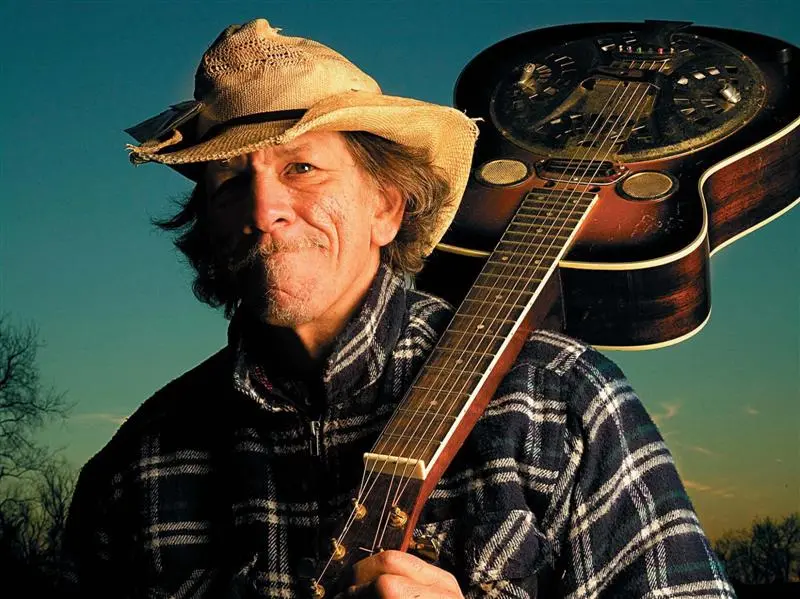
Oh, the things Watermelon Slim, aka Bill Homans, has done.
A Vietnam veteran, truck driver, sawmiller, collection agent, funeral officiator, political activist, the guitar-slinging, harmonica playing Slim doesn't just sing the blues; he's lived them.
Having first visited New Zealand in 2006, four years after he suffered a near-fatal heart attack, Slim is returning this way for a tour that includes shows at Coronation Hall, Dunedin, on Friday, April 12, and the Luggate Hotel on Saturday, April 13.
Born in Boston, Slim was raised in North Carolina where he was introduced to the blues through a housekeeper who used to sing John Lee Hooker songs. However, his early musical expression came in the form of church music.
''I grew up in the Episcopalian Church,'' Slim explains via email from his home in Oklahoma.
''By the time I was 7, I knew I could not only sing the liturgy and hymns but I could sing harmony, instantly, to anything I was familiar with. I was also going to a Catholic school and was part of the glee club there. My first big solo performance was as a boy soprano soloist singing the Bach-Gounod variation of Ave Maria. I've been performing well-nigh all my life.''
Having entered college on a fencing scholarship, Slim left early when he enlisted and headed to Vietnam. It was while he was laid up in a Vietnam hospital bed that he taught himself guitar.
''As I grew up, there was never anyone to teach me how to play a left-handed guitar. It's an oft-told story, but I started playing left-handed slide guitar on a right-handed guitar - on my lap, backwards - in Vietnam, with a $5 balsa-wood guitar this old Vietnamese commissary person had in his little booth where he did sewing work.
''I started playing with a Zippo cigarette lighter for a slide. As I fiddled with it, I was hearing things that began to sound like Mississippi Fred McDowell or John Lee Hooker. So I've been playing for 43 years now. I'm almost a master of my own style by now, at least.''
Returning home a fervent antiwar activist (he remains a member and supporter of Vietnam Veterans against the War), Slim first appeared on the music scene with the release of Merry Airbrakes, a 1973 protest-tinged album featuring tracks Country Joe McDonald later covered.
''I am also a member of the Veterans for Peace Actions Committee. I was arrested at the White House in 2010 and 2011 protesting the Iraq and Afghanistan wars ... I do my best to help ensure justice for individual vets, and raise my voice with them against war - against, particularly, the American way of war - any time I get a chance.
''Every song I write comes from an integral way of looking at my life. Because I've actually lived the politics of social change, because I have been a revolutionary my entire adult life, rather than just reading about it, politics comes from the very same place as all those other things. Reading the newspaper ought to give every man and woman the blues so bad they'd figure out a way to stop it.''
Although Slim suffered a heart attack he continued to drive trucks for a living for another two years, transporting industrial waste ''for the lowest pay I'd ever worked for in trucking''.
''I gave my boss two weeks notice and took off with [his sometime band] The Workers on our first West Coast tour, for jack-diddly money. It was touch and go for a while.
''I had made my first national release, Big Shoes to Fill, two months before the heart attack, plus my first recording in 27 years back in 2000, called Fried Okra Jones, so I had already made several steps toward trying one more time to be a musician for my living.''
Having gained a bachelor's degree (journalism and history) from the University of Oregon and a master's degree in history from Oklahoma State University, Slim could have had a white-collar career, yet the man who got his nickname while farming watermelons in Oklahoma claims he could ''never be a capitalist''.
''I could never work to advance myself in the system. My degrees were largely the result of attempts to reinvent myself as something besides a labourer ... I just don't do well in offices, or teachers' conferences, or newsrooms. I'm known to be loud, opinionated and sweaty.
''Besides, with my face being pitted and craggy, I don't look middle class so I did not succeed in socialising myself into the middle class. That was never a problem as a trucker. It was honest labour, particularly household moving and sawmilling, two jobs I held for a total of 13 years or so.''
Now a full-time musician who has released five albums, Slim still doesn't make a great living, ''and I have zero health benefits - if I get real-bad sick or injured, that's all, folks ...''
His career might not be defined by financial success, but Slim has found favour with critics. Industry awards include the 2007 Independent Music Award for Blues Album of the Year, the Blues Critic Award, the 2006 and 2007 MOJO Magazine Blues Album of the Year Award and Canada's Maple Blues Award for International Artist of the Year (2007), an award won by notables such as B.B. King, Duke Robillard and Gregg Allman.
''I have told people that I write about three main themes in the blues: work; long-term, bittersweet life relationships; and mortality,'' Slim explains, adding his two marriages have been failures.
''I have rarely chosen women to have [good] relationships with.
''As Jimmy Buffett wrote in He Went To Paris, as an old man describes his life: 'It was most of it magic, and some of it tragic, but I had a good life all the way'.
''I'm still a fierce, free man. I will continue to write the highs - and if I must, the lows - into song.''
See him
Watermelon Slim performs at Coronation Hall, Dunedin, on Friday, April 12, and the Luggate Hotel on Saturday, April 13.