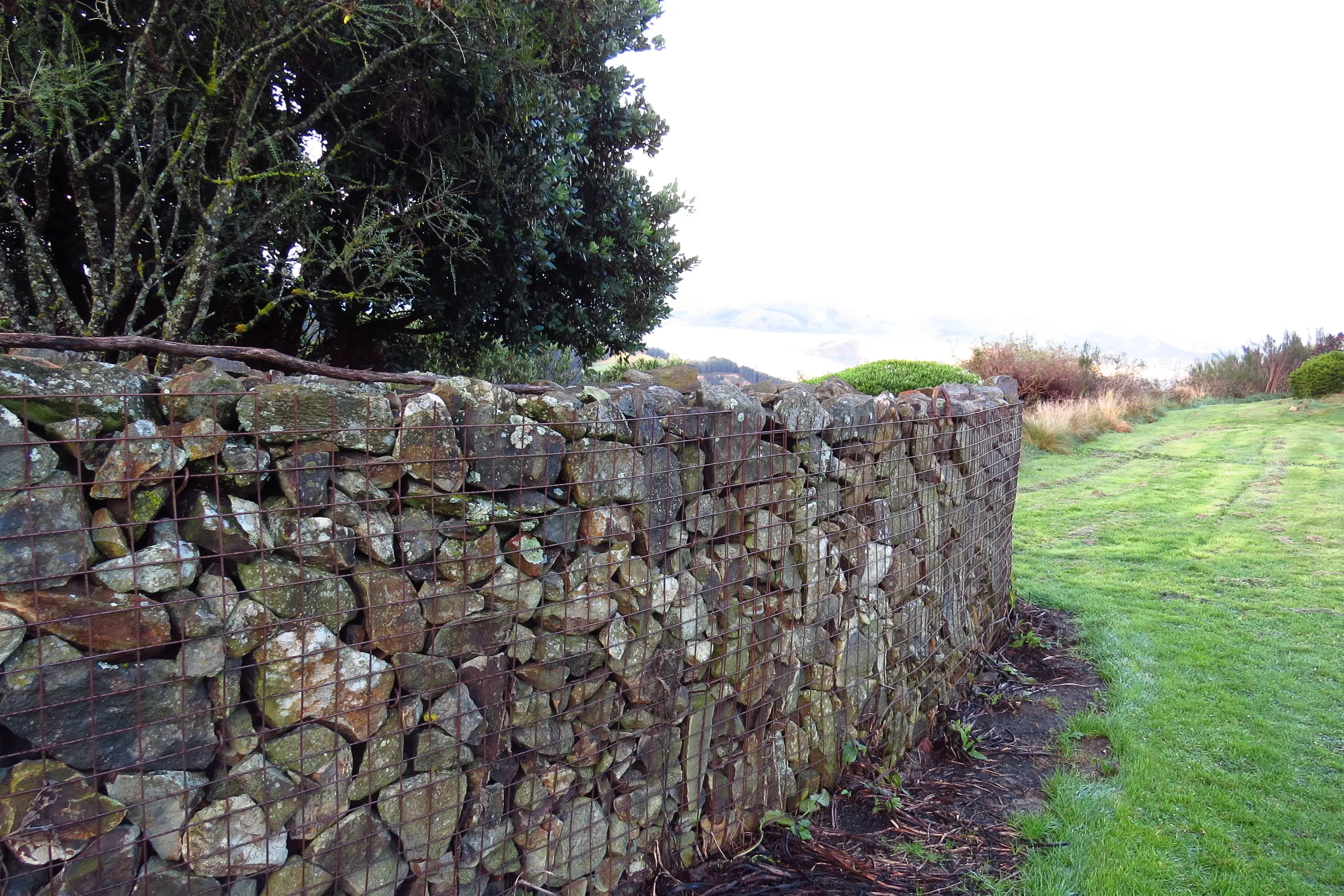
Launched earlier this month at the Otago Polytechnic, designer Mick Abbott’s latest book Designing with Nature has me thinking about the possible nature benefits of dry stone walls in gardens. In his book, Abbott describes the dry stone walls on his 45ha property north of Dunedin that were originally built from stones unearthed along with the roots of felled trees in the 1870s. Stones can be usefully introduced into the garden landscape too in many ways — in the form of walls, rockeries, paths, liners to ponds, stone banks or even natural swimming pools. In particular, dry stone walls and stacked rocks reintroduce a missing habitat into the urban setting by mimicking wild rocky outcrops. [Missing Credit]Self-established drooping spleenwort ('Asplenium flaccidum') on a dry stone wall. Photo: Maureen Howard Like Abbott, stonemason Ken Mitchell near Oamaru, values the way natural local materials can be used to make structures useful to us. Mitchell is more at home working on larger properties where stones are plentiful. He makes it sound easy, “it’s a matter of just picking them up from the field and putting them to use”. [Missing Credit]Ken Mitchell, stonemason. Photo: Supplied Dry stone walls are built from natural stones without cement, glues or mortars. To create the two sides of the wall “you fit and stack the stones so that they interlock and are pinned with little bits of stones so that they don’t rock”. The centre of the wall is filled with hearting — smaller stones — that are carefully slotted into place to pin it together, he says. Providing structural complexity with natural materials creates new habitat for organisms to move in. In particular the crevices between stones in dry stone walls and rock stacks help organisms get a hold. Here, invertebrates and skinks may find a home or refuge from predators, while over time soil accumulates when mosses and later ferns establish. AALBERT REBERGENNew Zealand Grass Skink (Oligosoma polychroma), Waikouaiti, Dunedin. Photo: Aalbert Rebergen Unfortunately mice as well as cats are significant predators of skinks and may make a beeline for your wall or rock stack. Urban ecologist Prof Yolanda van Heezik from the University of Otago, who has been involved in the development of the Aotearoa Design for Urban Biodiversity Guide, says “stone walls are fantastic places for things like skinks because they provide that wonderful temperature buffered habitat and opportunities for basking, but if the gaps are big enough that mice can get in, then it still makes them quite vulnerable to predation”. This may be critically important for rare lizard translocations. In a study by Ox Lennon in 2023, then a Victoria University master’s student, he modelled different sizes and configurations of rocks to design rock piles that could protect small skinks from mice. In our own gardens, the New Zealand Herpetological Society advises that we can help protect skinks by placing mouse traps off the ground and out of reach of ground skinks, encouraging thick ground cover for skinks to hide in, discouraging cats from visiting and confining our own feline indoors. Whether you hire a stonemason or pile a few rocks together yourself, it’s likely your stacked rocks will in time contribute to the biodiversity of your garden. And as a natural material, when its role as a wall is over, it can return again to the earth. Further from the house, native forest on Abbott’s property has been naturally regenerating over the last few decades and in some places the stone walls are tumbling to become part of the forest again. I’m reminded that nature is cyclical and reuses natural elements many times over. [Missing Credit]Mick Abbott by a dry stone wall in the garden. Photo: Maureen Howard Abbott reminds me of our connection to that process. “While we might see a stone wall solely as a physical object, it is equally the expression of a living process in which people and landscape have made their way together.” (Abbott, 2026, P. 122, Designing with Nature. WildLabs) Aotearoa Design for Urban Biodiversity Guide can be viewed at www.aotearoabiodivercity.org/aotearoa-biodiversity-design-guide Rock Recommendations In your garden, stack rocks carefully, or keep low, in case they fall unexpectedly. When tramping, don’t create rock stacks or cairns that may confuse other walkers. Don’t move or shift rocks you find, as you may be disturbing wildlife already living under and around those rocks.