
PHOTO
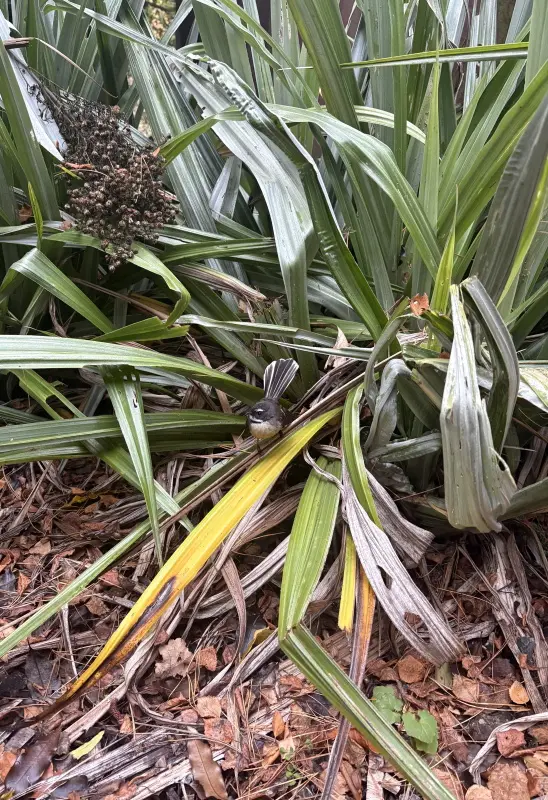
As our garden beds tuck themselves in for winter, we reach for our fluffiest coats.
Summer’s colours have softened as the sun lingers low, taking its time to spill into the garden and warm the shadowed corners it once reached so easily. Growth has slowed, the soil has turned dark and spongy beneath our boots. Even the weeds seem to have lost their enthusiasm.
Then, with impeccable timing, the pīwakawaka bursts on to the scene, clearly missing the memo about slowing down. Its striking black and white plumage stands out against the muted winter garden colours, while the rarer charcoal black morph is an occasional surprise for those lucky enough to spot one.
Small, acrobatic and impossible to ignore, it dances through the air in looping zigzags and sudden turns, never still for long enough to truly settle. The moment a spade enters the soil, it’s there. Turn over a patch of earth, it watches. Pull a weed, it follows.
The pīwakawaka (New Zealand fantail) is one of Aotearoa’s most familiar native birds. Long before gardens, paths or wheelbarrows shaped the landscape, it moved through native forests, weaving effortlessly between branches and undergrowth in constant motion. The centuries may have passed, but the pīwakawaka still dances to the same rhythm.
In Māori tradition, the pīwakawaka features in stories that vary between iwi. It is closely associated with Tāne Mahuta, the atua of the forest and its birds, and in some traditions is regarded as a messenger between the spiritual and physical worlds.
For us gardeners here at the Dunedin Botanic Garden, it’s an unofficial supervisor with permanently expressive little eyebrows. While it plays no part in our work in a practical sense, its abrupt dance is impossible to miss, a reminder to slow down and notice the garden around us, where even the smallest details come alive.
The garden remains quiet, grounded and subdued, yet it is no longer silent in quite the same way. While our noses may be cold, the pīwakawaka ensures our spirits are anything but.
- Jess Freeman, Dunedin Botanic Garden