
PHOTO
Catalhoyuk is a remarkable early farmer town located on the Konya Plain of Turkiye. For a thousand years from about 7000 BC, it was continuously occupied, and as mud brick houses fell into disrepair, they were flattened and rebuilt so that the double-peaked mound reached a height of 20 metres.
Remarkably, there were no streets there, the houses were all attached to each other, and the only access was through the roof. Once down into a typical house, archaeologists are confronted by several rooms often with dramatic wall paintings. Some of these depict men out hunting deer and wild cattle on the surrounding plain, dressed in leopard skin kilts. There is another that portrays an image of the settlement with its crowded houses, to a backdrop of the volcano Hasan Dagi erupting. This was a source of obsidian, the stone treasured for its razor sharp edge when flaked, that was traded over great distances. There was a bull cult, for shrines within the houses were embellished with their horns.
Back in the 1970s, a renowned social anthropologist warned we archaeologists that there was no way in which we could realistically reconstruct the social organisation of an extinct society. The facts, he went on, were forever concealed in a black box with no key. He was not then aware that the study of the human past would enter a new and exciting phase with the recovery and analysis of ancient DNA.
At Catalhoyuk, the dead were buried in their homes, as it were, under the floor boards. A recent study has pored over the skeletons of 131 ancient inhabitants, which were interred in 35 houses. The authors have found that over several generations, females continued to live in a given house, while males moved out into other homes. Moreover, when buried, girls were regularly interred with more mortuary offerings than boys. It is apparent that this was a matrilocal society in which females were prominent.
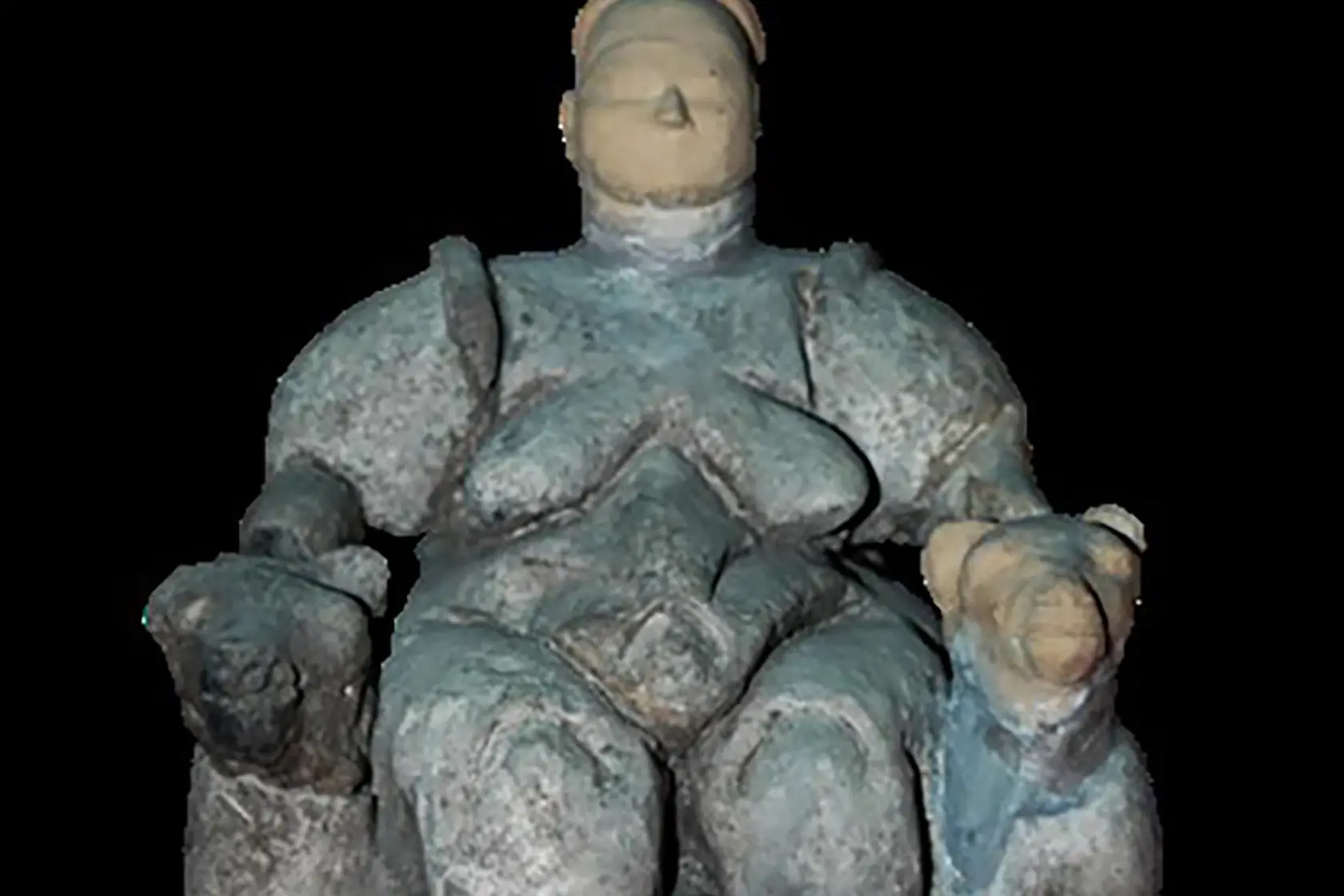
On a wider horizon, other farmer communities in Europe tended to be socially dominated by men but not so at Catalhoyuk. Indeed, one of the best known figurines from this site portrays a seated woman giving birth. What better way of emphasising the central importance of women over the 50 or so generations that lived there?