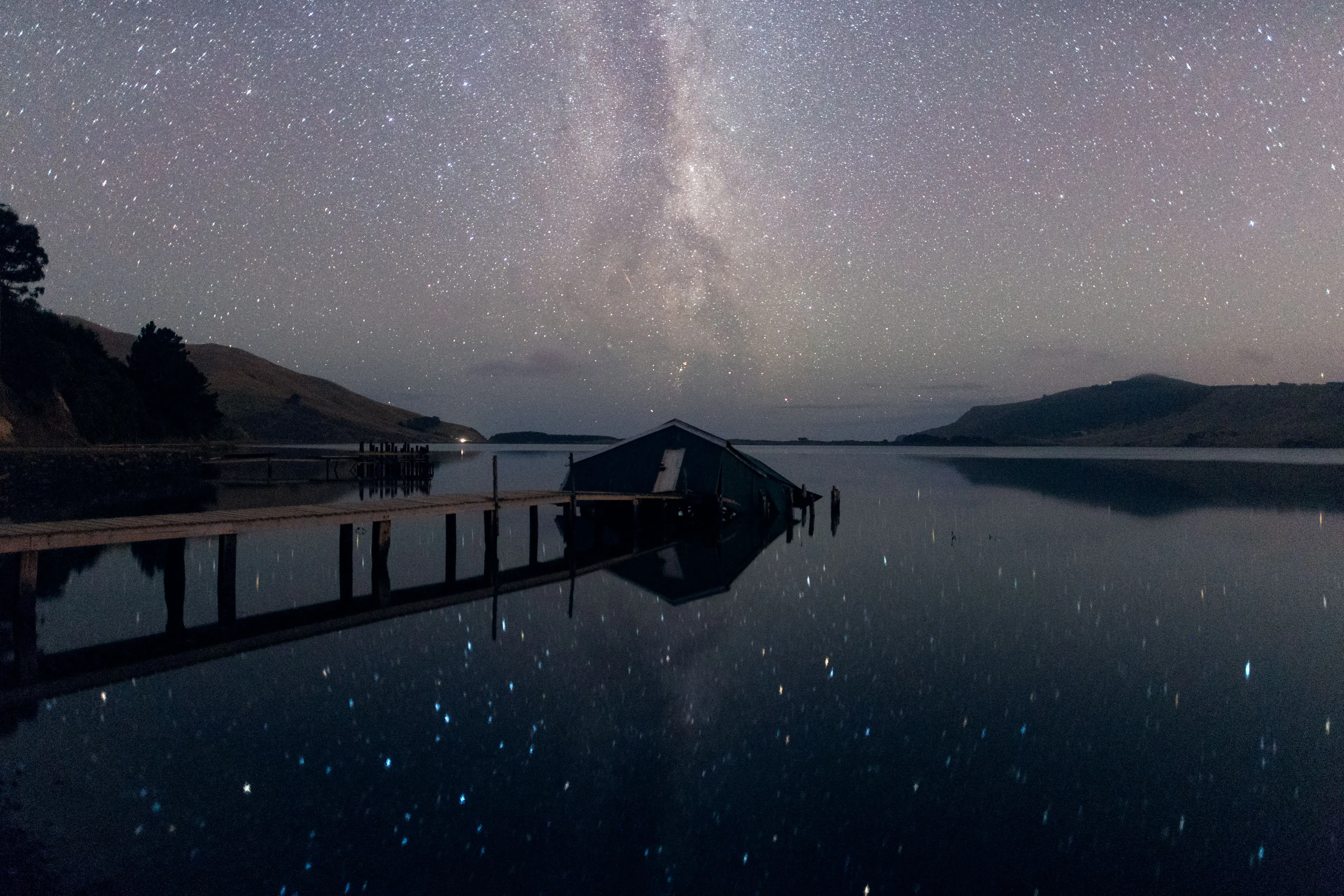
For generations, an old boatshed stood at the edge of a tidal inlet on the Otago coast. Then a storm put it down into the water and there it stayed, for a few weeks, half-sunk, its roofline settling into its own reflection. Then it disappeared forever. The strange thing is that this is when people fell in love with it. On clear nights the Milky Way stood directly above. The inlet went still and every star was doubled, thousands of small lights appearing in the dark water beneath the hull. I have been thinking about that shed since I spoke at Tony Harris’s funeral last week. For more than a decade my column ran alongside his. For some of them I was, on paper at least, his boss, though anyone who knew Tūhura Otago Museum understood that Tony didn’t work there so much as belong to it. Tony was the world authority on our spider-hunting wasps and the author of some fifteen hundred Nature File columns. He carried his copy to the newspaper by hand, in an envelope, long after the rest of us had surrendered to the screen. He knew rather than searched. He belonged to a vanishing kind. Since the funeral I have kept coming back to a question I suspect Tony might have regarded as unnecessarily grand: what remains after someone who has spent a lifetime noticing things is no longer there to notice them? Astronomers are accustomed to delayed arrivals. Some of the light entering a telescope tonight began its journey years, centuries or even millennia ago. The source can change, or disappear altogether, while its light is still travelling. Tony left an extraordinary amount on the way. Generations will encounter it in museum dioramas, without knowing who helped make them. It is there in fifteen hundred columns, each recording something he thought worth noticing. And it is there in three small creatures, a butterfly, a fly and a wasp, which now carry his name. Perhaps that last part would have pleased him most. Not something enormous. Three small creatures. Look closely, Tony taught us. Don’t dismiss the small. Don’t assume the unnamed is unimportant. The boat shed went down in a storm. On still nights, it made us look at the stars twice. Tony Harris did much the same for the natural world. For more than forty years, he made us look twice.