Food hailing from the sunny Mediterranean coastline has been placed on a pedestal for decades.
For food writer and stylist Georgina Hayden it is not surprising given its versatility and mass appeal as well as its being seen as healthy and nutrient rich.
‘‘While I am no nutritionist, I have spent years working alongside teams of them and it is true that they consider food from the ‘Med’ as one of the healthiest, most balanced diets on the planet.’’
A diet rich in fresh fruit and vegetables, nuts, pulses and legumes is always going to be a good idea.
‘‘But food and eating in the Mediterranean is about more than that; it is about pride in weekly markets, respecting seasonality and searching for the best quality ingredients.’’
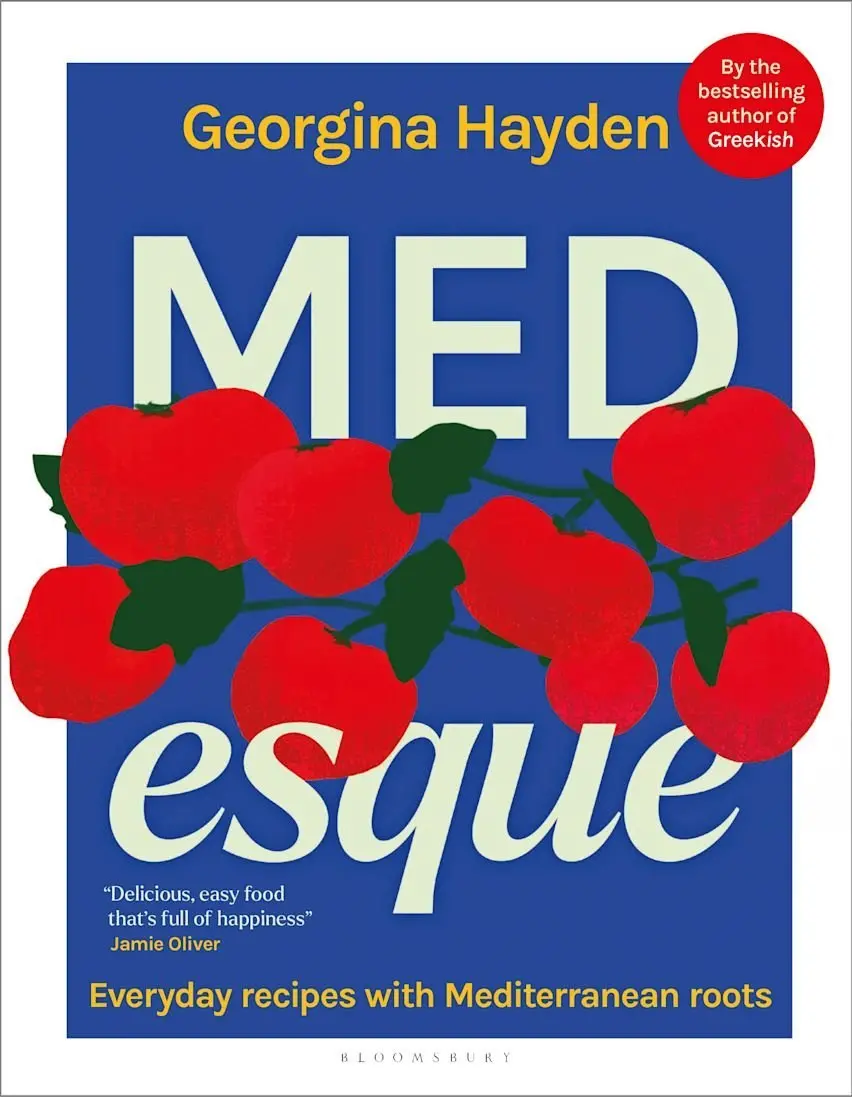
Hayden, whose family is from Cyprus, says her latest book MEDesque reflects exactly how she cooks, day in and day out.
‘‘I feel lucky to have been born into such a food-centric Greek Cypriot family, but the cuisine of my ancestors doesn’t define how I cook now.
‘‘Sure, it has shaped me, I’ve been lucky to learn techniques from my yiayias and my mum.
‘‘But I’ve also been fortunate enough to travel and cook with people far and wide.’’
As a result her tastes have changed and adapted along the way and she has also been influenced by the reality that life is busy.
‘‘I wish I could visit a market every week, choose the plumpest, ripest fruit, slow-cook beans whenever I fancied and make fresh bread every few days.’’
While she tries to incorporate these things into her everyday life whenever possible, she also needs to fit around the mundane, busy work and school days.
‘‘I need one-pan dishes that my children will eat . . . and effortless dishes if I am having friends over after a busy day at work.’’
Hayden firmly believes cooking should not feel like a burden.
‘‘The beauty of Mediterranean food is that it can be low key and simple but still packed with flavour. Of course, there are days when labouring over a dish is a joy.’’
So she has divided her book into chapters reflecting that — starting strong, weeknight wins ‘‘pasta party’’, the weekend, soups, snacks and sarnies, as well as sweet spot ‘‘creams can come true’’.
The book:
MEDesque by Georgina Hayden, Bloomsbury Publishing, $NZ59.99
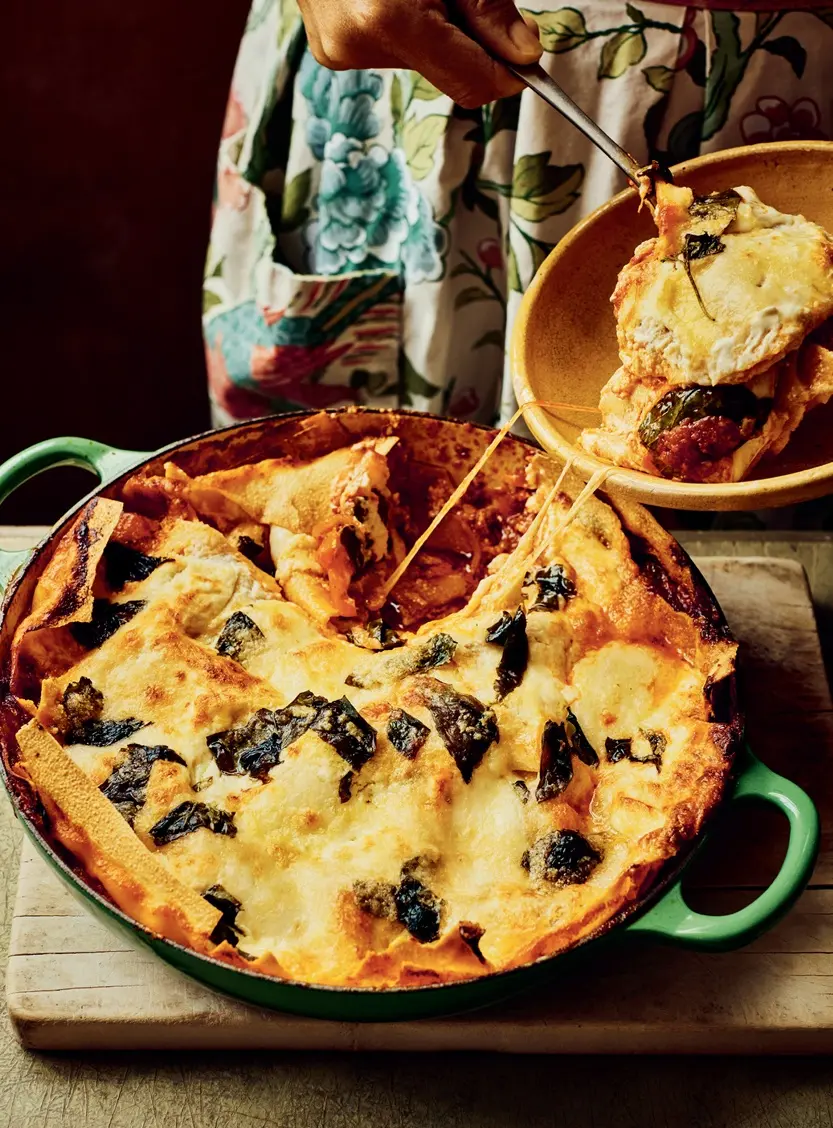
One-pan ’nduja, pepper and three cheese lasagne
A classic lasagne is a labour of love and, at the weekend, it can take a full day to make and assemble. Sometimes I crave that form of meditation; other times I need speed.
This is a one-pan number, but it doesn’t feel like a cheat, just a different version. ’Nduja provides fantastic depth of flavour, plus it takes a fraction of the time to cook.
Serves 4
Ingredients
2 red peppers
Olive oil
2 garlic cloves
2 red onions
½ bunch of basil
100g ’nduja
400g can of chopped tomatoes
250g mascarpone
100ml whole milk
60g Parmesan
250g fresh lasagne sheets
2 x 125g mozzarella balls, or
250g robiola, if you can get it
Sea salt and freshly ground black pepper
Method
Halve the peppers, remove the seeds and very finely slice. Set a large, ovenproof frying pan or shallow flameproof casserole over a medium heat and add a generous amount of olive oil. Fry the peppers for 15 minutes.
Meanwhile, peel and finely slice the garlic and red onions. Pick the basil leaves, set aside and finely chop the stalks. I like to do this as I go, adding the garlic, red onions and basil stalks to the pan as I slice to speed up the prep. Season well, then when the veg has started to soften and colour a little, spoon in the ’nduja. Fry for five minutes, until it has broken down and it releases its fiery red oil into the veg. Add the can of tomatoes and 500ml water to the pan. Increase the heat, bring to the boil, then reduce the heat a little and vigorously simmer the sauce for 10 minutes.
Meanwhile, stir together the mascarpone and milk in a mixing bowl. Finely grate in two-thirds of the parmesan, season well and beat together. When the components are ready, remove the tomato sauce pan from the heat.
Preheat your oven to 200°C. Spoon half the ’nduja sauce out into a bowl, then tear half the lasagne sheets into the pan with the other half of the sauce. Spoon just under half of the mascarpone sauce over the top, then tear over half the mozzarella and half the basil leaves. Evenly spoon over the reserved ’nduja sauce from the bowl. Then repeat with the remaining ingredients: tear over the remaining lasagne sheets, evenly spoon over the rest of the mascarpone sauce and tear over the remaining mozzarella. Finely grate over the rest of the parmesan, scatter with the basil leaves and drizzle everything with olive oil.
Cover the pan with a lid, or a sheet of foil, and pop into the oven for 15 minutes. Then remove the lid or foil, increase the oven temperature to 220°C and continue to bake for a further 18-20 minutes until golden and bubbling on top. Leave the lasagne to rest for at least 5 minutes before serving.
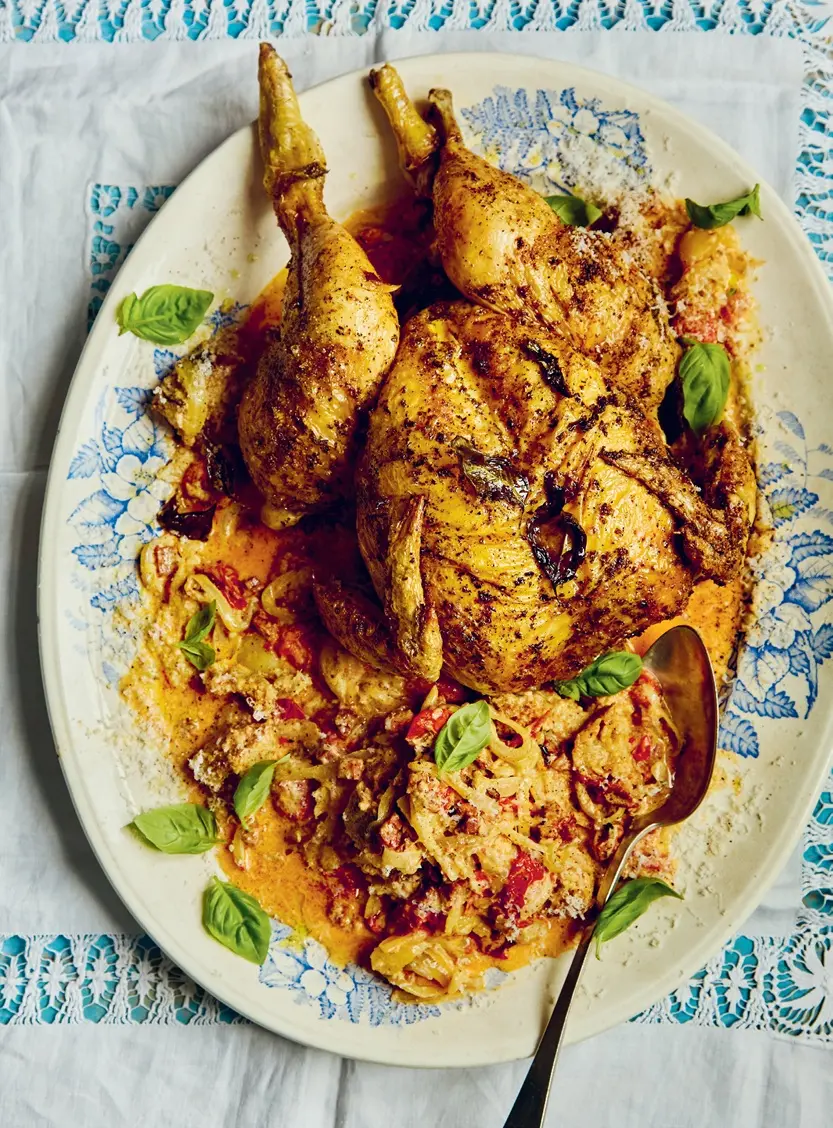
Spatchcocked chicken, chorizo, tomatoes and cream
One of my favourite recipes in this book at the time of writing (though I am fickle), so much so that I couldn’t pick only one picture of it; it had to have two just to show you its true magnificence!
Cooking the bread under the chicken to catch all those juices is an absolute game-changer. You will be snaffling off bits of that chicken fat-toasted bread as you are carving, because it’s completely irresistible.
Serves 4-6
Ingredients
1.8kg whole chicken, spatchcocked
(see recipe method for this, it’s easy, or ask your butcher)
½ tsp sweet smoked paprika
1 teaspoon dried oregano
Olive oil
2 onions
1 garlic bulb
125g cooking chorizo
4 slices of sourdough bread
400g cherry tomatoes
½ bunch of basil
150ml double cream
30g Parmesan
Sea salt and freshly ground black pepper
Method
Preheat your oven to 240°C. Remove the chicken from the fridge and spatchcock it, if that hasn’t been done already. To do that, cut down either side of the chicken’s backbone and parson’s nose with a pair of large, sturdy scissors or poultry shears and discard it (or save it for stock). Then lay the chicken out flat like a book, skin side up.
Press firmly on the breastbone with the heel of your hand to really flatten it out. Place the spatchcocked bird on a plate and rub with the sweet smoked paprika, oregano and a generous pinch each of salt and pepper. Drizzle with olive oil and rub it all in. Set aside while you prepare the rest of the ingredients.
Peel the onions and cut into thin wedges. Horizontally halve the bulb of garlic. Finely chop the chorizo, if it isn’t already. Tear the sourdough into large pieces and use it to line a large roasting tin. Scatter over the onions, garlic and chorizo, then top with the spatchcocked chicken. Dot the cherry tomatoes all around the chicken, then tear over half the basil leaves. Drizzle everything with olive oil, season and pop the tin in the oven.
Immediately reduce the oven temperature to 200°C and roast for around one hour. Halfway through, baste the chicken if possible with any juices. After an hour, the skin should be crisp and the veg and bread gnarly. Carefully lift the chicken on to a plate or tray and leave to rest for a few minutes.
Meanwhile, carefully remove the garlic bulb halves from the roasting tin, squeeze out the cloves and discard the skins, returning the roasted garlic to the tin. Pour in the cream and mix everything together, breaking up the rich, chewy sourdough as you go. Finely grate in most of the parmesan and stir. Either return the chicken to the tin, or spoon the bread sauce on to a platter and top with the chicken.
Finish by grating over the remaining parmesan then scatter with the rest of the basil leaves.
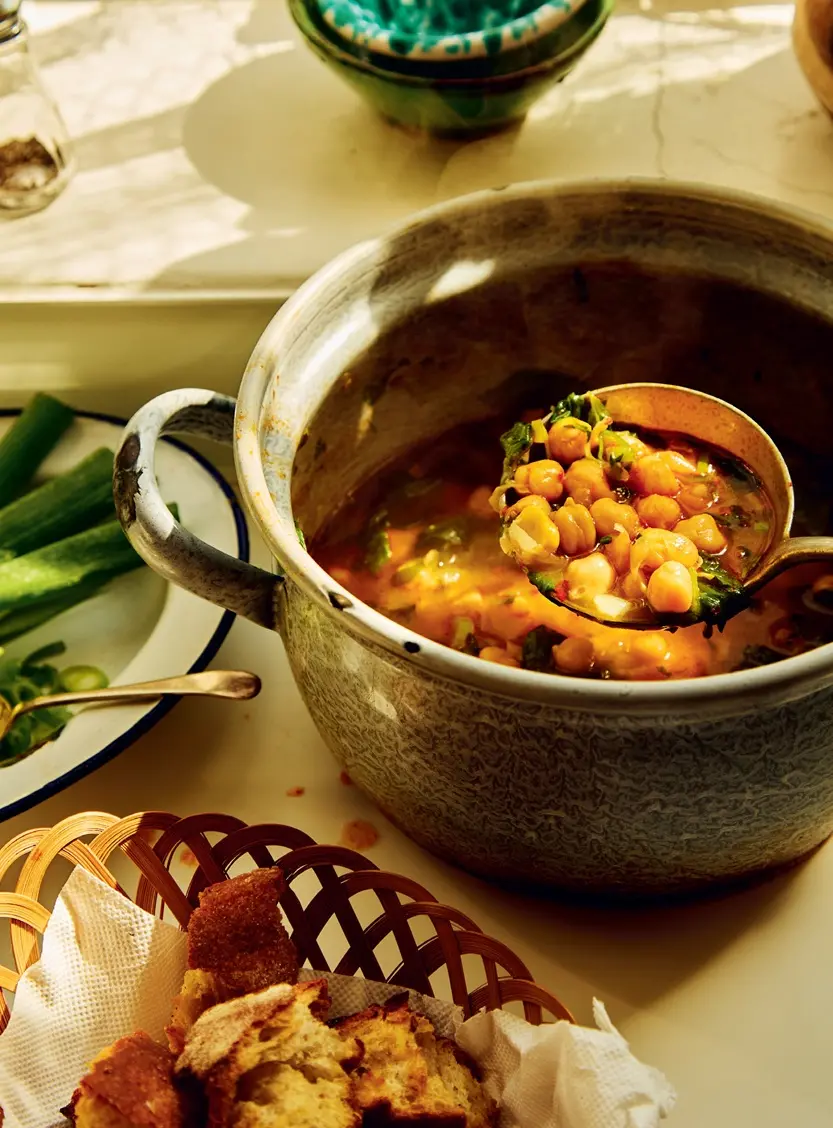
Lablabi party: chickpeas and toast
Traditionally, this would be a Tunisian breakfast, not a million miles away from one of my favourite dishes, Egyptian ful medames. And if you think pulses are an odd choice at breakfast, just think of baked beans in a tin, but without the added sugar. It makes an incredible start to the day, packed with protein.
Here, I’m proposing it as an evening offering. You make a big pot of delicious flavoursome chickpeas and lay out a spread of accompaniments: pickles, olives, capers, boiled eggs... Each person jazzes up their own bowl however they like for a fun dinner, really nourishing, healthy and delicious at the same time. I’ve also heard stories of Tunisians eating this when they get home from a night out.
In Cyprus, we have avgolemoni for the same purpose, served in bowls at a handful of late-night cafes at 2am. So you could use it in that way, for a crowd after a night on the tiles, if you want. A big bowl of these chickpeas will always sort you out.
Serves 4
Suitable for VG, DF, GF
Ingredients
2 x 570g jars, or 3 x 400g cans, of chickpeas
1 ciabatta, or baguette (gluten-free, if needed)
2 tsp cumin seeds
1 tsp coriander seeds
Extra virgin olive oil
3 garlic cloves
1 tsp Aleppo pepper
½-1 Tbsp harissa, plus more to serve
1 bunch of flat leaf parsley
½ bunch of coriander
1 bunch of spring onions
120g baby spinach
2 lemons
Sea salt and freshly ground black pepper
Other serving suggestions
Capers
Pitted olives
Pickles
Boiled eggs
Method
Preheat your oven to 220°C. Start by simmering the chickpeas. Empty the jars or tins of chickpeas into a large saucepan and top with 750ml water. Bring to the boil over a high heat, then reduce the heat to a simmer and leave to gently bubble away for 15 minutes while you get on with preparing the rest of the ingredients.
Tear the ciabatta or baguette into 3cm-4cm chunks and spread them out on a baking tray. Crush the cumin and coriander seeds a little in a mortar and pestle. Drizzle the torn-up bread with olive oil, then sprinkle over most of the crushed spices. Season well and toss everything together, then massage in the flavours and spread the bread out into an even layer.
Transfer the tray to the hot oven. Bake for 8-10 minutes, until the bread is golden and evenly toasted. Remove and set aside to cool.
Meanwhile, peel the garlic, place in a mortar and pestle with a good pinch of sea salt and bash until creamy. Add the Aleppo pepper and crush that in, then mix in the harissa and 2 tablespoons of extra virgin olive oil. Get the rest of the toppings ready: finely chop the parsley and coriander. Trim and finely slice the spring onions.
When the chickpeas are ready, stir in the garlic-harissa paste, the baby spinach and most of the chopped herbs and spring onions. Squeeze in the juice of one lemon and season to taste.
Set up the table for your chickpea party as a big spread: divide the toasted bread between the serving bowls. Place the leftover toasted spices in a small bowl and take to the table along with the jar of harissa with a teaspoon and a bottle of extra virgin olive oil. Then any extra toppings you want to include: a bowl of capers and olives or pickles, boiled eggs if you wish. Then ladle the hot, brothy chickpeas into each bowl, top with the remaining chopped herbs and spring onions and let everyone pimp their chickpeas as they wish.