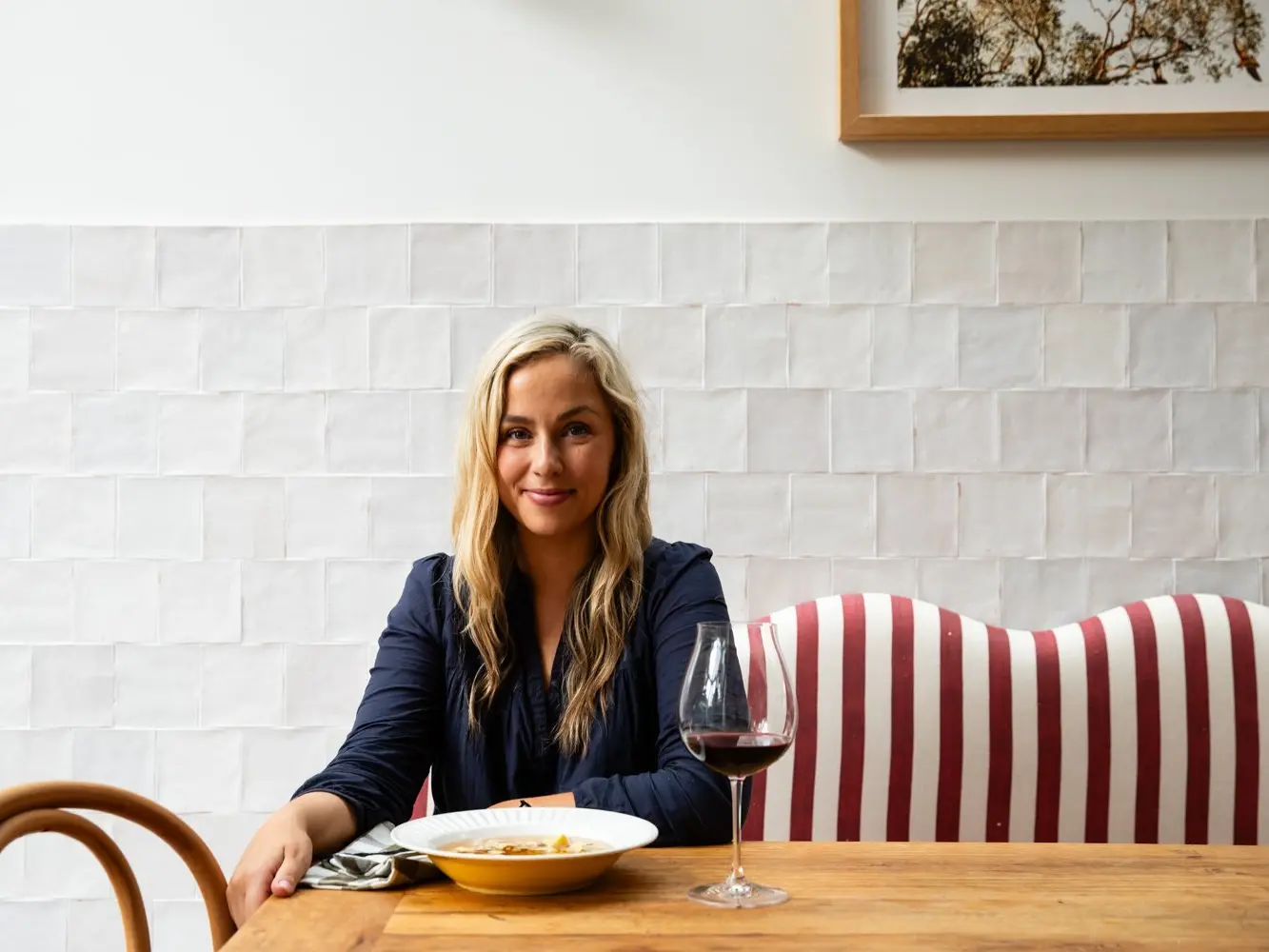
Elizabeth Hewson decries perfection when it comes to simple, comforting family cooking.
The recipe writer, author, creative, founder of #SaturdayNight Pasta and mother of two small children lives in Sydney and has just published her third book Home Food.
‘‘Home food isn’t about impressing anyone. It doesn’t chase trends, viral moments or complicated techniques. It’s not performative and it’s far from perfect.’’
For Hewson, while the food may be different for different people, the feeling it ignites is the same: comfort.
‘‘Comfort doesn’t necessarily mean heavy, cheesy, creamy food, but the kind of nourishment that sparks the feeling of home. It’s delicious and satisfying in a way that goes beyond taste.’’
Her aim is to take the pressure off the home cook so they can stop worrying about the potatoes being the same size or that the ‘‘finely diced’’ onion is roughly hacked.
‘‘This is where the magic happens — in the imperfection, just like in life. Despite the trending, attention-grabbing recipes filling our feeds these days, I’m willing to bet the food you eat most often — and crave — is a far cry from the picture-perfect recipes.’’
If there’s ever a moment that drives this point home, it’s cooking in the thick of life, she says.
‘‘You’re running late, juggling appointments, pickups, errands, remembering to call your mother. Tantrums are brewing, distractions are everywhere. Steps are skipped, instructions aren’t followed, ingredients go missing, things get burnt, timing’s off — and yet, somehow, dinner still makes it to the table.’’
So Hewson believes the only way to hold on to the joy of cooking is to let go of the pursuit of perfection.
‘‘Cooking at home should be flexible. It’s about adjusting, making do, embracing the pandemonium. It doesn’t need to be new or life-changing, it just needs to be delicious and done.’’
She also gets how sometimes the hardest and most time-consuming part of cooking isn’t the cooking itself — it’s deciding what to make. So she organised her book by what a person’s mood or situation calls for.
‘‘Throw together meals for long-energy nights, realistic weeknight dinners, midweek apostasy, one and done dishes and pottering recipes for slower days ... and puddings, because life is for living.’’
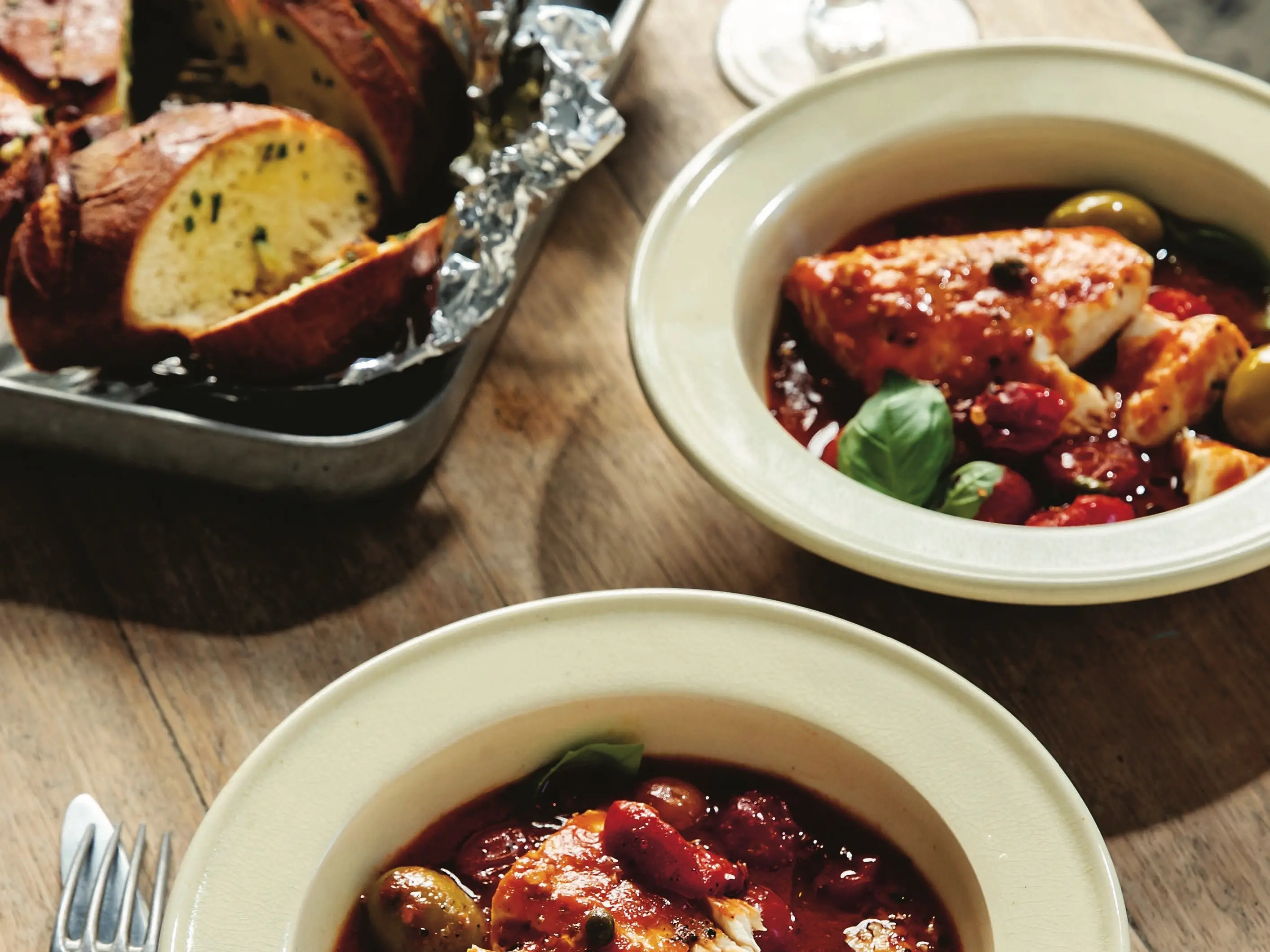
Fish puttanesca with garlic and chive bread
This is a one-pot fish dish with all the punchy, briny flavours of a puttanesca anchovies, olives, capers, chilli and a good hit of garlic, only here, they’re wrapped around fillets of fish instead of pasta. Like puttanesca, which was famously thrown together from pantry staples, this comes together with little effort but delivers big on flavour. A side of garlic bread to mop up the sauce is non-negotiable for me.
Serves 4
Ingredients
3 Tbsp olive oil, plus extra for drizzling
4 garlic cloves, finely chopped
4 anchovy fillets
pinch of dried chilli flakes (optional), plus extra to serve
⅓ cup (80 ml) dry white wine
1× 400g can cherry tomatoes
200g whole cherry tomatoes
½ cup (90g) Italian black or green olives, pitted
2 Tbsp capers in vinegar, drained
½ cup (about 20g) basil leaves, plus extra to serve
½ tsp caster (superfine) sugar
4× centre-cut fillets of firm white fish or pink-fleshed fish (trout or salmon)
1 lemon, for zesting
Garlic and chive bread
60g salted butter, at room temperature
4 garlic cloves, finely chopped
3 Tbsp (½ bunch) finely chopped chives
1 small loaf ciabatta or baguette (around 30cm)
Method
Preheat the oven to 180°C fan-forced.
In a large frying pan with a lid, heat two tablespoons of the olive oil over medium heat. Add the garlic, anchovies and chilli flakes, if using. Cook for 1-2 minutes, stirring to help the anchovies melt into the oil. Pour in the white wine and let it bubble, simmering for about two minutes until it starts to reduce. Add the canned cherry tomatoes, then rinse out the can with about ¼ cup (60ml) water and pour that in too. Stir in the whole cherry tomatoes, olives, capers, half the basil and the sugar. Taste and add a pinch of salt if needed. Cover and let it simmer for 10 minutes, stirring occasionally, until the sauce thickens slightly.
Meanwhile, for the garlic and chive bread, mash the butter, garlic and chives together in a bowl. Slice the baguette into 1cm pieces, stopping just before the base so the baguette stays intact. Using a teaspoon, smear the garlic butter between the slices. Wrap the bread in foil and bake for 15 minutes, until the butter has melted. Open up the foil slightly so the top of the bread is exposed and cook for a further five minutes, until golden and toasted.
Once the sauce has had its 10 minutes, nestle in the fish. Season each piece with salt, pepper and a lick of the remaining olive oil, then lay the remaining basil leaves over the top. Reduce the heat to low, put the lid back on and poach the fish gently for 6-8 minutes, until it is opaque and flakes easily with a fork. When the fish is ready, zest some lemon over the top and serve, spooning the sauce over the fish. Scatter with extra basil leaves, a pinch of dried chilli and a final drizzle of olive oil. Serve with the warm garlic and chive bread to mop up every bit.
Get ahead:
Prep the sauce without the fish up to three days in advance. The garlic bread can be made but not baked, and kept in the freezer for three months (bake from frozen for 25-30 minutes). When you’re ready to use it, bring the sauce up a simmer you might need to add a splash of wine or water before adding the fish and proceeding with the recipe.
Note:
If you’re feeding fewer people, just use two fillets, but keep the quantity of sauce the same. The dish will be saucier, but that’s not a bad thing, as you’ll soon taste.
Olive oil cake with lemon & thyme glaze
This olive oil cake is hard to beat. Irresistibly moist with a golden crust, it’s rich and flavourful and achingly simple. In fact, it’s about as straightforward as a cake gets. It suits any occasion, equally happy served for morning tea or rolled out for dessert (with the help of a little cream). It’s a cake that takes me through the seasons, as I serve it with the best fruit of the moment. Sometimes I’ll poach the fruit, other times Ill serve it fresh, always with a dollop of creme fraiche or thick Greek yoghurt.
Serves 8
Ingredients
2 cups (300g) plain (all-purpose) flour
1½ tsp baking powder
½ tsp bicarbonate of soda (baking soda)
1½ cups (330g) caster (superfine) sugar
½ tsp salt flakes
3 eggs, whisked
1 cup (250ml) full-cream milk
1 cup (250ml) mellow extra virgin olive oil (see Note), plus extra for drizzling
1 tsp vanilla bean paste
zest of 1 lemon
¼ cup (60ml) lemon juice
Lemon and thyme glaze
45ml lemon juice (from approx. 1 lemon)
115g caster (superfine) sugar
pinch of salt
2 Tbsp fresh thyme leaves
To serve
sliced peaches (or your favourite fruit)
creme fraiche or Greek yoghurt (optional)
Note:
Opt for a light and fruity oil here. Anything called mellow, light or classic will be fine.
Method
Preheat the oven to 170˚C fan-forced. Oil a 20cm round cake tin with high sides, then line the base and sides with baking paper. I like to have a 5-10 cm overhang of baking paper to encourage the cake to rise evenly.
In a large bowl, combine the flour, baking powder, bicarbonate of soda, sugar and salt. In another large bowl, whisk together the eggs, milk, olive oil, vanilla paste and lemon zest and juice. Add the dry ingredients into the wet ingredients and mix with a wooden spoon until combined.
Pour the mixture into your prepared cake tin and bake for 1 hour, or until the top is a beautiful golden colour and a skewer comes out clean. The cake sides will also be coming away from the tin. Leave the cake in the tin for 10 minutes, then run a knife around the edge and turn it out on to a cooling rack.
While the cake is cooling in the tin, mix the glaze together by combining all ingredients. Once you’ve turned the cake out, flip it right-side up on to a cooling rack and drizzle the glaze over the top. Leave to cool completely (for at least 1 hour) before slicing.
Serve with fruit and crème fraîche or thick Greek yoghurt, drizzled with olive oil.