

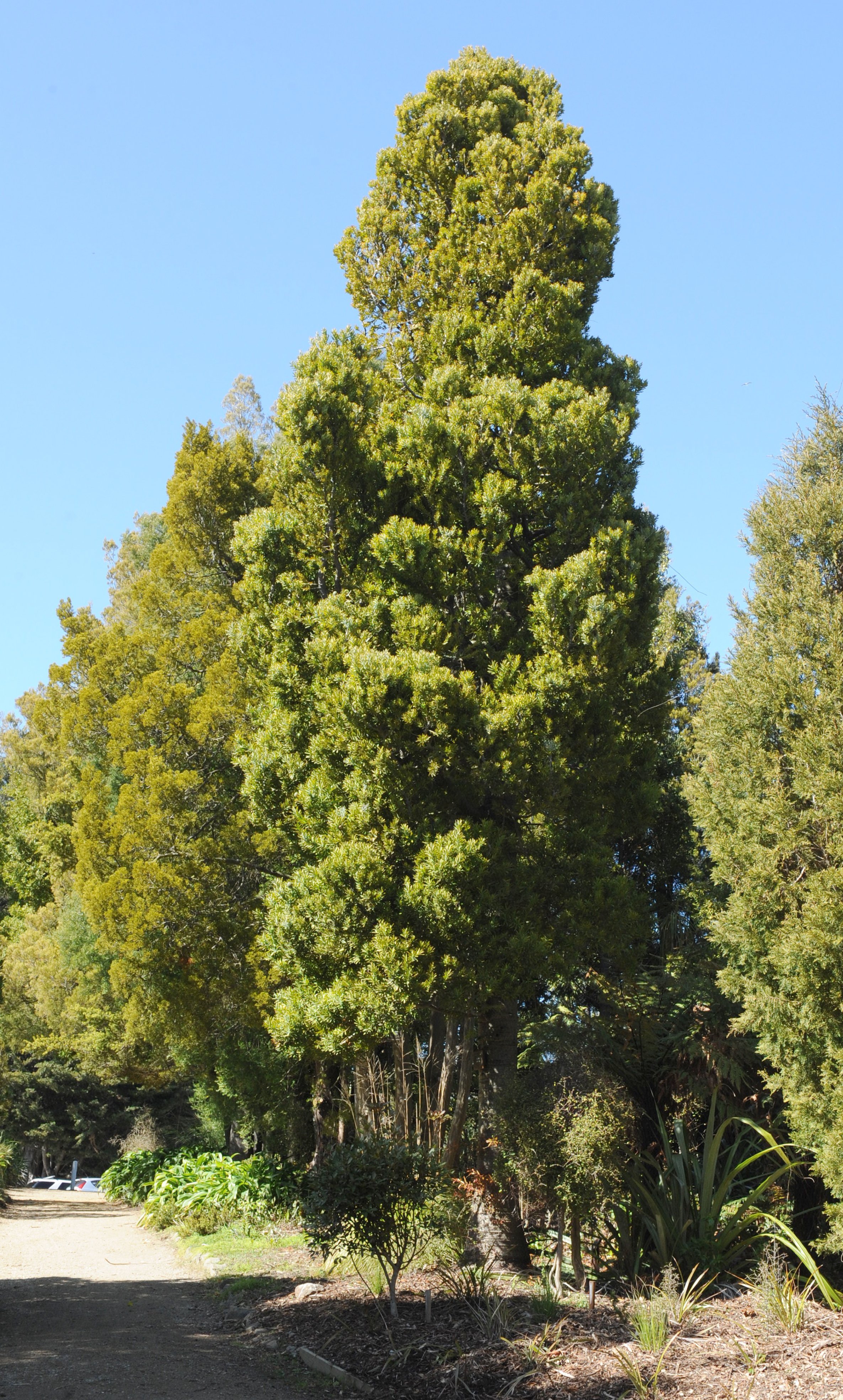
During Jurassic times this plant family was widespread, however their range has reduced significantly and are now only found growing wild in the southern hemisphere.

New Zealand has one surviving genus with a single species — the well-known Kauri, Agathis australis, which occurs naturally in the northern regions of the North Island.
Of this previously widespread family only three genera have survived, Agathis, Araucaria and Wollemia, between them comprising of about 41 species. Wollemia, a genus once thought extinct for over two million years, was discovered in 1994 by a field officer, David Noble growing in an isolated rainforest gorge at the Wollemi National Park. Fewer than 100 mature trees were found, a true survivor, but this also highlights just how close to actual extinction this genus really is. Today due to propagation the Wollemi pine, Wollemia nobilis is available commercially around the world but remains critically endangered in its natural habitat.
In New Zealand, the kauri is our largest native tree by volume of wood produced. They can grow to about 50m and the trunk can reach diameters of 5m. Mature kauri are estimated to survive to ages of up to 2000 years, making it one of the longest living tree species in New Zealand. A kauri of much smaller proportions can be seen in the conifer border of the Native Plant Collection.
Garden Life is produced by Dunedin Botanic Garden.
For further information contact Zane Gray.


