
PHOTO
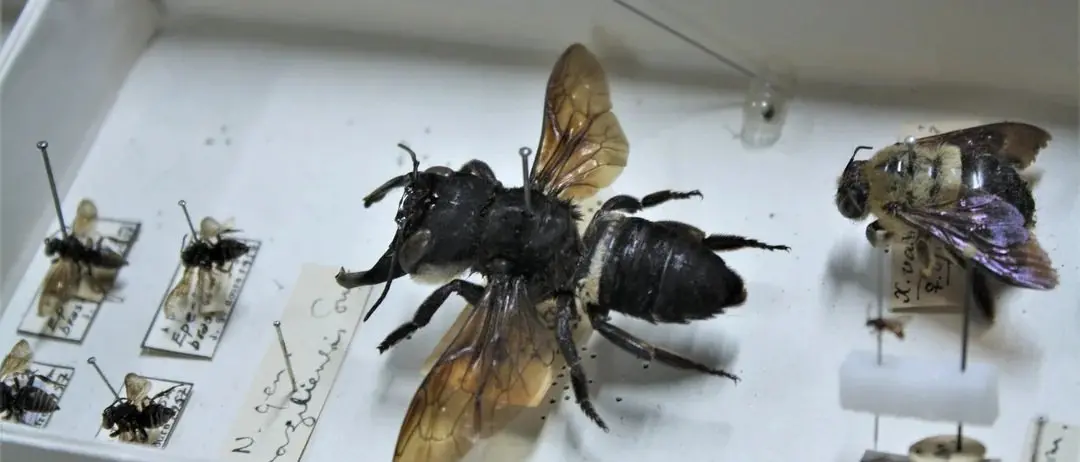
I was recently asked to name the world’s largest bee. This giant is Megachile pluto. It was discovered by the famous naturalist A.W. Wallace on the island of Bacan. In a tract of mountainous forests, he watched one fly around with a loud humming noise reminiscent of a giant dung beetle (Geotrupes sp.).

Wallace eventually captured some with his insect net. He donated specimens to the British Museum (natural history), where the specialist hymenopterist Frederick Smith said it was ‘‘the giant of the genus and the grandest addition that Wallace has made to our knowledge of the family Apidae [bees]’’.
Females reach 4cm long, with a wingspan of over 6cm. Males are smaller. The life cycle remained unknown for 122 years.
Finally, in 1981, US entomologist Adam Messer observed the giant bees building their nests within living colonies of the Southeast Asian termite Microcerotermes amboinensis, where the relationship is symbiotic.
The termites provide a stable micro-environment and provide protection from predators. Within the termite nest, female giant bees make galleries out of resin and wood fibres, which harden and prevent the entry of termites.
Wallace’s giant bee lives on only a few Indonesian islands, at low altitude in old-growth native forests. Sadly, it is under threat from deforestation by palm oil producers.