
PHOTO
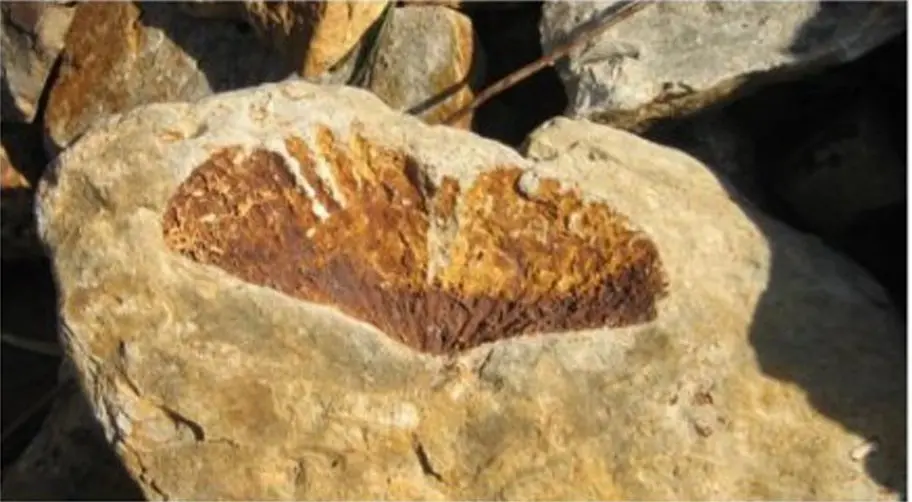
Long, long ago I was an undergraduate student learning about paleontology. One of the joys of studying fossils is that you discover kinds of ancient life that you had never heard of. I was particularly taken by the so-called “lamp shells”, scientifically known as brachiopods. That’s Greek for “arm-foot”, which is quite apt, as we shall see. I was able to study very interesting fossil brachiopods, but never was able to find a living one — in the oceans of the northern hemisphere they are rare and found only at great depths.

So I was really excited when I moved to Aotearoa New Zealand, where snorkellers can see living brachiopods. Not only that, but you can just pick up dead brachiopod shells on the beach. There are not many places in the world where you can do that! I have to confess that, even after being here for almost 40 years, I still pick up brachiopod shells — they sit in a jar on my windowsill.
During the history of the Earth, there have been more than 12,000 species of brachiopods, but the Permian-Triassic mass extinction of about 250 million years ago nearly killed off the whole group, and so only a few species survive in small niches, including right here. Aotearoa New Zealand is a “hot spot” for brachiopods, hosting about 70 living species out of some 400 alive in the world today.
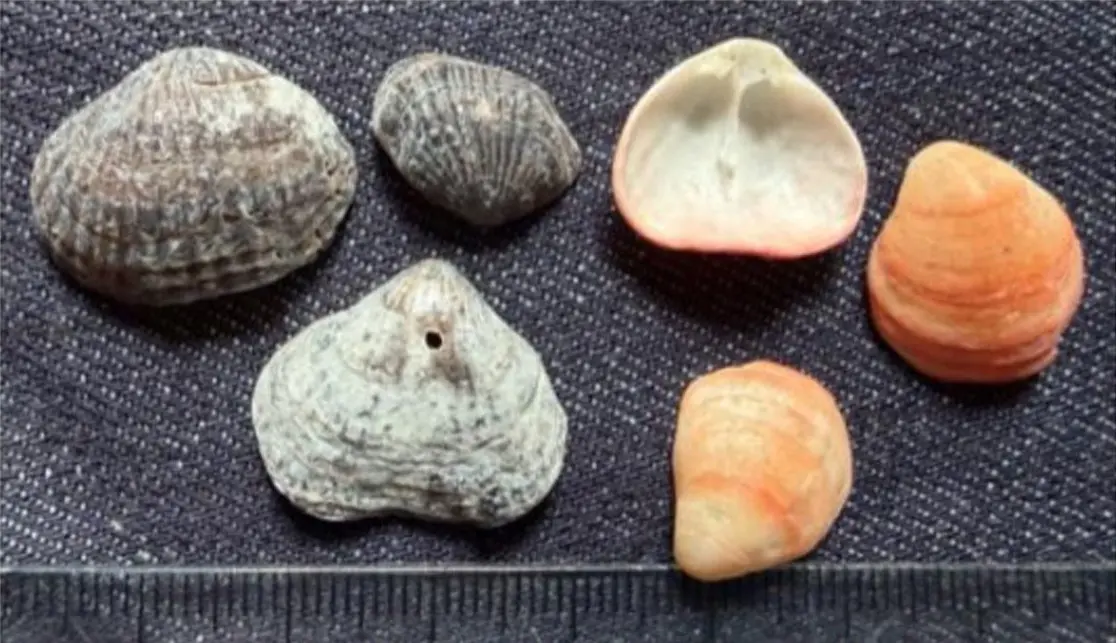
There are two species that commonly wash ashore on Otago beaches: the red lamp shell (Calloria inconspicua) which is bright red and not inconspicuous at all, and the black brachiopod (Notosaria nigricans). They both live attached to rocks and shells at and below low tide. The genus name Calloria is derived from the Greek word callos, which means “beauty”, and was bestowed on this brachiopod by Arthur Cooper of the Smithsonian Institution and Daphne Lee of the geology department at the University of Otago.
Brachiopods usually live for 3-5 years, but some can live as many as 30 years. They release eggs or sperm that combine in the ocean to form larvae. Larvae then swim in the plankton for many days, even months, before sinking to the bottom and growing their shells (scientifically they are called “valves”).
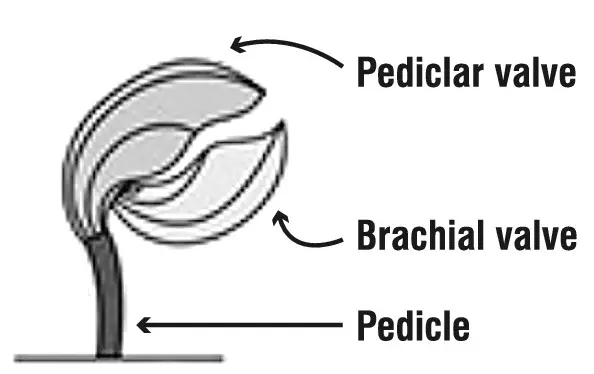
Like clams, adults have two shells, but unlike most clams, the two shells of brachiopods are usually quite different from each other. That’s because they are oriented “sideways”, with one shell on the seafloor and one shell facing the water — unlike most clams. The upper shell (pedicle valve) is usually the larger one, and it often has a hole in it, from which an “arm-foot-thing” (called a pedicle) anchors the animal in the sediment. Inside the lower shell (brachial valve), there are some rigid structures that support the feeding apparatus (lophophore) of the animal. No other animal on Earth has this kind of body plan, so it’s not surprising that brachiopods are in their own Phylum, the Brachiopoda.
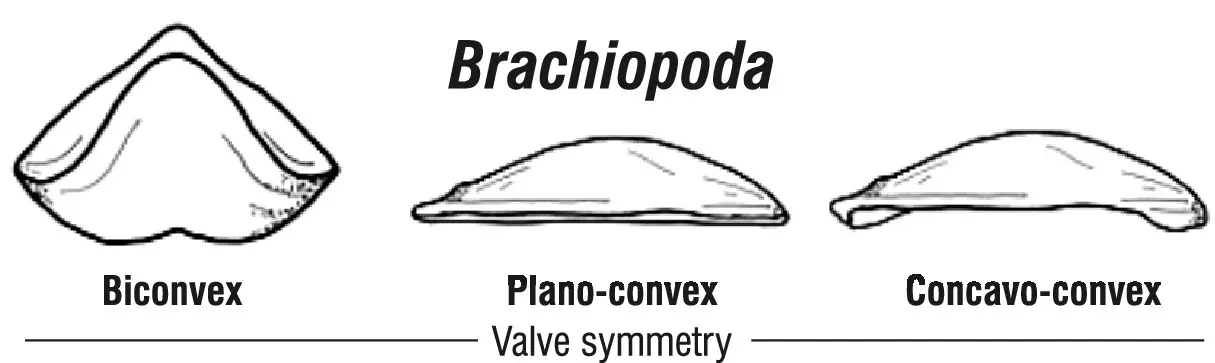
Brachiopods have been called lamp shells because the pedicle shell can look a bit like an ancient oil lamp (think Aladdin, sort of). The pedicle that anchors them in sediment or on rock is like the wick of the lamp, though it points down into the substrate. The red shells washed up on beaches have apparently also been called “mermaid’s toenails”. And they have quite generic names in te reo as well: papa kura iti; papa pōuri.
Worldwide, people mostly don’t eat brachiopods, apart from a different type of brachiopod called Lingula, a delicacy in parts of Southeast Asia. Lingula no longer live in New Zealand seas (it’s too cold), but there are quite a few fossils.
So, they aren’t edible, they aren’t smart, they aren’t obvious, they aren’t special — or are they? Brachiopods have a fossil record covering more than 550 million years — a very long time. In the Paleozoic they were the most abundant, widespread, and successful seafloor dwellers, creating huge living reefs. Many species made their shells from calcite, a mineral that is easily preserved. So their fossils are large, well-preserved, and found all over the place. In New Zealand alone we have more than 500 brachiopod fossil species, easily seen in some of the limestones and rocks around Oamaru.
Brachiopod shells act like time capsules; they can give us chemical information about the oceans way back then. Known as “paleothermometers”, they allow us to reconstruct environments of the very ancient past. Because brachiopods are sensitive to pollution, they can act as indicators of sea-water quality, in the past and today.
I think it’s amazing that descendants of those fossils I studied all those years ago in a dusty classroom are quietly living their lives on the rocks just offshore from where I washed up. They are a special part of Aotearoa New Zealand’s wonderful and diverse invertebrate fauna, sitting out there under the waves. It just goes to show that paleontology is about more than just dinosaurs!
• Abby Smith is an emeritus professor of marine science at the University of Otago. Each week in this column writers address issues of sustainability.