
PHOTO
South Islanders and international visitors are watching weather forecasts keenly this weekend in the hopes of finding snow and ice at ski fields and frozen lake ice rinks.
MetService was forecasting a cold snap for parts of the lower South Island.
Many of the South Island ski fields had not had snowfall since last week, it said, while strong winds shut Canterbury’s Mt Hutt on Thursday.
Matariki made for a stellar long weekend from July 8-10 across South Island ski fields and hills during a cold snap when thousands headed to fields including Coronet Peak and the Remarkables near Queenstown and Mt Hutt.
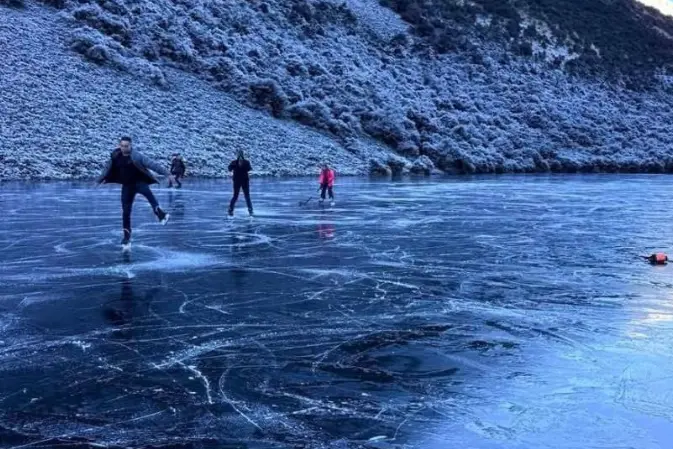
Outdoors enthusiast Clive Murphie sought out frozen lake ice rinks around Canterbury, and said Matariki made for ideal skating conditions around popular spot Lake Ida near Lake Coleridge.
"When we were skating on Saturday at Little Lake Ida, we had about 40 people out there over the day. It's a good day out."
Natural ice skating was popular overseas and drew many international tourists, as well as local families and enthusiasts from out of town, he said.
"Every year is different - some places will freeze one year and they won't freeze the next.
"If it's frozen you go, because it might not be tomorrow."
Murphie said Lakes Ida, Evelyn, Lyndon and Clearwater were his favourite spots around Canterbury, but Central Otago hosted the best natural ice rinks, where good skating had been enjoyed this winter.
"There's just something really special about being out in the country.
"It's always great to get out on the ice."
Earth Sciences said previously, last month was the warmest June New Zealand has had since its records began in 1909.
Murphie said warmer temperatures were pushing the start of the ice skating season later into early July recently.
"Things have been getting warmer. There's a lot less ice around than there used to be, but you still get good years and bad years."
Safety was paramount in natural ice skating, he said, with many visitors often bringing life jackets or wooden claw-spikes in addition to their own ice skates.
"It's risky, but you look at the risk and then you have a bit of a plan," he said.
"We always take ropes with us when we're skating. We always have a designated person if anybody falls through the ice. Now, that only happens once or twice a year. It's very seldom that people go in."
Many natural rinks overseas were on frozen rivers, which posed greater risks than New Zealand's lakes, he said.
"In New Zealand, because there's no flow under the ice, what you find is you fall in, you get cold and you get wet.
"And then when all your friends are finished taking pictures, they'll throw you a rope and pull you out."
Murphie said he and his friends asked local farmers and landowners for permission to skate, but many did not.
One farmer RNZ spoke to in the area said visiting tourists could be a pain, with parking and driving behaviour.
Snow tourism attracted many international visitors to areas around Te Waipounamu over the winter months.
MetService recorded the coldest air temperature at alpine village Lake Tekapo at -12.5°C degrees on June 11 in the Mackenzie district.
But during that Matariki weekend, there was also a spate of vehicle crashes around the district.
The Mackenzie District Council even warned visitors about hazardous driving conditions and limited accommodation in Lake Tekapo, especially with storm-related road closures around the district.
Outdoor ice rinks could be found in Fairlie, at Mount Cheeseman, Staveley, Lake Tekapo, Maniototo, Alexandra, Cardrona and Arrowtown.
