
PHOTO
In 1961, I spent the summer in Macedonia, excavating a Neolithic village occupied about 8000 years ago. Each day we drove to the site through a village called Vergina, known to the ancient Greeks as Aigai.
Being archaeologists, we couldn’t help but notice a large, low mound beside the road. We never stopped to look into it, being too absorbed with our own research. However, 16 years later, Manolis Andronikos began excavations there, resulting in amazing discoveries.

Aigai was the capital of Macedonia and it was in the theatre there in 336 BC Philip II was murdered and succeeded by his son, Alexander the Great. Probing into the mound, Andronikos encountered a massive marble portal that sealed a tomb of such splendour that it almost defies belief. Usually, mounded tombs and pyramids were looted in antiquity, but this one survived intact. It contained a solid gold larnax, a box containing the cremated bones of a man who had suffered injuries to his eye and leg. These facts make it virtually certain that this was the tomb of Philip II himself.
Macedonian kings practised polygamy and Philip had at least seven wives. The golden wreath of myrtle leaves, ascribed to Meda, his fifth wife, lay in an antechamber to the main tomb. The king was interred with his bronze armour, his breastplate bearing a golden head of a gorgon. His funeral couch was embellished with the ivory carving of a wild boar. When I returned to Vergina 10 years ago and entered the mausoleum, I couldn’t help but wonder at our fame had we stopped and explored instead of driving on.
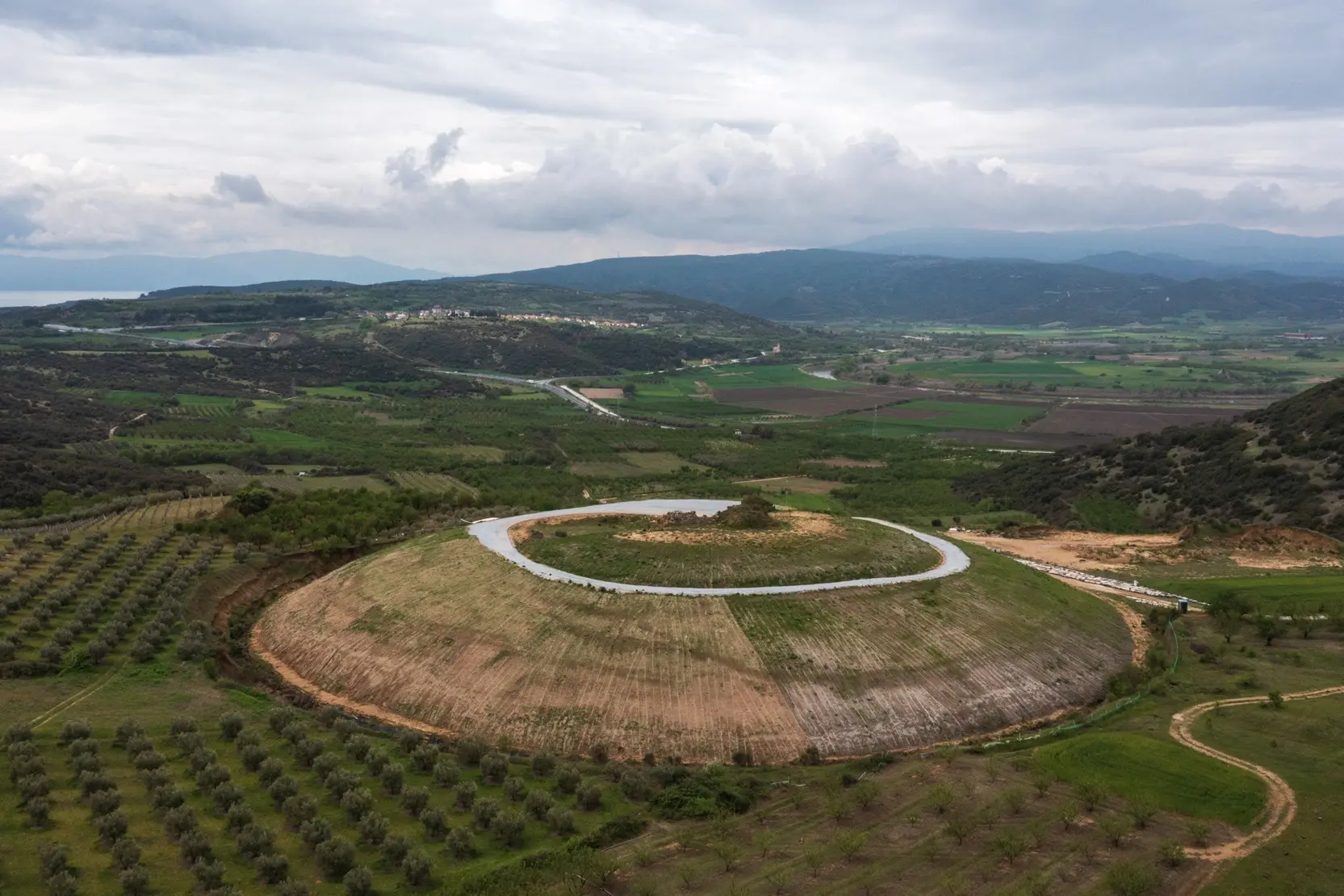
Now another tomb mound is being investigated. First discovered by a local lad many years ago, the Kasta mound lies 166 km east of Vergina. It is massive, with a diameter of 140m, the surrounding wall covering 8ha — that is 16 rugby pitches. Great marble doors guard the entrance into the tomb chambers, in which the remains of five people have been found. Unlike Vergina, this tomb had been looted, but the walls are still decorated with multi-coloured mosaics and, given its great size, some have even suggested that it was the final resting place of Alexander the Great himself. However, others have suggested that it was the tomb of his favourite Hephaestion or his mother Olympias. The mausoleum is currently being restored and once complete, it will be open to the public.