

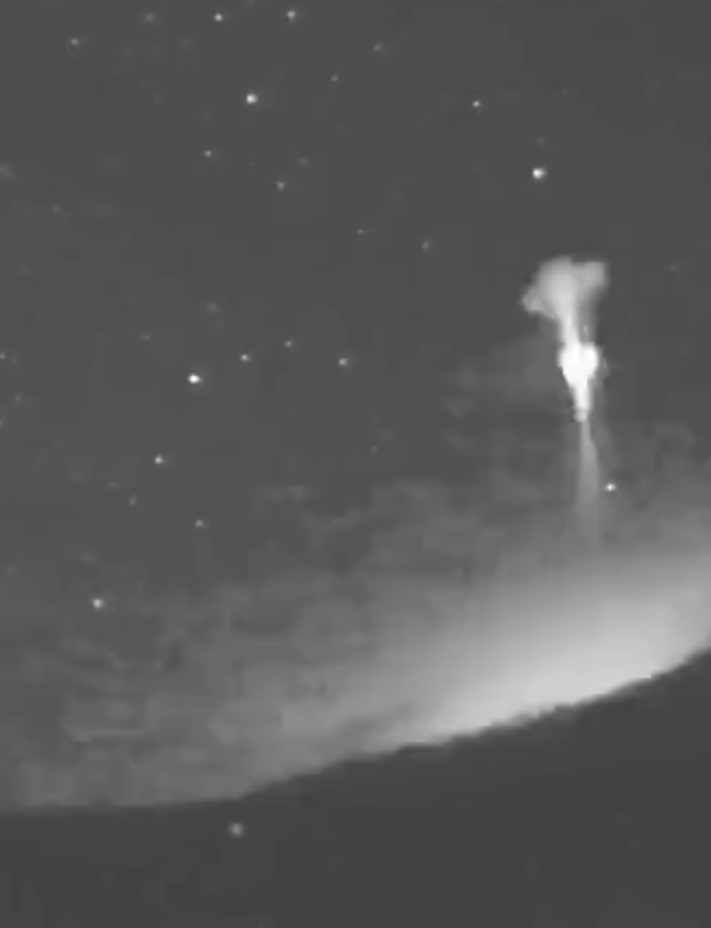
The first showed up while I was asleep. Somewhere beyond the Rock and Pillar range, a storm was raging and my meteor camera, meant for catching bits of space tumbling down, caught something else. A pale, branching flicker high above the storm, climbing instead of falling. A lightning sprite.
Sprites keep to the high country, seventy or eighty kilometres above the lightning. They’re set off by powerful strikes below, but they leap upward, sketching faint red or white shapes in the sky for a heartbeat before they’re gone. For most of history, nobody saw them. Too quick, too faint, hidden above the clouds. Only in the past few decades have cameras confirmed what a few pilots once reported and others quietly dismissed.

The second was not a sprite, not really, though it gave a convincing performance.
Saturday brought an aurora early in the evening, one for the scrapbook. Later, the sky offered a quieter encore. Along the southern horizon, a row of green bars lined up, neat as you please, like someone had hammered together a fence out of light. A “picket fence” aurora.
The name is plain enough. Those tidy bars are narrow rays of auroral light, all standing in line with the earth’s magnetic field. From where we stand, they fall into that repeating pattern, as if arranged with care.
Standing out in my Middlemarch paddock, I found myself thinking about words.
We reach for folklore to name electricity in the sky. We borrow fences to describe magnetism. The sky gives us the show and we answer as best we can.
Sometimes, when we are lucky, the old words still fit. Sprites, for instance.


