
PHOTO
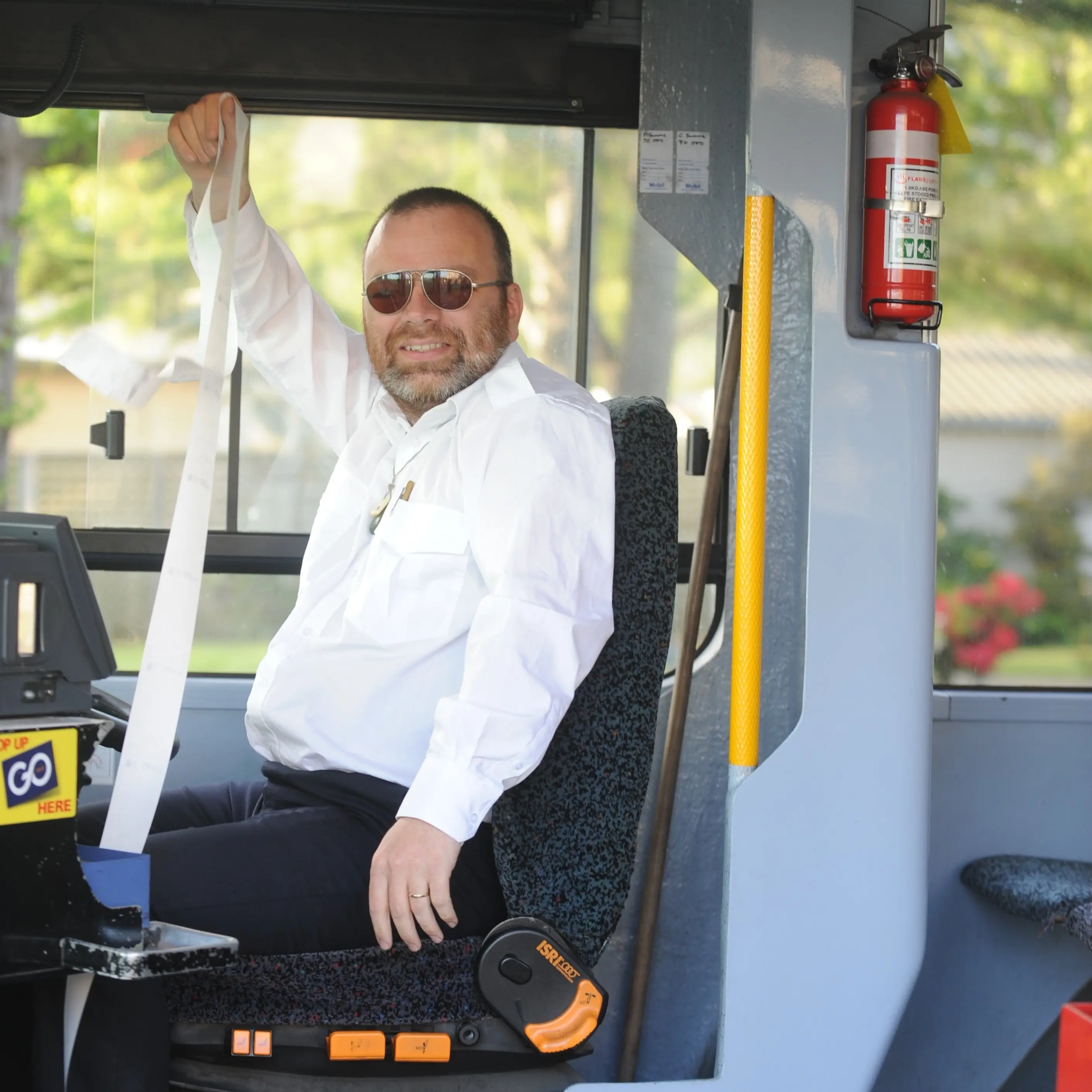
Dunedin's near-ready bus hub signals an exciting gear change for the city's public transport, Peter Dowden says.
The longtime bus driver, transport heritage enthusiast and conveyance system aficionado talks to the Otago Daily Times about the excellent public transport Dunedin used to have and how it can get it back again.
"We know Dunedin can have world-class public transport; because it's been done before.''
That is the firm belief of Peter Dowden, who has seen the city's transport system from many angles.
Dowden has driven Dunedin buses for 14 years, giving him a front-seat view of what is going on at street level.
An avid amateur historian, he is a founding member of the Otago Heritage Bus Society, whose dozen classic coaches are used for charters, community events and to provide a basic bus service on the Normanby to St Clair route on Christmas Day, Good Friday and Easter Sunday.
He is also president of the Dunedin branch of the Tramways Union and a keen consumer of local news, informing and shaping his views on the city's public transport - past, present and future.
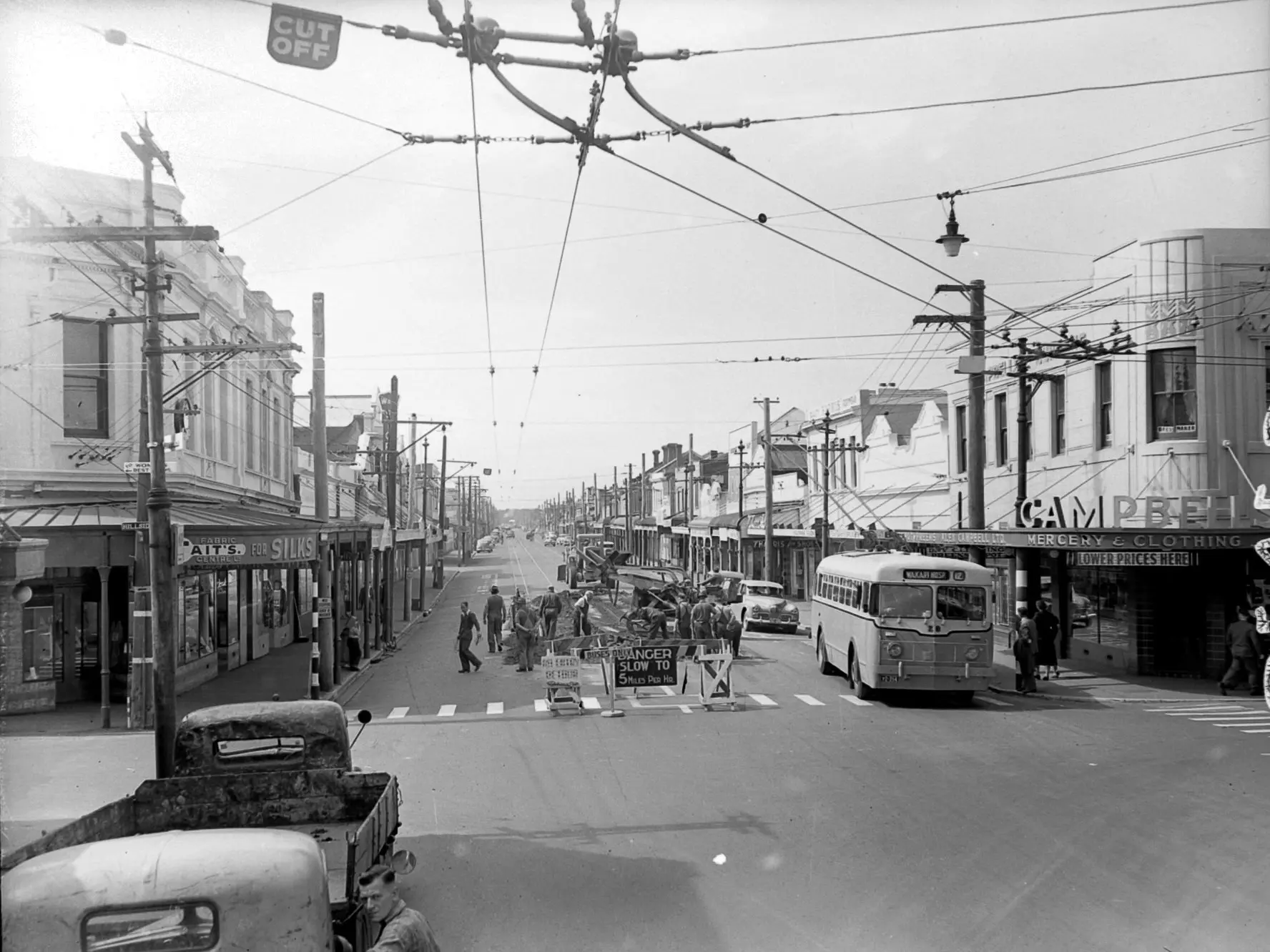
About 150 years ago, Dunedin's public transport got off to a bumpy start with David Proudfoot's horse-drawn trams running along thin rails set into the "Mud-edin'' streets, Dowden says.
These routes were quickly converted to smooth-running electric trams, while real estate entrepreneurs promoted cable car lines to develop Dunedin's steep hill suburbs.
At various times, Dunedin claimed world records for the most tramline per capita and the steepest cable tramway, a gradient of 1 in 3.75, in Mornington. The city also boasted New Zealand's first electric tramway, along Highgate.
Later, it ran the first New Zealand-built electric trolleybuses.
"Nearly all of these ran on renewable energy from the city's Waipori hydro power scheme,'' Dowden says.
Half a century ago, however, decline had set in.
Trolley wires began to be pulled down. The push was on to reduce services and raise fares.

Otago Daily Times
cartoonist Sid Scales drew a cartoon of "the last bus passenger'' being asked by a driver for a huge number of dollars, illustrating the paradox that fare increases lead to patronage drops, which then require more fare increases.
Route cuts were severe, especially off-peak. By the mid-1980s, on a Sunday, there were just five runs on each of only four, unloved "combined trip'' suburban routes, serving three suburbs at a time.
The Rogernomics, free-market reforms of that period made outsourcing mandatory, Dowden says.
Municipal and government-owned bus services underwent painful change to become profit-oriented, while driving wages down.
"New, private companies moved in with cheap, and often nasty, imported second-hand buses, which lowered costs.
"But these contractors also introduced several new ideas, particularly `low-floor' wheelchair-friendly buses and services to the university.''
With declining costs from outsourcing, the Otago Regional Council made slow, steady improvements during this period, particularly to evening and weekend services. Service cuts were an exception: the trend was constant gradual improvement.
Competitive tendering brought costs down, eventually enabling the all-low-floor fleet we have today; one of the most accessible bus fleets of any city in the world.
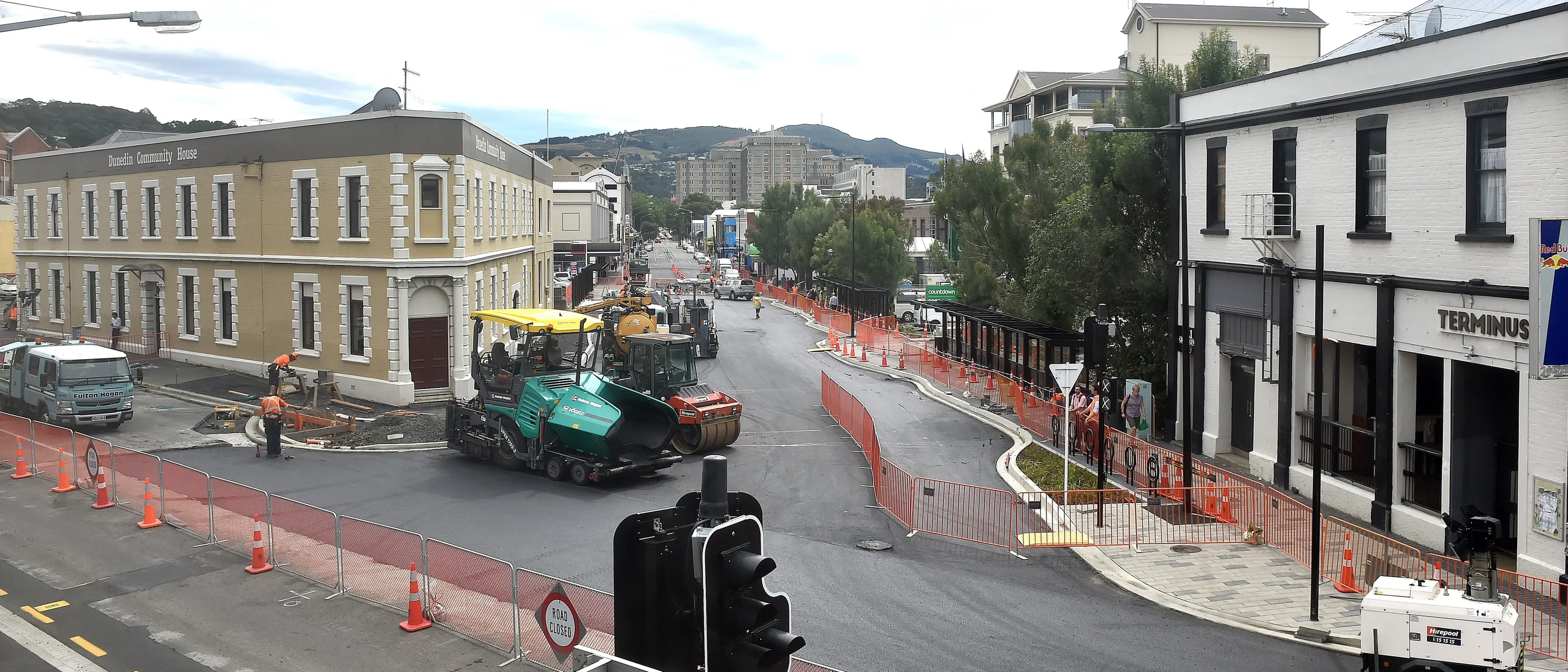
The latest big development is the construction of the new bus hub, in Great King St, between Moray Pl and St Andrew St.
The more-than-$5.3 million bus hub will make many new journeys possible, Dowden says.
At present, buses depart from seven different stops in the central city within a four-block radius, making it difficult for people to transfer between services.
The hub will include 10 bus bays, electronic timetables showing bus times, shelters, public toilets and a cafe kiosk.
Delayed several times, the hub is now due to open early next month.
Otago Regional Council corporate services director Nick Donnelly has said other bus changes would occur in parallel.
These will include "tag-on, tag-off'' ticketing, online top-ups and balance checks.
An app will also be released, allowing real-time information for passengers.
AS in Queenstown, the brand for the service will be renamed "Orbus''.
"The tag-on, tag-off ticketing will encourage transferring between buses,'' Dowden says
"With fares set in such a way that the passenger will pay much as if they were on the one bus for the entire journey.
"But only, if you pay with a card. The big message is `go electronic' because cash fares are being hiked considerably and do not transfer between routes.''
Dowden says the city now has three "flagship'' high-frequency routes and almost all other services go no less often than half-hourly. Every route operates a seven-days-and-most-nights service.
This marks the end of the "slow and steady improvement'' as all the new contracts are long-term, set at about the lifetime of a modern bus, he says.
This will bring certainty and stability to the public transport system, until now characterised by constant adjustment.
But, he warns, buses will not be going any faster for the foreseeable future. Recently signed service contracts last a decade or more.
"All the latest timetables have margins added to eliminate late running, which aids punctuality but can make journeys tedious.
"Drivers get generous breaks at each terminus, which avoids fatigue but ties up capital in stationary buses. For example, there is at any one time about a million dollars worth of buses parked on the Normanby to St Clair route.''
Journeys to Mornington or Kaikorai are slower than cable car rides of old, and some bus times on the flat would not frighten Proudfoot's horses, he says.
"Slowing buses in order to aid punctuality is an outdated technique. In a digital world where everyone knows where everything is, buses could run on flexi-time, demand-driven with vehicles going in and out of service in real time as ridership fluctuates.''
Dowden says the system now only lacks one thing: passengers.
The capacity is available to double the number of passengers.
"Our huge buses have plenty of spare seats and the upcoming ticketing system will speed boarding, allowing people to pay their fares as quickly as they can step into a bus.
"Those who doubt the ability of our bus system to rapidly increase patronage need only look at Queenstown, where a generous simplification and reduction of fares led to a doubling of riders.''
The resort town is set to move 1.2 million bus passengers per year.
Dowden has two suggestions for future improvement of the city's public transport system.
"Queenstown benefited from enthusiastic co-operation between its regional and local councils. This has not been tried yet in Dunedin.
"And, although Dunedin's bus fleet is almost brand new, it is still reliant on imported diesel fuel. Battery technology is advancing so quickly that the very next vehicle replacements in Dunedin will surely be all-electric.''
Both ideas are now on the cards.
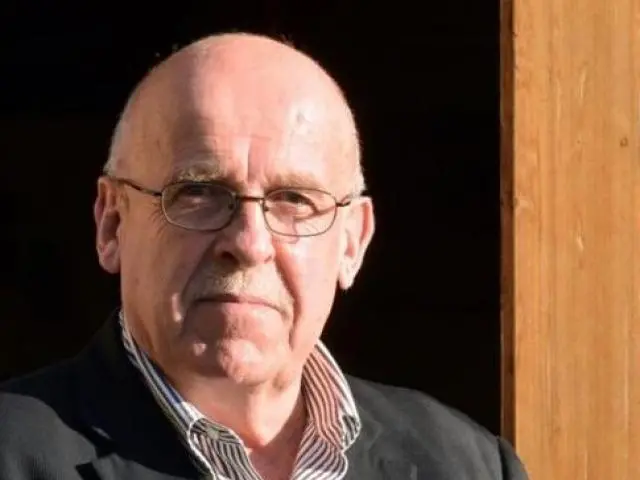
The Dunedin City Council is exploring options to reduce the cost of bus tickets and to trial a free central city transport loop using electric buses.
City councillor Aaron Hawkins is promoting the idea of offsetting bus fares, perhaps through rates collected by the city council and parking charges.
Queenstown's $2, all-zone, bus tickets are funded by the district council, regional council and New Zealand Transport Agency (NZTA).
Cr Hawkins believes Dunedin also needs a cheaper bus service because "there are still too many people who can't afford to use it''.
Cr David Benson-Pope says it is a "no brainer'' there should be a low-carbon bus service operating for no charge in the inner-city.
He has in mind two, 15 to 20-seater, electric buses operating in opposite directions on a loop that takes in the Otago Museum Reserve, George St, the Exchange, Queens Gardens, the Dunedin Railway Station and Dunedin Hospital.
Cr Benson-Pope favours working with the regional council to trial the idea, with funding from both councils, the Energy Efficiency and Conservation Authority and the NZTA.
Both proposals are being investigated by DCC staff and will be part of public consultation on the city's annual plan in March and April.
If supported by all parties, including the public, Cr Benson-Pope hopes the trial could be running before the end of the year.

Going almost full circle, reintroducing cable cars, may take a little longer.
Neville Jemmett is spokesman of the Dunedin Heritage Light Rail Trust. The trust has three restored cable cars on display at its Mornington sheds. But the real goal is to get cable cars running again from the hill suburb to downtown.
Just before Christmas, the Trust applied to the Ministry of Business, Innovation and Employment for $100,000 for a project feasibility study.
This week, Mr Jemmett had not yet heard whether the application had been successful. If it is, the money will pay for a feasibility study that will determine the accuracy of the scheme's estimated $23million price tag. Then planning and fundraising will begin in earnest.