

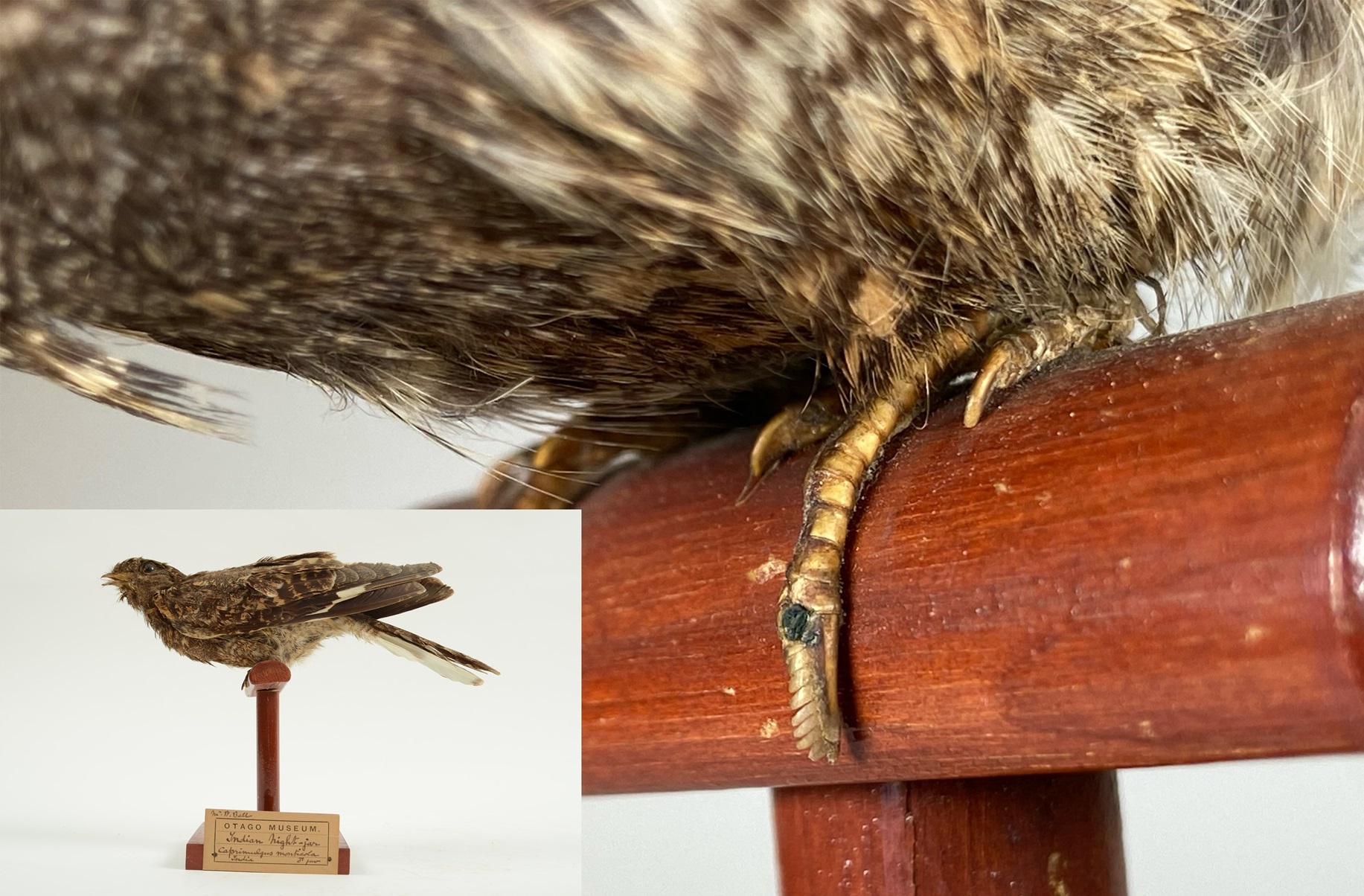

Even the natural world can’t do without them — next time you pick up a comb to correct a rebellious sprig of hair, think of the birds. Some of them are fortunate enough to have combs built into their feet!
Although birds do use their beaks to clean and rearrange their feathers, and for ectoparasite control, certain parts of the body are hard to reach. That’s where the feet come in. And while scratching with claws can damage or dislodge ectoparasites, sometimes it’s not enough. (You may have recollections from childhood that "nits" aren’t defeated by simply scratching your head.)
The comb is the ultimate ectoparasite control tool — especially when you can’t use shampoo — and about 15% of avian families have one built into the claw on their middle toe. These claws have a special pectinate (comb-like) edge and are used for parasite removal. You may know some of the birds that have them: nocturnal nightjars, some owls and waterbirds such as pelicans, bitterns, grebes and the lanky herons.
Scientists are still trying to ascertain what other functions pectinate claws might have, but one possibility is feather alignment, which can play a crucial role in hunting. Barn owls can pinpoint the location of mice rustling in the undergrowth with the help of facial discs that gather soundwaves and direct them to their ears. They use their pectinate claws to groom the discs, carefully aligning the feathers. Nightjars are also suspected of using their pectinate claws for grooming. They have lots of bristles around their mouths which probably help detect flying insects in the dark, so maintaining them is likely crucial.
To prove the benefits of a pectinate claw, researchers have suggested conducting a study where some birds would have their combs filed off (like your fingernails, the combs would regrow). Their parasite load would later be compared with a control group of birds that still had their combs.
Because pectinate claws are comparatively rare, they have a bonus function: bird identification. I recently had to sort and identify a series of skeletons donated to Tūhura Otago Museum from the old zoology department anatomy collections. The presence of a pectinate middle claw helped me quickly identify several herons among a pile of unlabelled bird legs.
Rarely will you get close enough to a wild bird to peer at its toes. But if you want to look at a bird comb, you should visit Tūhura’s Animal Attic and look for pectinate claws on some of the birds on display. There are several to spot. Good luck!
Marcus Richards is a collection technician — natural science, at Tūhura Otago Museum.


![Anna Caselberg (née Woollaston, 1942-2004), Mihiwhaka [sic] Hills, 3a, 1980, oil on board:...](https://www.odt.co.nz/sites/default/files/styles/odt_landscape_small_related_stories/public/story/2026/06/hocken_image_3.jpg?itok=nrb8BrFW)


