
PHOTO
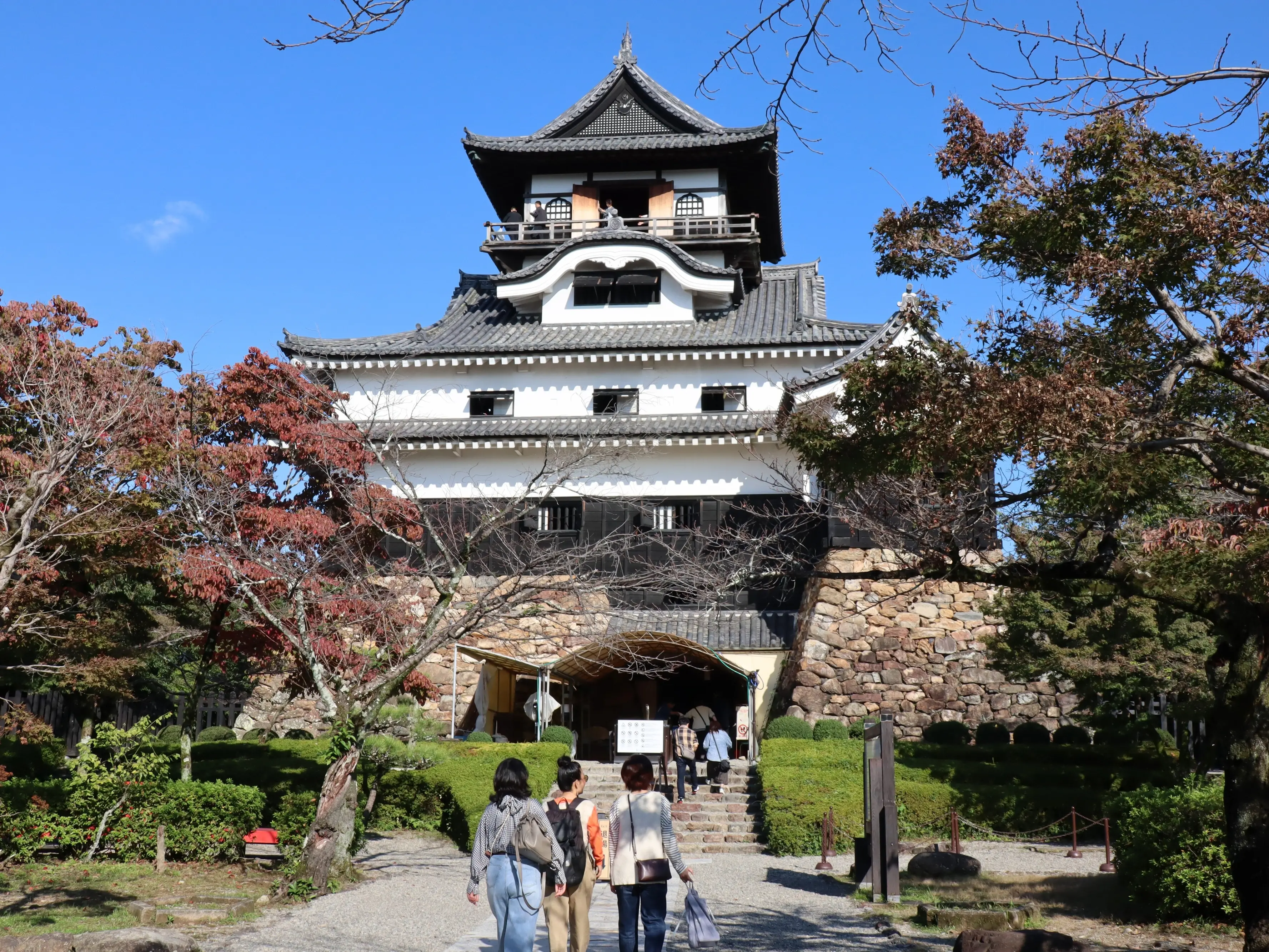
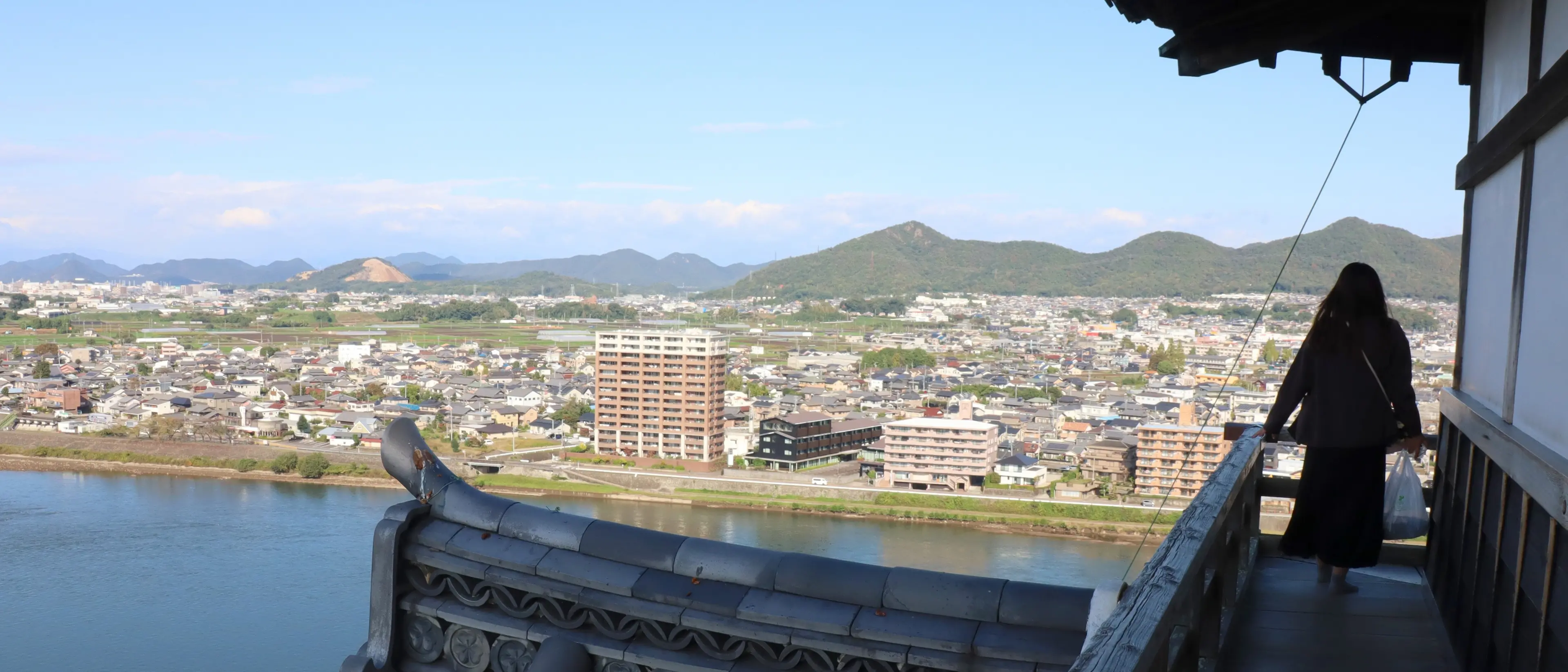
The view over the Kiso River towards the Japanese Alps was amazing, but I felt a little nervous. The narrow veranda around the castle’s top floor had a low railing, while the ground seemed far below and a long way to fall. This veranda was one of many original features in Inuyama Castle, Japan’s oldest and a designated National Treasure.
The previous day I’d admired the view from my room at Hotel Indigo Inuyama Urakuen Garden and noticed people walking around the veranda. It struck me as something I hadn’t seen before and I learned that it was unique to Inuyama Castle.
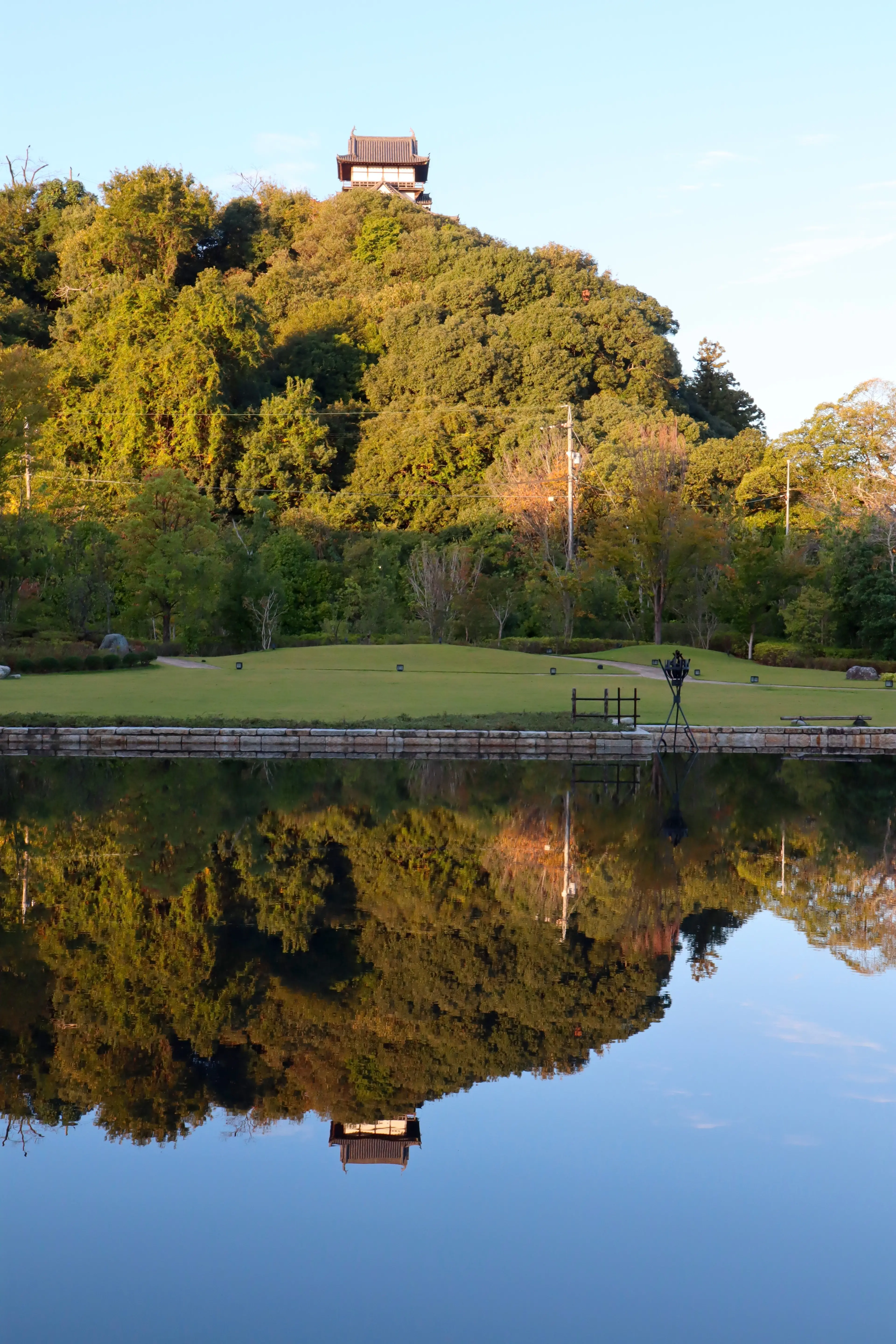
The castle itself stood on a hill high above the town, commanding a view over it and the surrounding countryside.
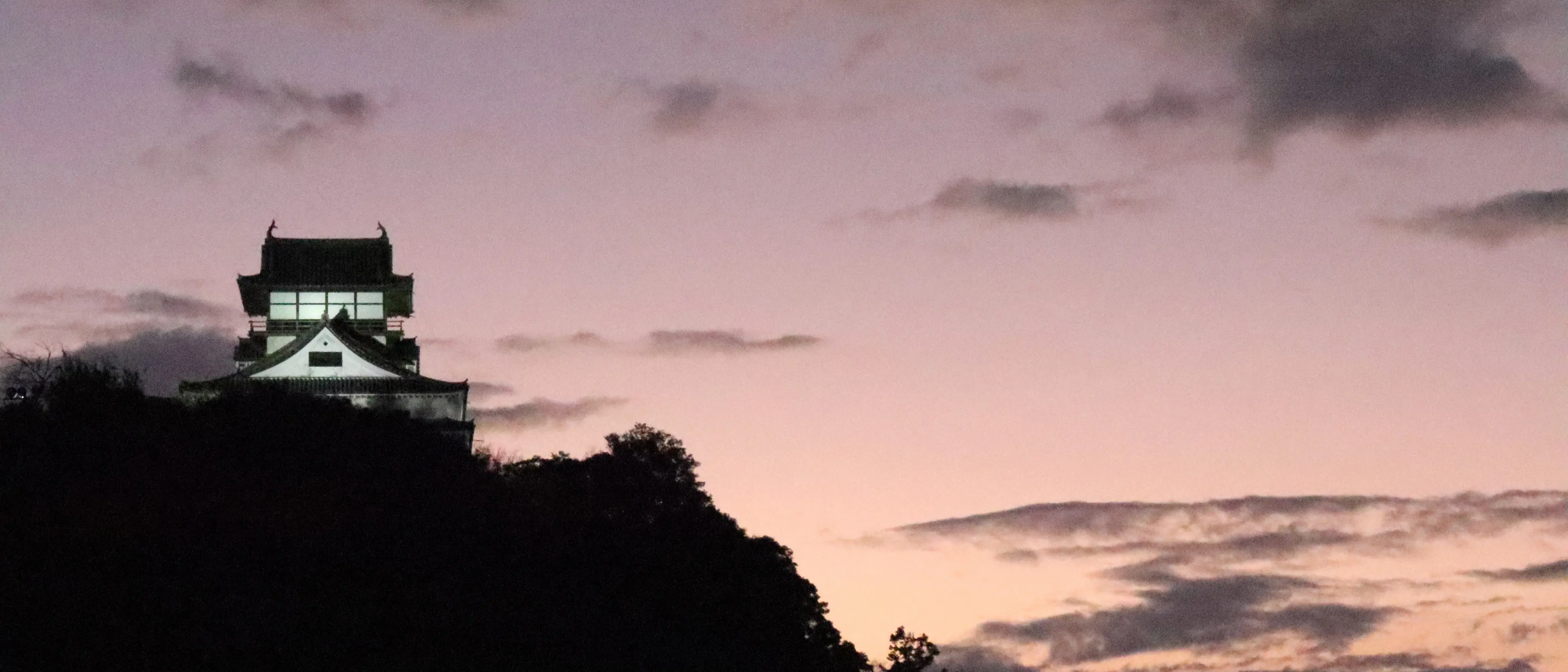
Over the next two days I enjoyed my castle view, illuminated at night, reflected in the hotel’s pond in the early morning and gleaming white against a blue sky during the day.
Inuyama Castle was a short walk from the hotel, easy enough despite the uphill path to the ticket office. After removing my shoes at the entrance, the real workout began. The stairs leading to the fourth floor were steep, with some flights almost vertical. Walking up them required stamina. Even though I am not particularly tall, I had to duck my head under low overhead beams in some sections. The antique suits of armour on display told me that the samurai of old were rather short compared with modern people.
Inuyama Castle’s outer buildings and fortifications were destroyed over the centuries but the keep survived battles, earthquakes and typhoons. It is remarkably well-preserved and much of this is due to the Naruse clan who owned it for over 400 years. Now it is maintained by a trust.
Walking down from the castle, I detoured through Sanko Inari shrine which is known as a place where those looking for love can pray for their perfect match. Pink heart-shaped votive tablets inscribed with prayers for love hung on racks, contrasting with the red torii gates lining the paths. As well as the votive tablets, the shrine sold various heart-shaped good luck charms, including one for bonding with your pet.
After leaving the shrine, I strolled along a shopping street lined with traditional wooden shops. Some visitors had dressed to match their surroundings with the help of a kimono rental shop. I was more interested in local products and one of the first shops I came to had beautiful ceramics. The tea bowls and plates on display were patterned with leaves and flowers, outlined in gold.

Further along the street was the Juhyoya pickle shop. The area is famous for its moriguchi-zuke pickle, made from a daikon radish that can grow over 1.5m long. Pickling takes two years, with the daikon pickled twice in salt and three times in sake lees. I’d already tasted this strongly flavoured pickle in the hotel restaurant’s moriguchi pickles tartar burger. The tartar sauce had a distinct tang, with some extra pickle on the side for added flavour. At Juhyoya, I decided to be adventurous and try the moriguchi-zuke flavoured ice cream. I was a little disappointed, as the pickle flavour was very mild and only just noticeable.

There were many shops offering tempting snacks on skewers such as local Hida beef, whole river fish and goheimochi, rice balls coated with miso. I bought a skewer which had two goheimochi, warm from the grill, and two pieces of moriguchi-zuke pickle. The goheimochi were chewier than ordinary mochi and the miso gave them extra flavour. One of the goheimochi was heart-shaped and this seemed to be a theme along the shopping street, perhaps borrowing from Sanko Inari’s romantic associations. I spotted heart-shaped cookies and cakes, ice creams decorated with hearts and matcha desserts with a heart wafer.
Honmachi Saryo offered dine-in as well as takeaway, so I took a counter seat and ordered the miso dengaku lunch set. This consisted of seven skewers and a pot of green tea. Four skewers were grilled tofu, with varied toppings such as sweet and spicy and, my favourite, yuzu. One skewer had konjac balls also topped with the sweet and spicy sauce, but I found the konjac a bit chewy and much preferred the tofu version. Two skewers were rice cakes, a green one flavoured with mugwort and a pink one flavoured with shiso and plum paste. It was a great way to discover a variety of Japanese flavours for less than $11.
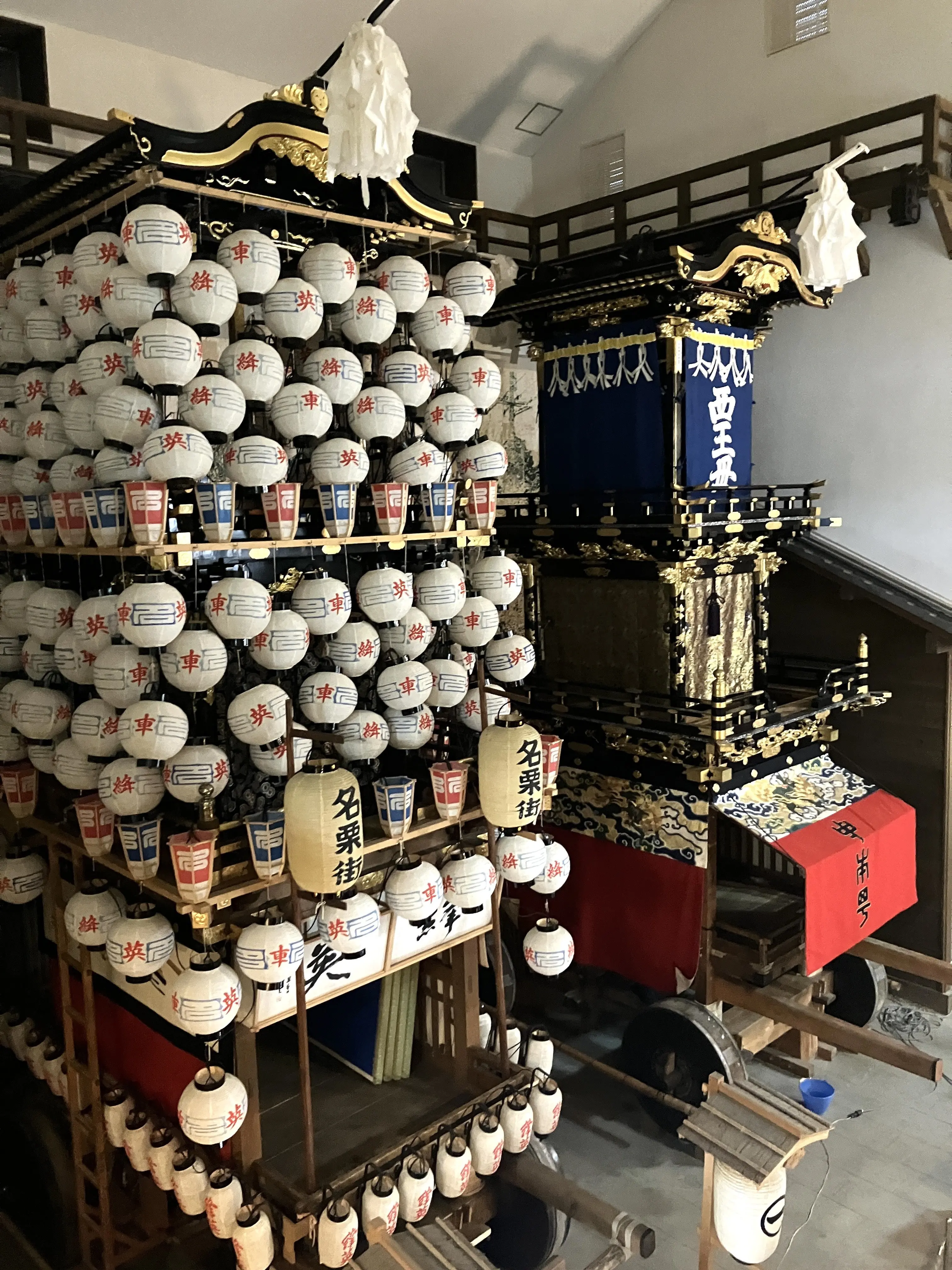
Revived by lunch, I continued to the end of the shopping street where Dondenkan, a museum dedicated to the local festival, housed some of the floats that take part. Over two days each April, these floats are carried through the streets of Inuyama by teams of locals. They are large, about two storeys high, so carrying them requires strength. I watched a video showing the festival and progress through the streets was precarious at times as the teams manoeuvred around tight corners.
Each float is ornately and individually decorated, festooned with lanterns that are lit up for the evening procession. At the top of each float is a puppet theatre, where puppets perform when the float is stopped. Craftsmen have been making these puppets for hundreds of years and each float tells a unique story.

While I’d missed the festival, Inuyama has something to offer in all seasons. When I was there in late October the leaves were starting to turn gold, although it would be another two weeks before they reached their full glory. In spring, cherry blossom surrounds the castle and lines the banks of the Kiso River. Seasonal boat trips run along the river to view cherry blossom and autumn foliage. In summer, fishermen continue the cormorant fishing tradition on the river, going out at night with trained cormorants to catch fish by lamplight. The bedside lamp I’d admired in my hotel room was based on the lamps used by fishermen.
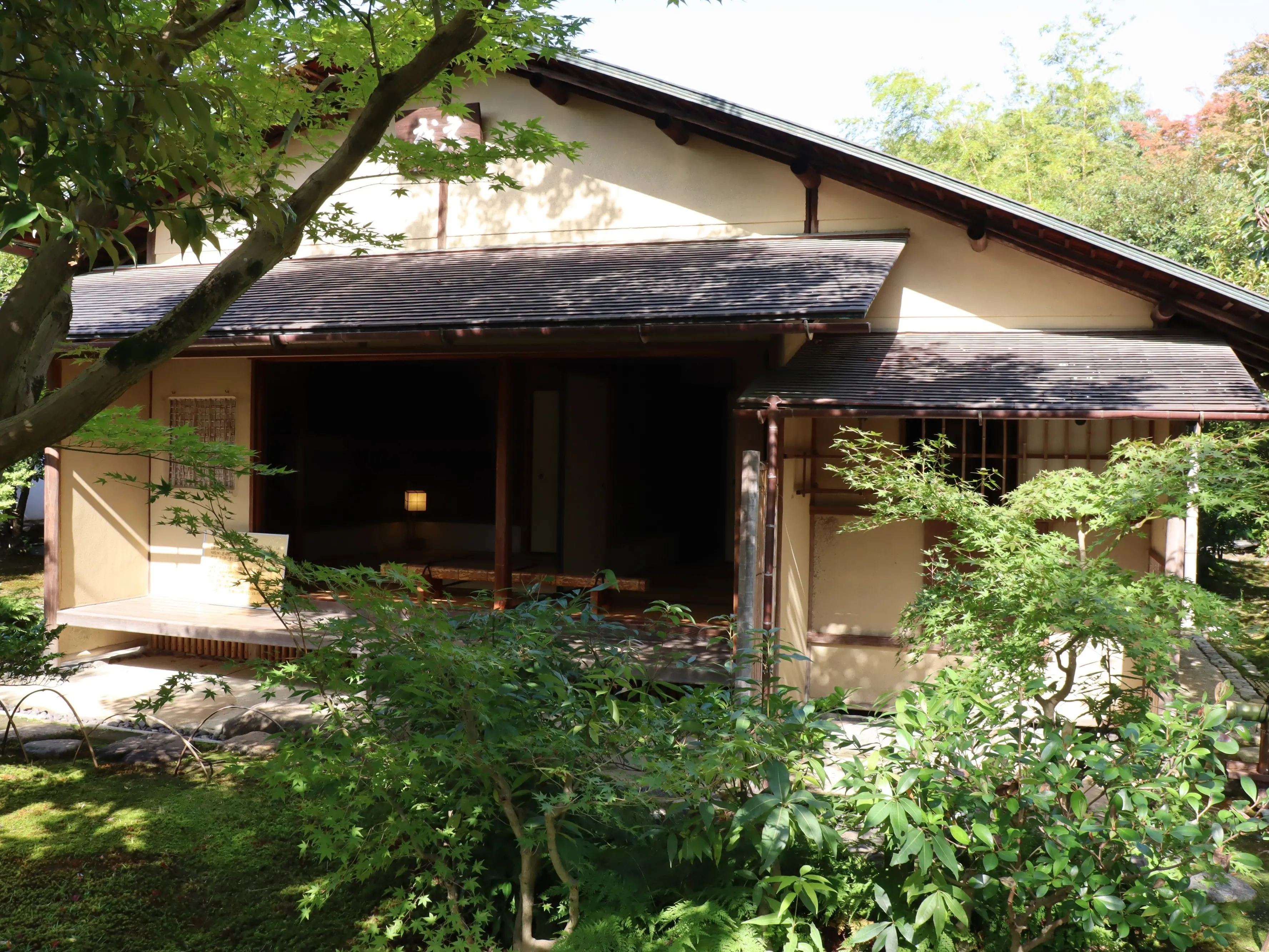
On the way back to the hotel, I stopped at Urakuen Garden to see another National Treasure, the Jo-an tea house. As a guest of Hotel Indigo Inuyama Urakuen Garden, entry to the garden was free. While Jo-an can only be viewed from the outside to preserve the fragile interior, there are other tea houses in the garden. One has its interior opened up to view from the outside, while it is possible to drink matcha in another for an additional fee. Urakuen is a classic Japanese garden, with paths winding through trees, past streams and rocks. Around each corner, a different view opens up. From Urakuen, it was a short walk through the hotel’s own landscaped gardens to get back to my room where I could admire the castle view once more.
Although Inuyama is very compact and walkable, my muscles were feeling tired so I decided to go for a soak in the hotel’s onsen, Hakutei No Yu. I changed into the yukata and matching jacket supplied in my room, put wooden geta sandals on my feet and headed downstairs. The onsen is the only hot springs in Inuyama, with separate men’s and women’s baths in the usual Japanese custom. Sheltered by lush foliage, both the indoor and outdoor baths were relaxing and soothed my weary legs. It felt a fitting way to end a day exploring Inuyama, a town full of Japanese tradition.
Although Inuyama feels far away from Japan’s bustling major cities, it is only 30 minutes by local train from Nagoya, a key stop on the shinkansen line between Tokyo and Osaka. I felt pleased that I’d made a small detour to spend a couple of nights in Inuyama where I could experience another side of Japan.
— The writer was hosted by Hotel Indigo Inuyama Urakuen Garden. inuyama.hotelindigo.com/en