
PHOTO
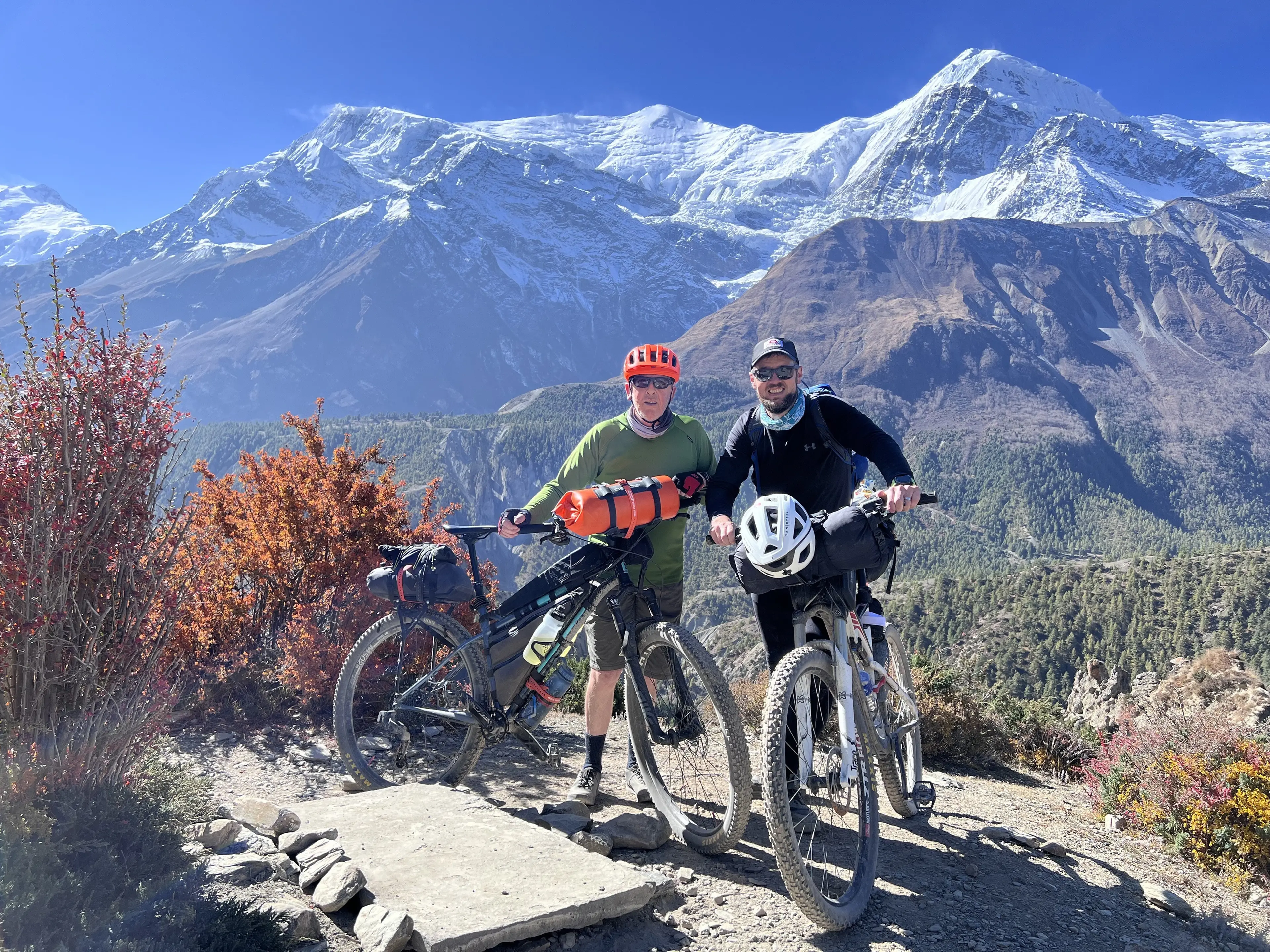
When a friend and fellow cyclist suggested to Murray Ross they should do Nepal’s challenging Annapurna circuit, he could not say no.
He had enjoyed bike-packing trips around New Zealand, in particular the Sounds to Sounds — a 1500km bike-packing route from Queen Charlotte Sound to Milford Sound.
"Honestly, it’s so much fun, because you just get on your bike and after the first couple of days, you go, well, actually, all I have to do is ride my bike today, and that’s it."
On a similar trip, colleague and fellow cyclist Ashley Kirk suggested doing the Annapurna circuit but then moved back to the United Kingdom.
But last year he got in contact with Ross, who has been cycling for 40 years and bike-packing for the past 20, asking if he was still keen. Ross did not have to think about it, and said yes.
The biggest part of any bike-packing trip, Ross says, is the organisation and logistics. Whether doing the 85km Old Ghost Road in New Zealand or the 386km Annapurna circuit in Nepal, being organised is key.
Making sure their bikes were set up for the trip — Ross rides a steel hardtail bike with 29-inch wheels — having the right clothing and finding the best way to deal with the altitude were just some of the preparation needed.
For this trip there was the added complication of a youth uprising and political unrest in Nepal about a month before, resulting in the New Zealand government issuing a no travel warning.
It meant some stressful days as they waited for it to play out and some tired eyes from scouring their travel insurance to ensure they were covered for all eventualities as a result.
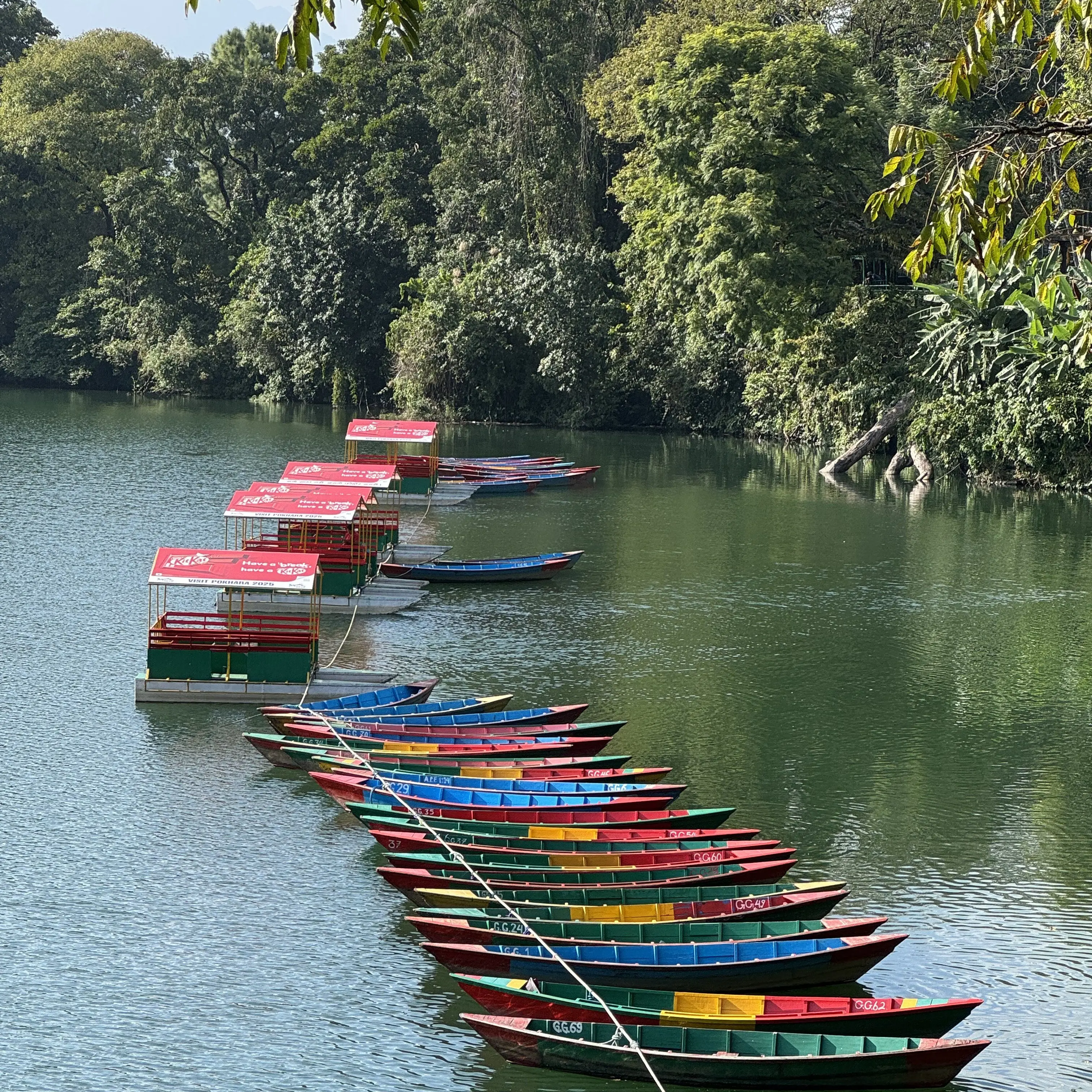
However, they both set off from their respective countries on their planned dates, meeting in Kathmandu where they had a day to look around before getting transport to Pokhara where they would start the trail. With his bike in its box on top of the truck, it took 8 hours to travel 120km over the "super rough" roads busy with trucks.
When they got to Pokhara (1400m) they put their bikes together in their hotel rooms and left their bike boxes there for when they returned. They packed up their bikes with their sleeping bags, clothes for both hot and extremely cold weather and water. All up, their gear and bikes weighed 25kg each.
The trail was a basic, rough gravel road requiring them to push their bikes a bit. At the lower elevations it was warm — about 25°C — and the weather was good but by the first day of cycling the temperate reached 35°C.
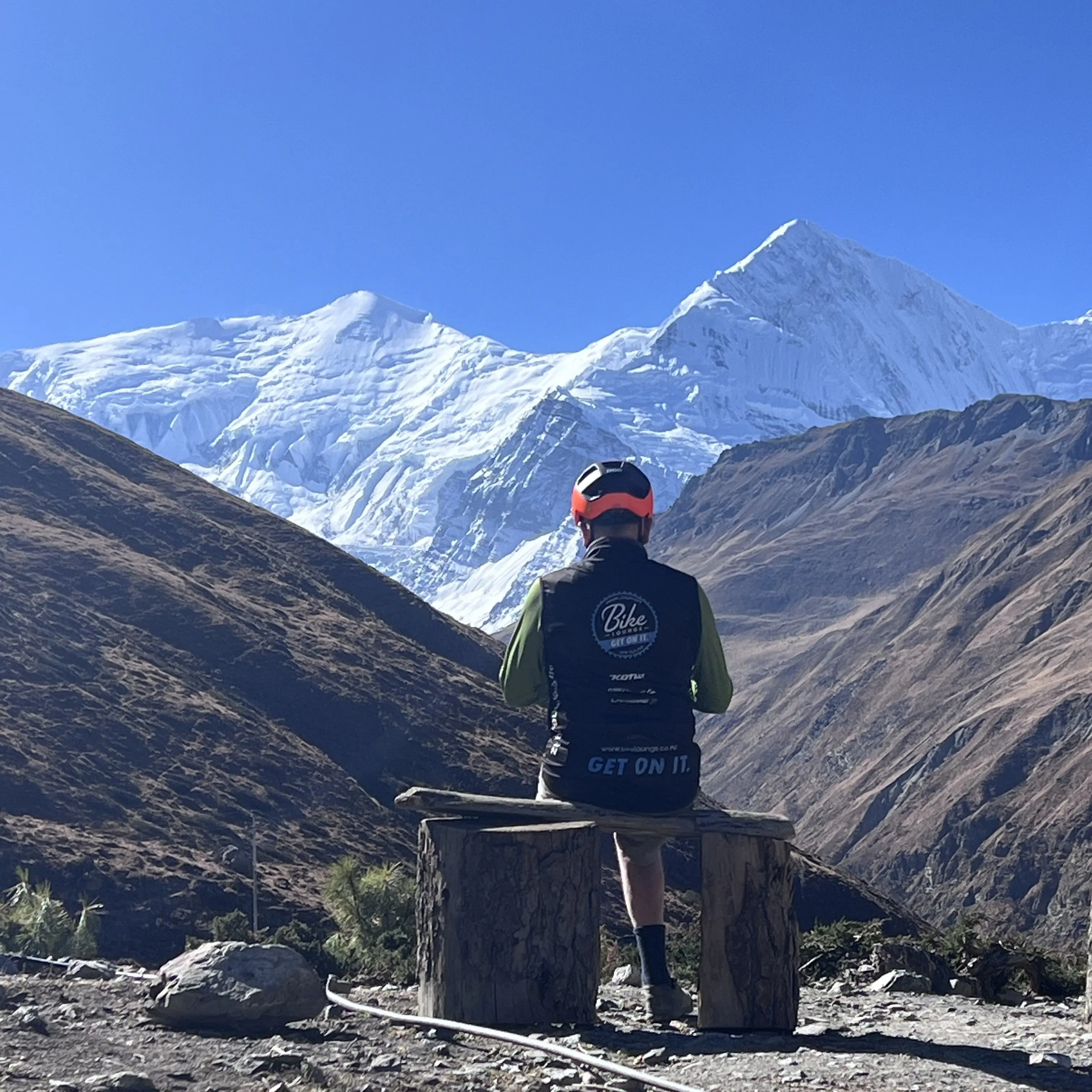
"It was incredibly hot and so you’re stopping everywhere to look at the amazing scenery."
Along the trail there are plenty of tea houses where they could stop, eat and stay the night. It was quite affordable: about $US30 a day (about $NZ60) for accommodation and food. Despite being cheap, most of the accommodation was very comfortable and even up in the hills everywhere had free Wi-Fi — so Ross’ wife kept track of him via his luggage tag.
"You’d just stop at these little places — family-run places — on the side of the road and you’d have a cup of tea and they were all just lovely people."
To reduce the risk of food poisoning they made sure they only drank hot tea and that all food they ate was cooked. A popular snack was momos: a deep-fried dumpling. Apples and apple juice were also offered as there were many orchards in the hills, as well as a lot of what Ross thought was cannabis — but it was hemp: cannabis without THC, which the Nepalese grow commercially for fibre.
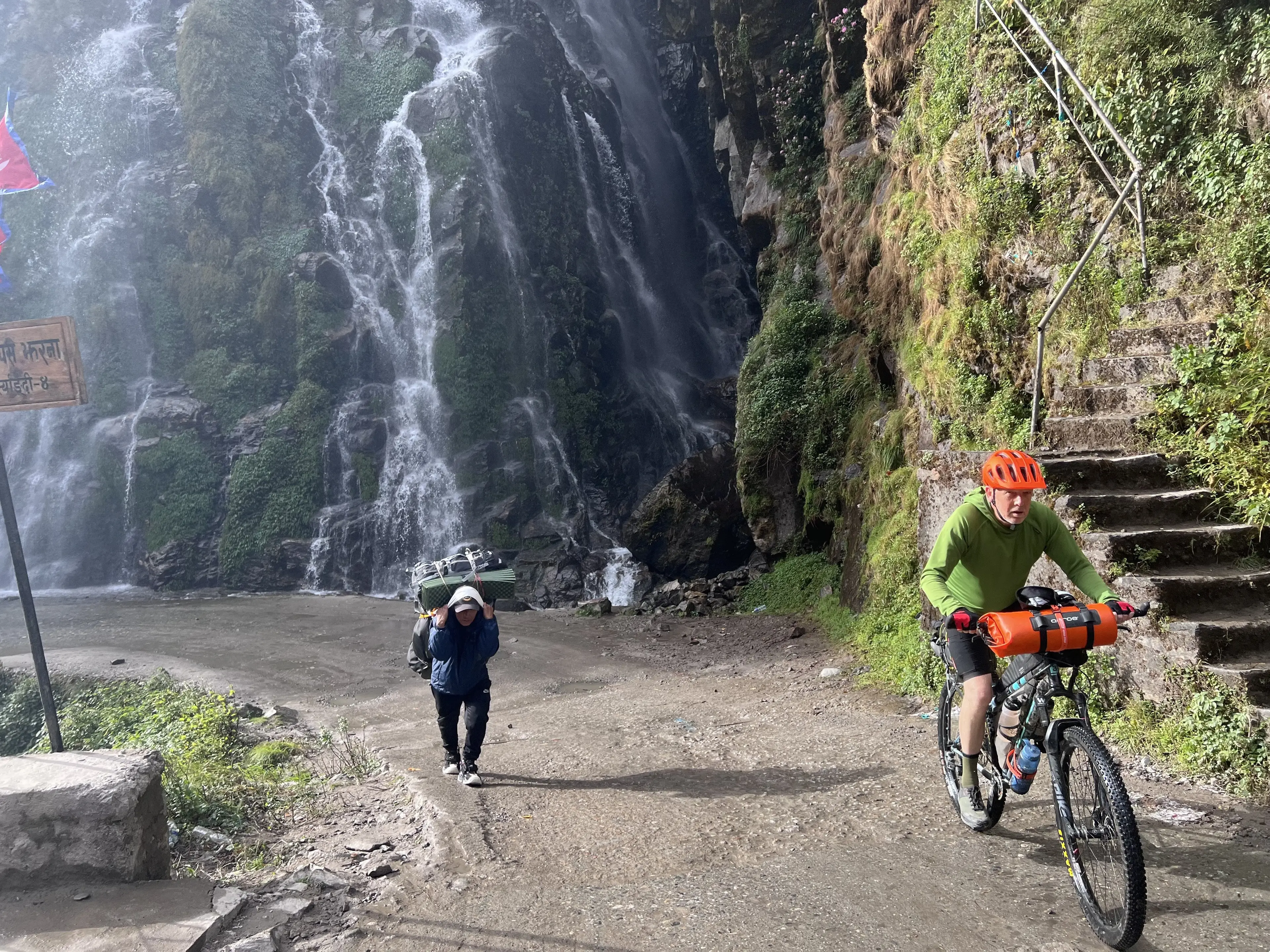
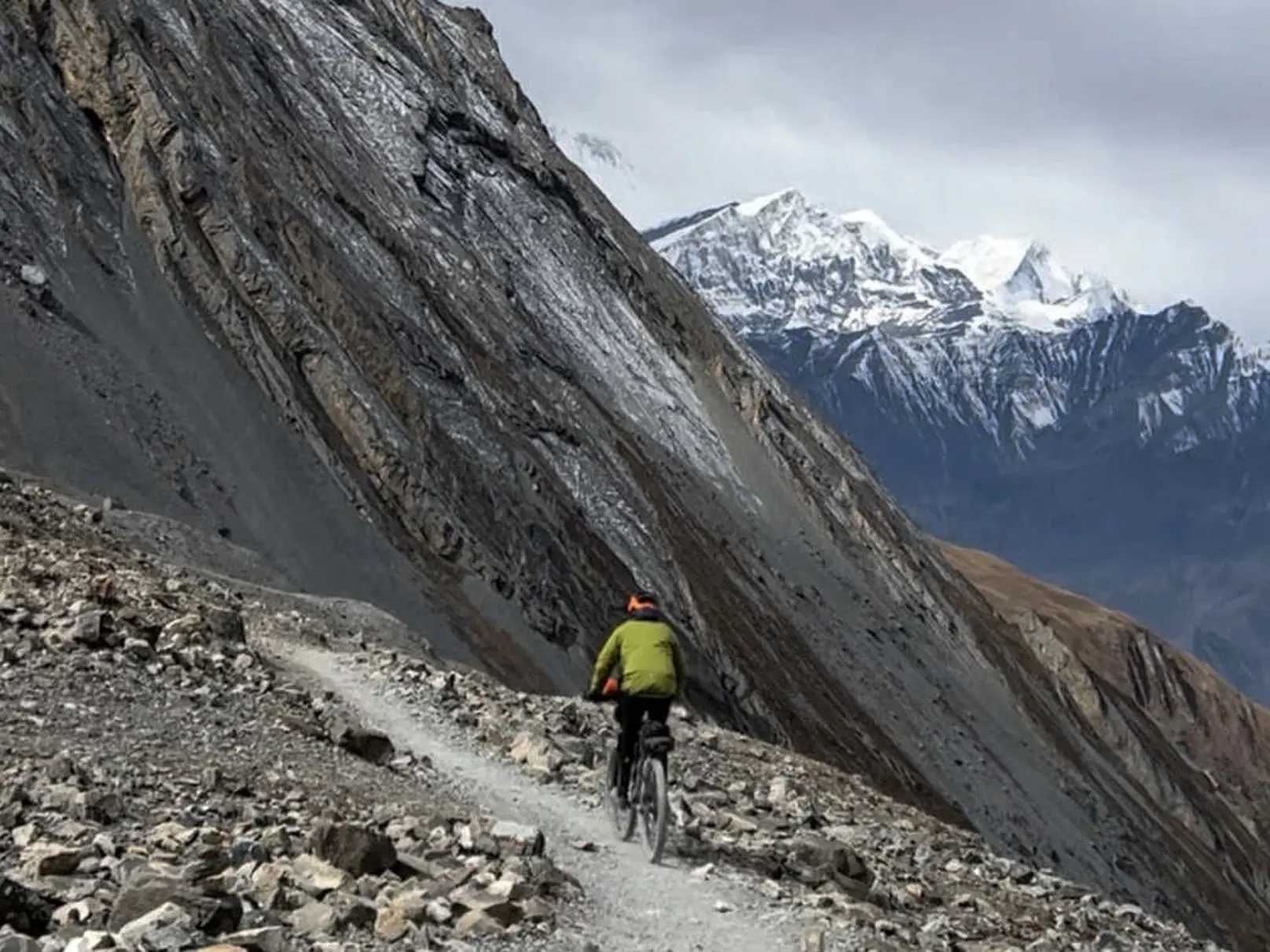
They continued to zigzag their way up the roads, often just loose gravel surfaces with a 30m drop off and no guard rails, sharing with other vehicles. They were required to be stamped in at checkpoints so authorities knew where they were.
"You could see the mountains in the distance: it was just spectacular."
As they were ascending over 5400m, when they reached 2000m above sea level they began taking a drug which helped reduce the risk of high-altitude sickness. They also only rode about 30km a day, making sure they did not go up more than 500m in elevation in 24 hours as a hedge against altitude sickness.
They stopped at the town of Manang (3500m) where many people spend a few days to acclimatise to the elevation but Ross and his colleague were feeling fine so they left the next day. They travelled up past the Blue Lake and by this level there were no vehicles; just hikers, donkeys and yaks.
"The yaks were quite funny. They just sort of stood there."
As they got higher, the landscape became more barren and the temperatures dropped. First they noticed frosts in the morning and then a bit of overnight snow and by the time they got to the top it was -6°C.
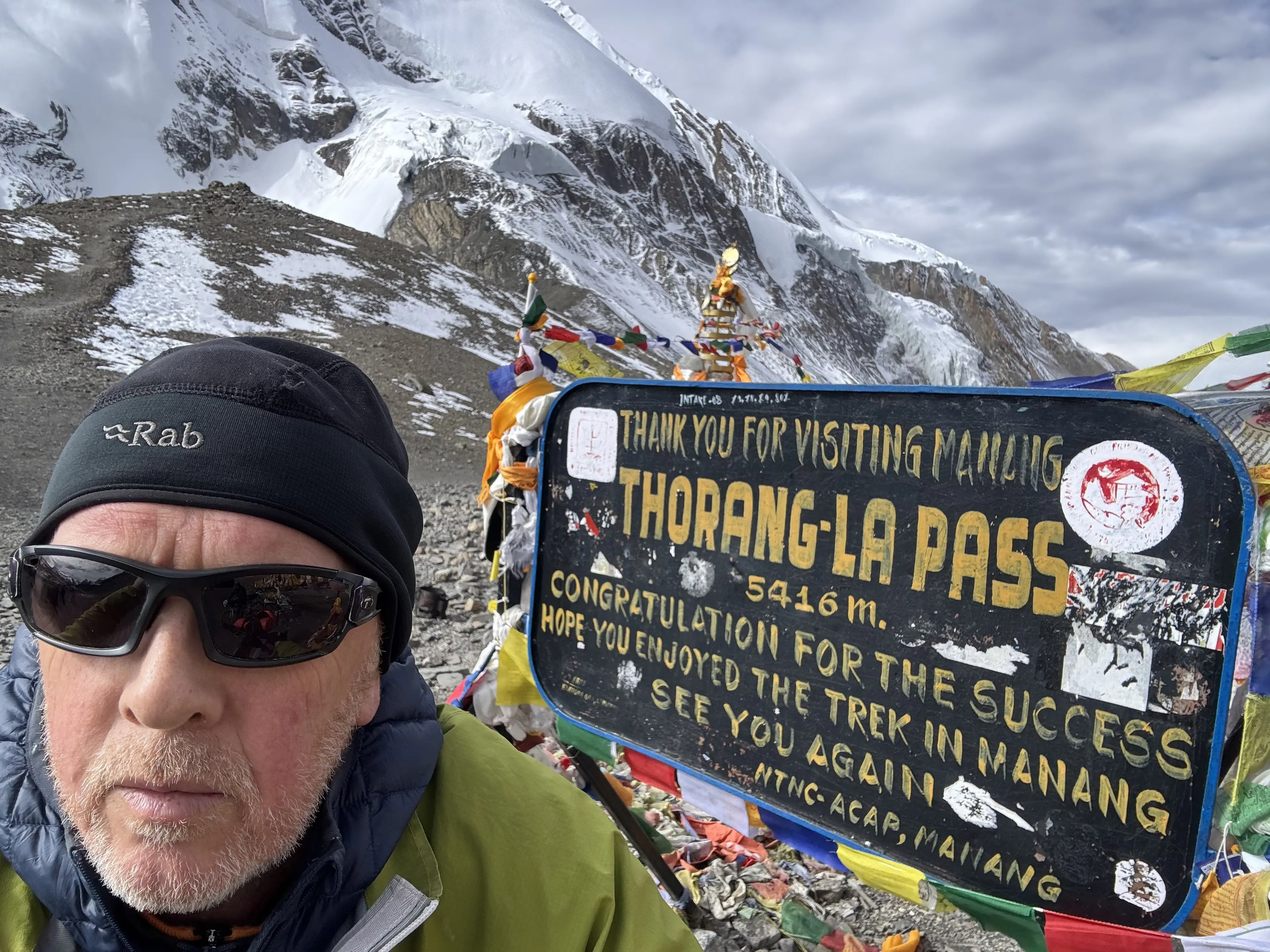
It took seven days to get to Thorong La Pass (5416m) — higher than Everest’s Base Camp (5364m) — and, as they were keeping a close eye on the weather, they decided to go across a day earlier to avoid a weather front coming in. They left in the dark at 4am to head over.
"Going over the pass, it was so cold that the water bottles froze solid on our bikes. We basically just pushed our bikes over.
"And then you just quietly work your way up. Like, you’re maybe walking five steps at a time. Because above 5000m, the partial pressure of oxygen is significantly lower, with available oxygen being about 52-55% of [that at] sea level, so your breathing rate becomes really high as the air is thinner, so you’re taking a few steps and then stop to catch your breath and just working your way up very slowly, step by step."
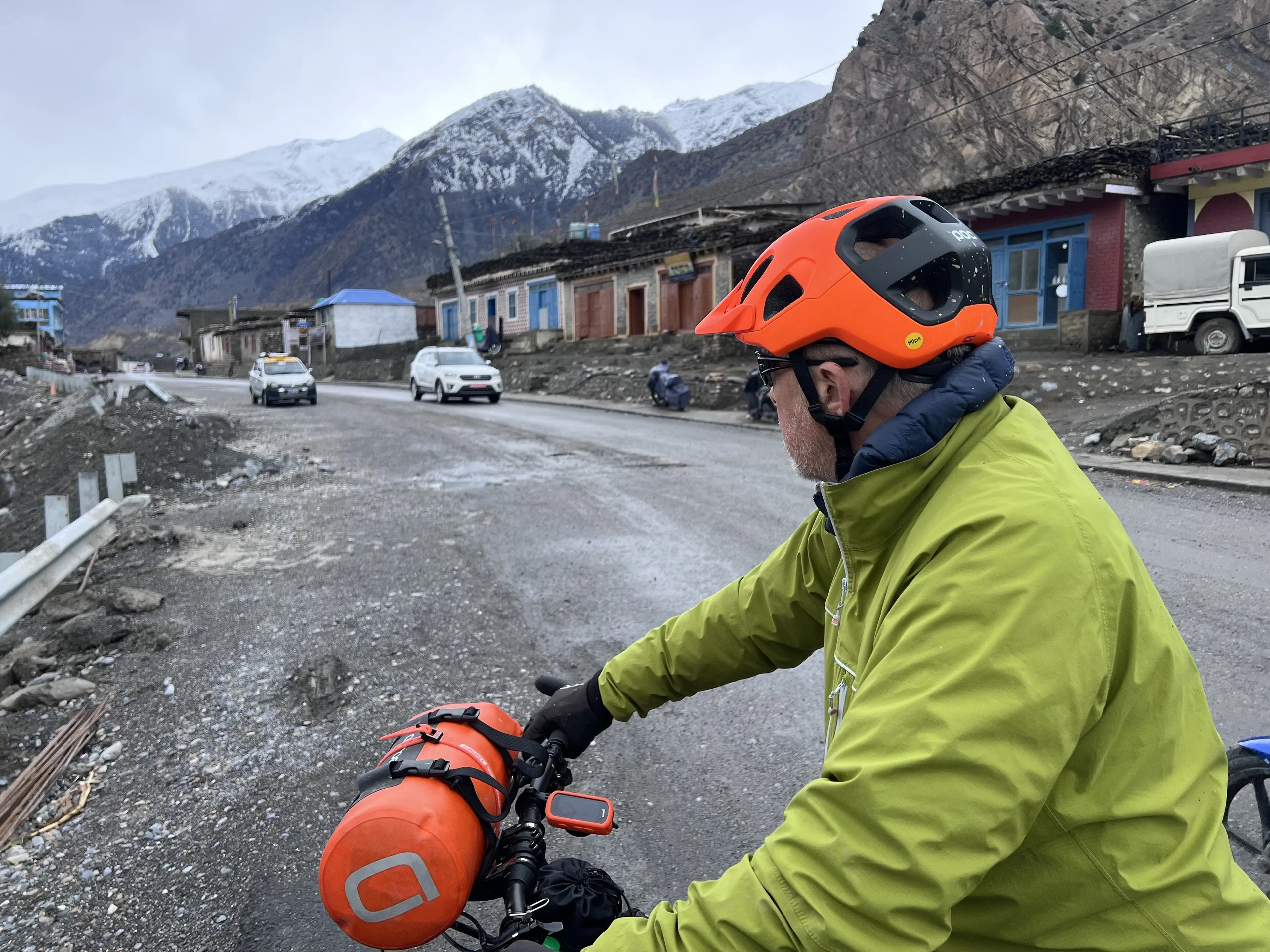
Going a day early was a good choice as the next day it snowed heavily and the pass was closed.
"I got up during the night and it started to snow. Honestly, it just snowed and snowed, the next day, it was like, oh my goodness, a total white-out and we were truly snowed in. So, we had to spend an extra day in Muktinath, the site of a scared temple for Hindus and Buddhists."
The next day the snow had eased and was beginning to melt so they began their descent down the mountain to the city of Jomsom (2713m). It was still merino wool and puffer jacket territory at this elevation and the gravel roads became concrete — but there were still super steep drops to one side.
They made it to Tatopani (1189m) where the weather started to warm up.
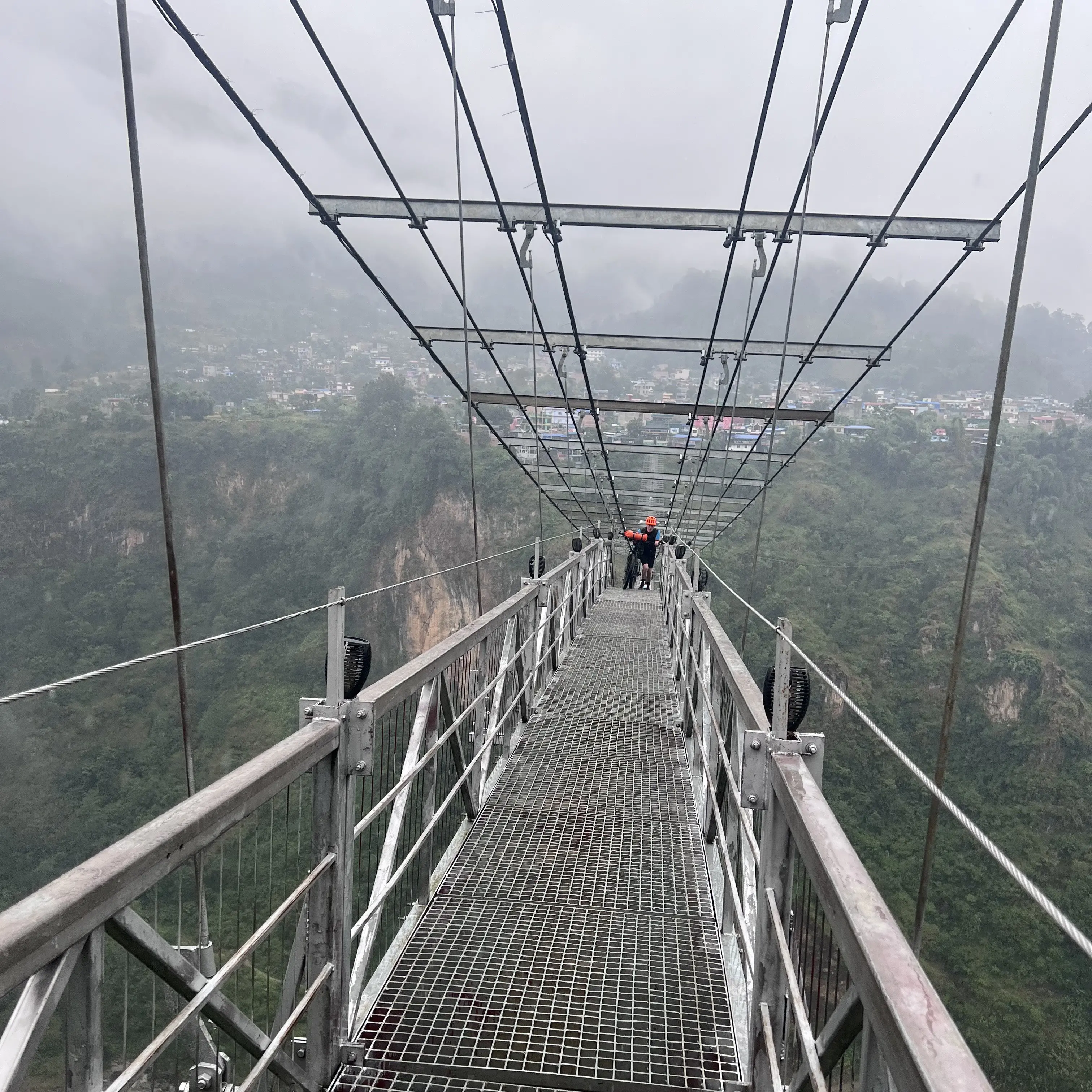
There were also many swing bridges linking the two sides of the Kali Gandaki River gorge; all made of metal; some spanning great distances. All were used by motorbikes or scooters — the main transport. One at Kushma was so high, at 228m above the river, it served as a bungee platform.
"That was apparently the second highest bungee in the world," Ross says.
Sometimes they had to cross the swing bridges to get to their accommodation on the other side; the longest was 360m in length.
"It was just amazing. It felt safe riding our bikes across."
The next day, they cycled down Kushma for a night before cycling to to their starting point of Pokhara, arriving in the rain. Their hotel, hot water and rest were welcome before they dismantled their bikes for the trip back to Kathmandu.
Ross says they were lucky their bikes worked fine, they did not have an accident or get sick. While they were doing the circuit they met only one other cyclist, who was from India. Many hikers and locals were amazed that they were riding bikes around the Annapurna Circuit.
Working with a travel agent in Kathmandu to organise the first couple of days’ accommodation in the city and Pokhara, as well as the return transport of themselves and boxed bikes, worked well and then they did the rest themselves while on the circuit.
"The actual circuit itself was very easy to travel. The people were lovely; they were friendly. The altitude — you noticed it, but because you were slowly acclimatising, it worked really well. And the bike was absolutely fine."
Now Ross is planning his next adventure, a little closer to home this time: The Old Ghost Road, in the northwest of the South Island.
"It’s the top mountainbike ride in New Zealand. It would be the best in the southern hemisphere. It’s amazing."