
PHOTO
Broadband data consumption is soaring in Dunedin, and telecommunications provider Chorus says it is not a coincidence that use skyrockets when ''certain data-hungry members of the family'' wander in from school.
New statistics from Chorus show Dunedin households are consuming 44% more broadband data than this time last year.
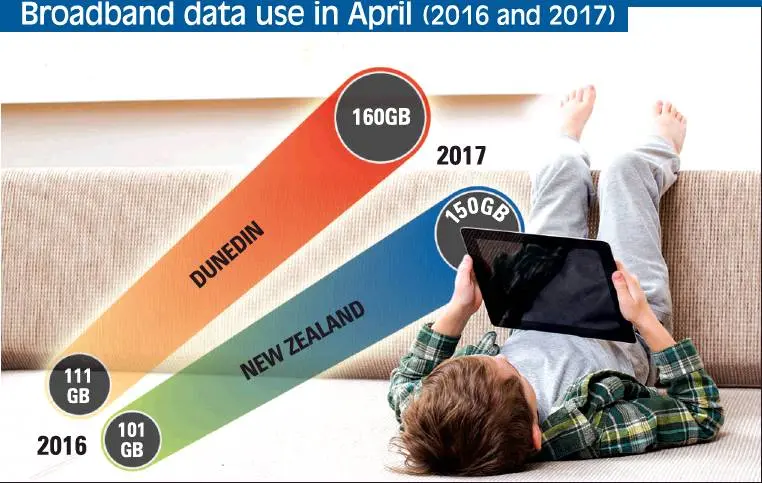
The average home used 160GB of broadband data on the Chorus copper and fibre network in April 2017, compared with 111GB in April 2016.
Network strategy manager Kurt Rodgers believed the increase was driven by surging demand for streaming services such as Netflix.
''Typically, homes now have several connected devices at any one time, so we're all using far more data and many of us are demanding faster and more reliable broadband speeds.''
On an average day in Dunedin, data use on the Chorus network was at its lowest at 5am and began to rise between 6am and 8.30am, he said.
Use remained consistent during the day and jumped sharply from 3.30pm.
''It is unlikely to be a coincidence that it's the same time certain data-hungry members of the family wander in from school.
''Household usage slows down again over dinner time, and from 7.30pm it climbs to the highest usage period of the day - between 8pm and 10.30pm - as people get through one or two Netflix shows, upload homework or Skype friends and family.''
Nationally, the average home used about 150GB of broadband data in April 2017, compared with about 101GB in April 2016, he said.
''More Kiwis can, and are, taking advantage of our faster, more reliable broadband connections.
''With faster broadband, you don't have long delays while streaming or downloading high definition TV and video, or face frustrating buffering - even when there are multiple connected devices in your home.''
Mr Rodgers said New Zealand's use of new technology was also driving the increase in speed.
''It doesn't matter whether you live in the cities or live rurally, content is flying into our homes faster due to newer technology, such as high definition online television and more interactive and complex online games.
''It's likely the impact of online TV will continue to be felt in peak network traffic growth.
''As more content becomes available online, new devices are released to watch it on, and higher video resolutions such as 4K [and eventually 8K] see increasing pressure on the bandwidth required at peak times.''