

PHOTO
A $1.16 million study that aims to unlock ancient secrets and understanding of Māori rock art is officially under way.
Supported by a Mana Tūānuku Research Leader Fellowship, the initiative aims to blend archaeological data with qualitative interviews.
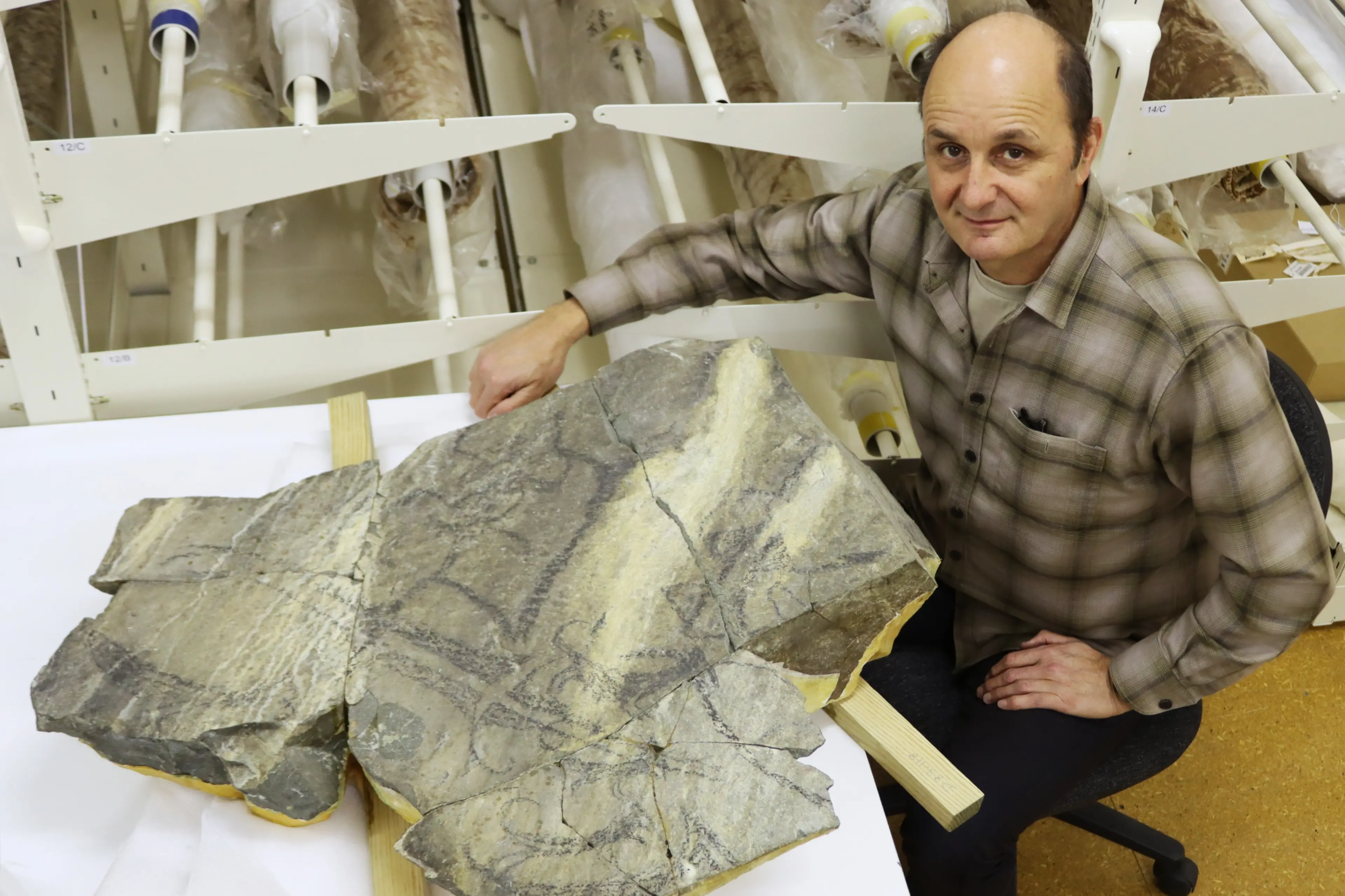
Tūhura Otago Museum curator Māori and pouhere kaupapa Māori Dr Gerard O’Regan (Ngāi Tahu) is leading the four-year project.
It was an opportunity to rethink narratives rather than just following traditional archaeological frameworks, Dr O’Regan said.
“When we talk of rock art, we are talking about markings that are made in the landscape.
“One of the important things about that is, where things are placed in the landscape is actually really significant.
“You might find a carving close to a pool, which is indicating that pool, that little eddy in the river, actually has significance.”
Rock art was not an isolated object and understanding its connection to the natural world was crucial to moving beyond the motif alone, he said.
The project comes after decades of Māori rock art being severed from its landscape or damaged by early European interpretation.
In the 1950s, the Ministry of Works blasted greywacke rock art out of the Ahuriri River to make way for the Lake Benmore reservoir of Benmore Dam.
Some of this salvaged art is held at the museum while the original site is now flooded.
The pieces showing depictions such as a dog, a lizard and what could be a taniwha form were permanently stained by researcher Theo Schoon, who retraced original markings with greasy crayon.
The research will include wānanga with notable Māori experts to explore traditional language and concepts, potentially challenging the terminology of rock art itself.
The term “ana whakairo” meant adorned cave as opposed to carved.
“We normally use whakairo for the term carving, but it has actually got a wider use,” Dr O’Regan said.
“Because we have four years, we have actually got a long enough time to really massage these ideas through in a way whereby we can really develop, you know, an idea of how we want to think about rock art going into the future.
“Some of these things might not have been art as such … there is other symbolism going on.”
Fieldwork in Southland and Otago will help fill information gaps and analyse images that have been recorded by the Ngāi Tahu Māori Rock Art Trust during earlier investigations.
This includes further investigation in Fiordland, where Dr O’Regan discovered a previously unrecorded red lizard painting in a cave about three years ago, alongside Associate Prof Alex Monteith and Emeritus Prof Atholl Anderson (Ngāi Tahu).
It will also explore commonalities between Māori rock art and that of other Polynesian peoples to see how first contact and colonisation impacted artistic practices.
“We want to be archaeologically informed,” Dr O’Regan said.
“That’s, if you like, our data set.
“But we don’t want to be constrained by the archaeological interpretation.”
The findings will inform an exhibition planned for the end of next year at Tūhura Otago Museum as well as a book on Māori rock art.
“By opening up a broader range of thinking and understandings, we can actually start to hopefully develop new grounds for thinking about the rock art,” Dr O’Regan said.
“Both in terms of our old people, but also what it means to us today and how we want to engage with it today.”
sam.henderson@thestar.co.nz