
PHOTO
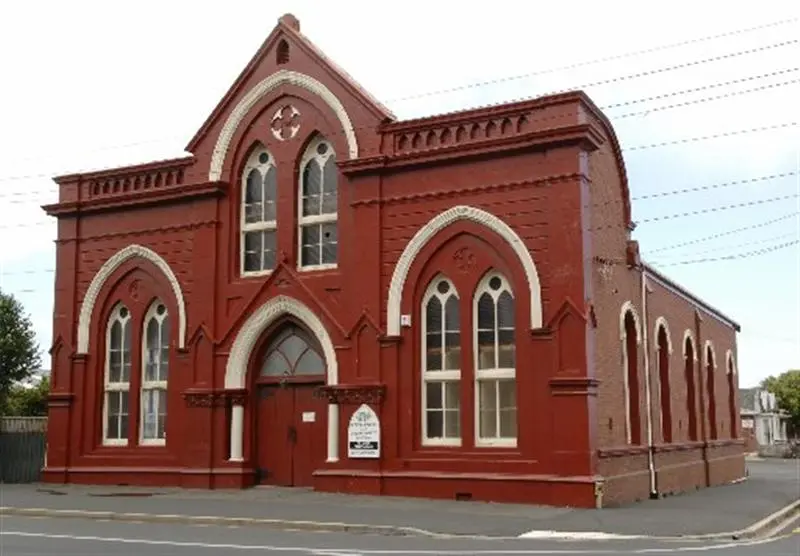
A plan to demolish the Wesley Church, in Hillside Rd, South Dunedin, looks set to be opposed by the New Zealand Historic Places Trust, which is hoping for what it calls "a better outcome than what is intended".
The issue has arisen following the Methodist Mission's application for resource consent for a new $5.6 million social services complex on the site.
The opposition has "confused" Methodist Mission general manager Laura Black, who said she understood the trust had acknowledged it was not realistic to retain the building.
She said the "Victorian gospel hall" style building harked back to a time when people were lectured from the pulpit, and had no place in a modern facility.
NZHPT Otago-Southland area manager Owen Graham said the trust generally opposed any demolition of pre-1900 buildings, except where they were beyond repair, and the trust believed the church was not beyond repair.
"I think demolition is inconsistent with sustainable management of the building."
The Methodist Mission last year announced a public appeal for money to help build the Wesley Village, on the site of the Wesley Church.
Existing buildings on the site, including the church, which was built in 1894, would be demolished.
The proposal has been publicly notified by the Dunedin City Council, as the site is industrial, and the project is a non-complying activity.
It was planned to incorporate a community lounge, hall, meeting rooms, nursery and pre-school in the new buildings.
Ms Black said when the project was announced the brick church was in a dangerous condition with foundations subsiding, borer in woodwork and roof beams giving way.
A report from consultant Mitchell Partnerships said an initial plan for the building was to relocate its original pillars and archway to a garden on the site, but that was not supported by the trust during consultation.
Retaining all the piers, pillars and decorative friezes was investigated, but was considered out of scale with the village concept.
Mason and Wales architect Ashley Muir said the new complex would retain some of the church's historical features, including two pillars on each side of the front door, and smaller items from inside the church, such as door handles and decorative hinges.
The difficulty from a design point of view was one of scale, with the church of a larger scale, not conducive to the human activities for which the complex was designed.
Mr Graham said the trust encouraged retention, or finding a new use for the church, as part of the "adaptive re-use" the trust recommended for historic buildings.
"We strongly recommend every effort be made to mitigate the total loss of the building."
The building was not a registered building, nor was it scheduled in the council's district plan.The trust would try to make further ground in its discussion with the mission.
Ms Black said the mission had worked very hard with the Historic Places Trust.
"We understood we were negotiating with them. We had an acknowledgement from them it was not realistic to retain the building."
It would have cost hundreds of thousands, even millions, of dollars to fix the church, she said.
Even if the mission could afford to fix the building - and it could not - it was not appropriate for its purpose.
A child-care facility had to be fenced off to stop bricks falling from the building and injuring the children.
"People look at it [the church] and see nothing that makes them welcome. It builds barriers. It no longer represents the face of Methodism."
Ms Black said the trust wanted the mission to retain the entrance to the building and its surrounds, but a design with those features "looked awful".
"That seems to be the bit we're struggling with. We're not looking to walk away from the building and not recognise it."
The submission period closes on February 23.