PHOTO
When Blenheim pilot Nigel Griffith got a call from someone looking for a float plane, he couldn't have imagined he would end up doubling for Hollywood superstar Brad Pitt in his new film Heart of the Beast.
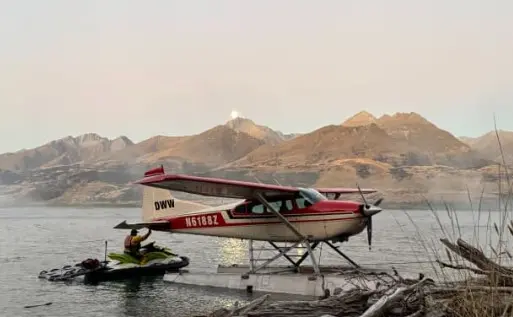
Just when the set director thought they would have to buy float planes from overseas, Griffith, who runs an agricultural aviation company and chairs the Recreational Backcountry Pilots Association, came to the rescue.
“I had some [float planes] that I thought I was going to have to send to the scrap man because I couldn't sell them. So I said, ‘I've got some floats in my hangar you can buy if you want’ and away we went,” Griffith told Nine to Noon.
“It was a bit of a miracle thing that happens in life sometimes, isn't it? You don't expect things like that to happen, but it couldn't have gone any better,” he says.
“It was all top secret and no one was to know who was starring. So we were sworn to secrecy from day one.”
It wasn’t until he got to Auckland that Griffith found out who the star was.
“There was about 20 people that met me standing on the grass at Ardmore.
“One of them said, ‘do you mind if I take your measurements?’ She started measuring me up and said, ‘you're exactly the same shape and size as Brad Pitt, who's the actor’.
“I said, ‘all right, okay’, and she said ‘would you be prepared to do that role?’ I said ‘absolutely’.”
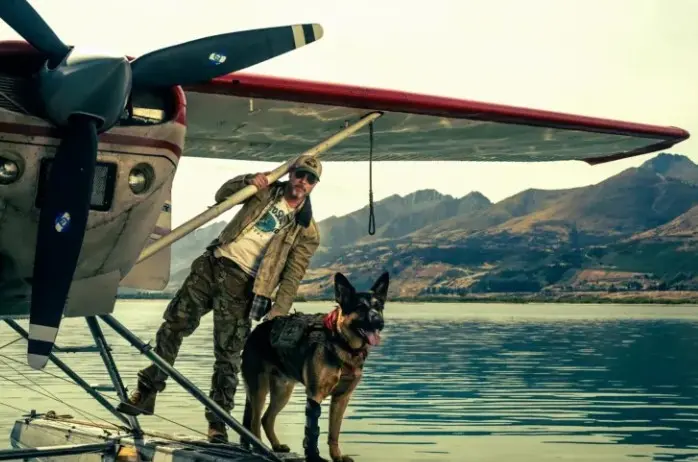
Set in the Alaskan wilderness and filmed across Queenstown, Glenorchy, Mount Aspiring National Park and Milford Sound, the movie follows a former Special Forces soldier and his former military dog stuck in the wilderness.
Griffith loved filming a challenging scene at Earnslaw Burn, where he hadn’t flown before.
“It's like flying around in the inside of a volcano. So we had to climb up for six or seven thousand feet, which is a bit of a mission in that aeroplane, and then descend down inside this almost round kind of amphitheatre underneath glaciers, and then do this crash scene all the way out through the valley that runs out of that area.
“It was the kind of critical shot we were looking for. I did my absolute best and we popped out the bottom. I thought, thank goodness that's over.
“And they called up and said, ‘oh, we had a bug on the lens. Start again’.
“So I think we did that three times, which was great. By then, I was settled in.”
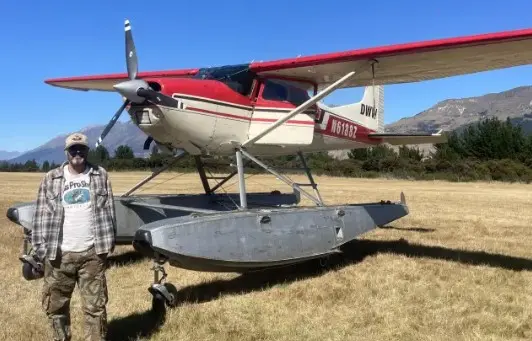
Griffith’s brief required him to fly close to hills, mountain ridges, lakes and rivers.
“I did wish I'd been in an aeroplane with more performance on the day, that aeroplane with the floats on is quite heavy and quite underwhelming performance wise. So I did earn my money that day, that's for sure.”
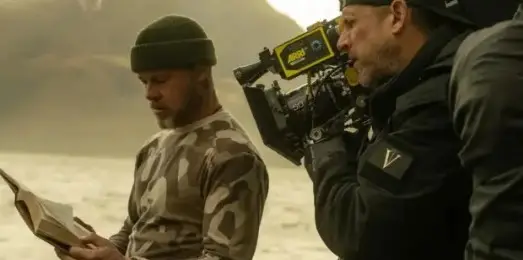
Pitt also trained with one of Griffith’s colleagues, learning how he should look while flying, as well as starting sequences and taxiing.
“I worked with him quite a lot and he really was calm and controlled and … he made me feel really necessary, which was really cool.”
While Griffith concentrated on the flying, directions came through an earpiece.
“My concern leading up to it was how the interaction was going to be with the filming from the helicopter.
“But the helicopter pilot was one of the best, if not the best, I believe, in the country doing that sort of work. He made my life so easy.
“He said to me afterwards, you know, the director would say to him, ‘get Nigel to drop down’ and rather than getting me to drop down, he would just climb up a little bit and get the shot. And I think that's why he made it so easy for me.”
Griffith says pilots can be highly critical of aviation films, but believes this one is hard to fault.
“I thought they did a magic job.”
After an extraordinary outing for his two float planes, Griffith has sold one to a farmer friend and returned to his day job of aerial top dressing.
“The top dressing is unbeatable in my opinion. It's the coolest flying you can do.
“So I'm very lucky to be able to do that day-to-day and that gives me such a buzz. It's so challenging and the people that you're working for are amazing, awesome people that are looking after their properties. It's a real privilege to do the job I do.”
