
PHOTO
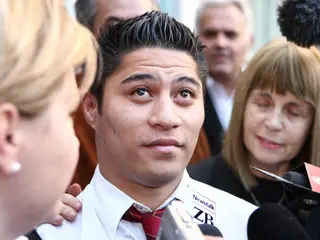
The chief coroner is considering whether enough could be learned from examining the deaths of the Kahui twins to warrant a formal inquest.
Judge Neil McLean said he had added the deaths of three-month-old twins Cru and Chris Kahui in June 2006 to deaths he was thinking about holding an inquest into.
He did so after their father Chris Kahui was found not guilty of their murder following a six-week trial in the High Court at Auckland.
Judge McLean said an inquest does not consider criminality or culpability, instead trying to establish how a death happened and what can be learned to help avoid similar circumstances in the future.
"The reality is often a trial, particularly if there's an acquittal, means that not all relevant issues are actually being canvassed because the focus of a trial is different from what an inquest maybe.
"I've got to weigh up a number of factors, including whether there is any point to an inquest, are there sufficient unresolved issues that an inquest could investigate, bearing in mind an inquest can't go over the coals of criminality or culpability."
However, he said the coroner has wide powers to call witnesses.
"The rules of evidence for a coroners inquest are much broader than for a trial. The coroner decides who he or she wants to hear from," he told Radio New Zealand today.
Judge McLean said a coroner "can issue a summons for people to appear at the inquest and talk", and if they refused, "we'll explore that if and when it happens".
This potentially means Chris Kahui, who did not take the witness stand during the murder trial, could be summoned to give evidence.
He said it was possible however for an inquest to stop and the criminal process to be started again if evidence emerged at an inquest which the Crown didn't know about previously that meant it wanted to lay charges.
"I've never experienced it myself, but it could happen."
Judge McLean said he was also considering an inquest into the death of 10-year-old Christchurch girl Charlene Makaza.
Her uncle George Gwaze, 54, was found not guilty of her murder last week at the High Court in Christchurch after evidence was presented to suggest Charlene's symptoms were similar to that of children who died of Aids in South Africa.