
PHOTO
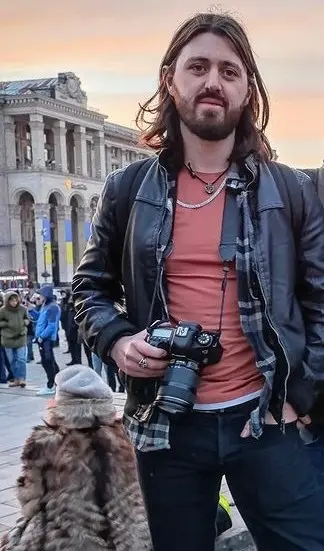
Christchurch-raised war correspondent Tom Mutch has detailed his ordeal huddling underground during Russian bombardments of the Ukrainian capital Kyiv, before joining a mass exodus west towards the Polish border.
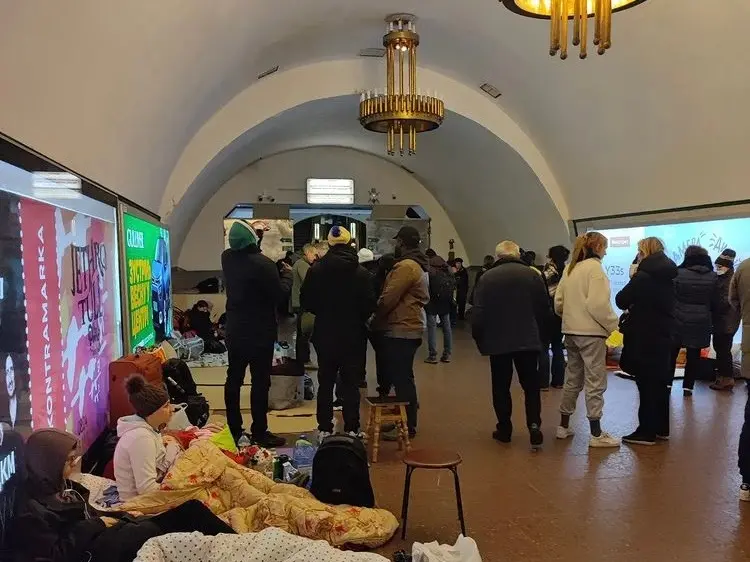
The 30-year-old former Burnside High School student spent three days taking shelter in the city’s network of subway stations, 70m below the streets in bunkers originally designed by the Soviets to protect citizens from a nuclear attack.

Mutch, who arrived in Kyiv a month ago following assignments in Afghanistan and Iraq, described how stark the contrast is now compared to his first experiences with the now rubble-strewn city centre.
He was working as a photographer when he first met Victoria Zavhorodnia, a vivacious former model who was liaising with media covering the Kyiv Fashion Week.
Less than a month later they met again under rather different surroundings - inside one of the city’s metro stations.
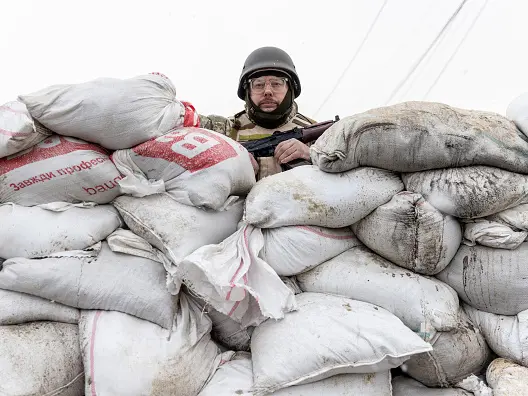
“It had been converted into a bomb shelter protected by an enormous steel blast door and half a dozen armed men and women standing guard behind it in case Russian troops attempt to enter,” Mutch wrote, in a dispatch for London’s Evening Standard newspaper.
“Whole families have been living down here for days and conditions are cold and cramped and quickly turning squalid, with nothing in the way of supplies or essentials, only the possessions people thought to bring with them in those panicked minutes they had to leave their homes - mattresses, pillows, yoga mats, even pets like dogs and rabbits.
“In the scariest moments, people have been handing out chocolate bars and water to boost spirits, and one couple, Platon and Barbara, even offered me a bottle of Jack Daniels over the weekend to take the edge off. On the streets above heavy fighting can be heard daily.”
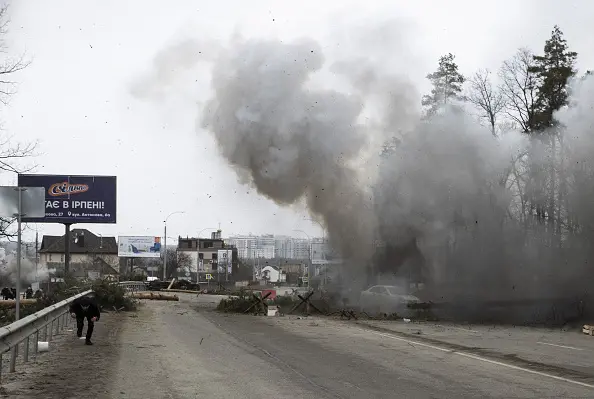
Mutch, who has covered conflicts in Asia’s South Caucasus region and Afghanistan in recent years, described the situation in Ukraine as "already on a scale my film and photography crew and I have never seen before".
“In a matter of days, one of Europe’s largest, most vibrant capital cities has turned into the world’s worst war zone.”
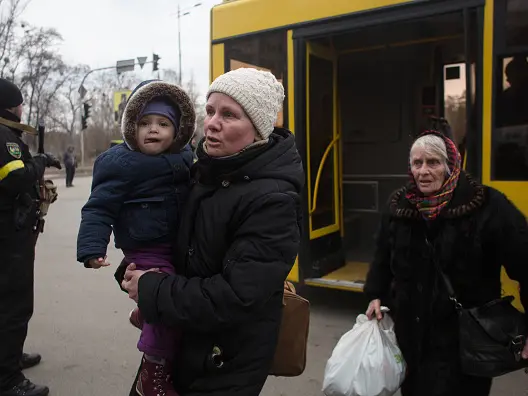
During a lull in the combat, Mutch emerged to street level and latched onto a refugee train heading to Lviv, 540km west of Kyiv.
“It (the invasion) has also spawned one of the largest refugee crises in European history, with hundreds of thousands of Ukrainians fleeing towards the borders of Poland.

“The evacuation train is full of refugees, mostly Ukrainians, but also large numbers of immigrants, particularly from India, Ghana and Nigeria. Groups of them huddle on the ground in the corridor, discussing the various European countries that might take them in,” Mutch said, adding: “People are burning clothes for warmth, a very hard thing to watch.”
Although currently in a safe haven 70km from the Polish frontier, Mutch feared for the Ukrainians who had chosen not to flee.
“The worst for Ukraine could be yet to come. Now, he (Russian president Vladimir Putin) could decide to bring the full weight of his heavy artillery, tanks and air power to take the cities street by street,” Mutch said.
“If the Ukrainians defend block by block, he will have to level the cities to the ground. Putin has form for this – he has done it before in the cities of Grozny in Chechnya and Aleppo in Syria. But could he really do it to Kyiv, what he has called the ‘mother of Russian cities’?”
Meanwhile, Carol Mutch was comforted by her only child retreating from Kyiv after watching columns of Russian tanks head for the city on television.

“He’s gone to help the refugees. I can only admire him for that. We just put some money in his bank account to buy food, water and blankets and so on for the various people who are flooding (towards Poland),” she said.
“I’m relieved he’s no longer in Kyiv but there are quite a few sleepless nights. I sleep with the phone beside my bed waiting for the buzz of an Instagram or WhatsApp message.”