
PHOTO

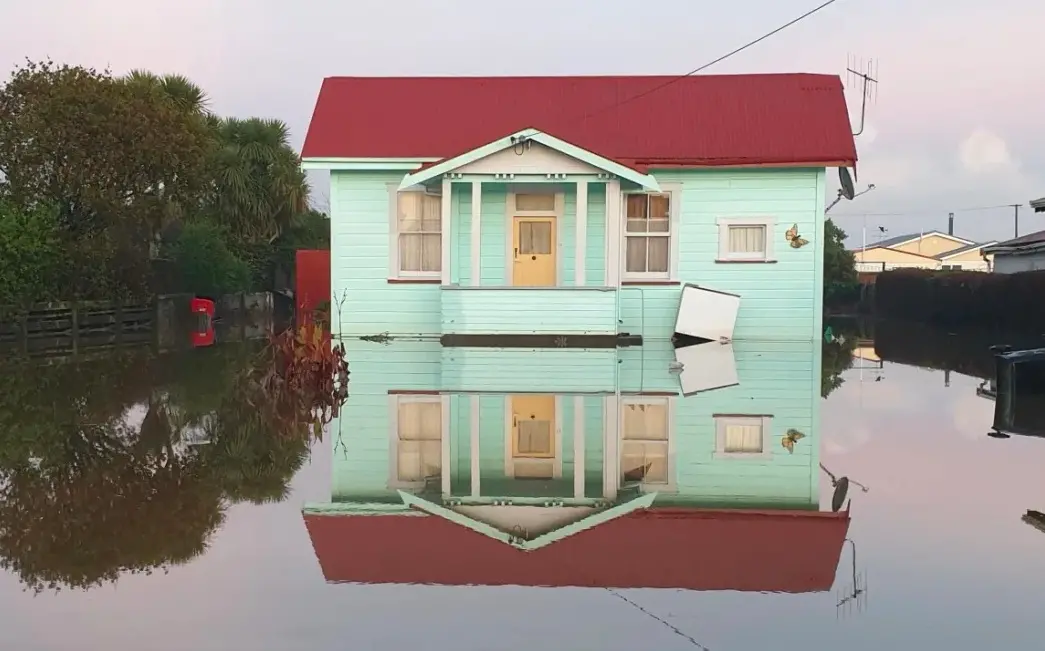
The government needs to stop delaying decisions about how climate adaptation will be funded, the mayor of one storm-ravaged district says.
Speaking at the annual Insurance Council conference, Gisborne mayor and Local Government New Zealand president Rehette Stoltz said the financial and decision-making burden was too heavy for councils to carry alone.
Her comments echo Westport residents' frustrations, published in a new Climate Change Commission report, that funding is available to make an adaptation plan but "after that you're on your own".
The government has repeatedly said that it will not make any decisions about climate resilience cost-sharing until after the election.
Climate Change minister Simon Watts told RNZ last month that it was "a complex area and one where it is important to take the time to get things right".
Stoltz told the conference the rolling maul of severe events her region had experienced since 2017 was "New Zealand's future arriving early".
"We have seen so many events I have stopped counting how many civil defence emergencies I have declared," she said. "We never, ever reset."
Councils were being asked to carry a national problem on local balance sheets and that could not carry on.
"We need durable co-funding, we need adaptation planning, and we need stronger national direction."
Speaking to RNZ, she said she was frustrated by the political delays.
"We should not be delaying any investment decisions or how we address this problem, because it is not going away."
The government's National Adaptation Framework, announced last year, did not answer crucial questions.
"What's missing is very clear delineation - who is responsible for what and who will fund what."

Within her region, council planners and landowners had spent the last 18 months coming up with a plan to transition 100,000 hectares of erosion-prone land out of farming and forestry.
"But we need money," Stoltz said. "We do need investment into cases like this so we can make it happen."
In a case study on Westport, the Climate Change Commission said it "consistently heard calls for increased funding to allow councils to implement work, after the research and planning phases are complete".
Buller District Council's regulatory general manager Simon Bastion told the commission that the council received funding for the first stages of the town's adaptation plan.
"But there's no follow-on - after that you're on your own."
Insurance Council chief executive Kris Faafoi said the adaptation problem was "overdiagnosed" and it was time for action.
"We've done a lot of policy thinking ... but no one actually wants to commit the funding."
This week, the council proposed that the government fund Fire and Emergency New Zealand directly, and re-direct the fire levy that insurers collect on Fenz's behalf into a 'community protection levy' to fund climate resilience projects.
However, the proposal received muted responses from Finance Minister Nicola Willis and Labour leader Chris Hipkins, who both spoke at the conference.
Willis said the government was already stepping up its investment in climate resilience, including $400 million committed in last week's Budget to upgrading highways that are vulnerable to severe weather.
The Budget also committed funding to a National Flood Map, which was announced last year, with a first iteration due in 2027.
Hipkins said the council's suggestion would "pose challenges" for how the Crown would then fund FENZ, which he said already faced sustainability issues.
"In the short term I don't think it's a viable proposition," he said. "Ultimately, someone still has to pay."
Labour had made a start on climate resilience when it was in power through ring-fenced funding, which was then scrapped by the current government, he said.
He also criticised the view that all government debt was bad, suggesting that taking on additional debt to fund long-term infrastructure was "an absolutely legitimate thing for governments to do".
The Crown needed to be "a financial contributor" to climate resilience, "but the Crown itself is not going to be the sole funder".
However, he would not commit to any specific policies until closer to the election, saying the party was still considering the recent Budget and what was affordable.
Kris Faafoi said politicians were welcome to "rubbish" the levy suggestion.
"But ok then, what is the alternative?
"This is our submission, take it or leave it, but somehow we have to have a conversation about supporting the councils for those reslience works," he said.
"We do need some urgency."
This story was first published on rnz.co.nz |  |