
PHOTO
A scathing review of police by the Public Service Commission has found an "integrity reset is urgently needed" with a perceived culture that holds seniors to a "lesser standard than juniors".
It also found a "wave of crime" arriving on New Zealand shores and says police are "struggling to keep up".
The report reveals that only 21 percent of homicide, sexual assault and serious assault investigations were finalised within 12 months in 2024/25 down from 40 percent in 2020/2021. Police's performance standard for 2024/25 was greater than 60 percent.
In response, police have developed an implementation plan which includes a 10-year police Capability Plan.
The Public Service Commission (PSC) released its Performance Improvement Review (PIR) of police on Thursday.
An overview of the report said police needed to tackle three "major challenges" in the next five years.
"They need to rebuild police integrity; address persistent traditional crime while adapting to increasingly complex, digital, and transnational threats; and build their corporate performance in the face of ongoing fiscal pressures."
In relation to integrity, the report referenced the Independent Police Conduct Authority's damning report released in November about how senior police responded to allegations of sexual misconduct by former deputy commissioner Jevon McSkimming.
"The report revealed integrity failings across a small group of senior individuals. Our findings add to the scale of police's integrity challenge: we found a perceived culture that holds seniors to a lesser standard than juniors, tribalism especially at senior levels, and complaint systems which can fail staff at all levels.
"An integrity reset is urgently needed. police understand the scale and urgency of this issue, the recent leadership refresh has aimed to address these challenges, and they have initiatives well underway."
The report said police leadership needed to sustain that effort over years to "embed integrity across the organisation".

"Culture and systems from frontline decision-making to executive governance need to reinforce zero tolerance towards misconduct. We see a strong base to rebuild integrity: the police staff we met are committed to keeping our communities safe and lifting integrity across the organisation."
Crime was also evolving with police "struggling to keep up".
"A wave of crime is arriving on our shores which threatens our economic prosperity, democracy, and social cohesion. Transnational organised criminal groups are bringing increasing amounts of drugs, firearms, and laundered money into our communities.
"Increasingly, online fraud (which is the fastest growing source of harm in New Zealand) is originating offshore. Meanwhile traditional physical crimes persist, and they are growing more complex, armed, and violent."
The report said police needed to "operate effectively across two parallel worlds".
"They must continue to respond to traditional, place-based crime - an area where stakeholders consistently report that police perform strongly as first responders. At the same time, police must rapidly build the capability, confidence, and tools required to prevent and respond to harm in digital, transnational, and increasingly borderless environments.
"This is not a challenge unique to New Zealand. police agencies worldwide are grappling with the same fundamental shift in crime. The difference will lie in how quickly and decisively police adapt."
Immediate action was required to "restore core investigative competence".
"Investigation skills are deteriorating, particularly among less experienced officers, and this is undermining case outcomes and public confidence. Looking ahead, police must secure the right people, skills, tools, and technology to operate effectively in an increasingly complex, cyber-enabled crime environment."
In relation to core policing, the report said police had "historically underinvested" in its "corporate backbone".
"To operate effectively at police's scale, complexity, and devolution, the organisation needs to lift its finance, workforce planning, property, asset management, technology, and risk assurance functions. Without this strengthened backbone, the frontline will be unable to scale to meet the demands of an increasingly complex, digital, and borderless crime environment."
'Serious integrity and conduct failings'
The report said Dame Margaret Bazley's 2007 Commission of Inquiry into police conduct found "systemic issues dating back decades".
Since then, police have implemented all recommendations however more work was needed to "resolve current integrity failings and set a clear course for long-term cultural reform".
The report said at times culture and processes had "failed Police staff at all ranks".
"We heard instances of junior staff fearing speaking up against rank - it can be career limiting.
"Internal complaints processes were "not necessarily robust and can take years to resolve".
The reviewers supported Police Commissioner Richard Chambers' "decisive response" in commissioning the review as well as strengthening information security controls and auditing.
"Police need to maintain this momentum: it is critical for Police to build a culture of zero tolerance towards all misconduct."
One of the risks identified was a "long-standing culture of tribalism", particularly at executive level.
"These loyalties endure over entire careers and are most visible during senior leadership transitions, when association with previous leaders may overshadow merit (resulting in capable people being moved on despite having the skills and experience to outperform their replacements)."
Insider-threat was also a "growing risk" to police.
"The National Integrity Unit (NIU) assesses insider threat, including corruption, as the most significant risk facing police,"
"Insider threats may arise where police employees maintain connections to organised criminal groups or links to hostile foreign state actors seeking to exploit privileged access to police systems and information."
Insider threat and corruption complaints were "trending upwards".
"Some of this may simply because of the increased workforce, but may also be due to insufficient vetting at the recruitment stage," the report said.
"As a result, there are examples of unsuitable candidates entering the Police College."
There were also no "systematic mechanisms" to detect compromise throughout an officer's career.
"Cost of living pressures, and police's salary progression (it can take 21 years to reach the top police pay band) can make police vulnerable to compromise.
"Even a small financial reward can entice staff to share information that seems innocuous (shift rosters, patrol routes, meeting times), but when aggregated by criminals or hostile actors it can have an outsized operational impact and undermine public trust and confidence in police."
Concerns were raised in the PIR interview process of a "pervasive culture of information leaking within police".
"There was a view that confidential information is at times disclosed to the public or media presumably to influence sentiment, shape policy settings, pre-empt internal decisions, or apply pressure on other agencies and ministers by creating external expectations.
"These unauthorised disclosures occur frequently enough to suggest to a number of those we interviewed that it may have been normalised. Such behaviour is deeply concerning."
Bullying within police was a "very significant risk to police engagement".
'Cases are increasingly placed on weak foundations'
In relation to performance, the report said only 21 percent of homicide, sexual assault and serious assault investigations were finalised within 12 months in 2024/25 down from 40 percent in 2020/2021. Police's performance standard for 2024/25 was greater than 60 percent.
District Court Judges' satisfaction of the performance of police prosecutors was also down from 89 percent in 2020/21 to 80 percent in 2024/45.
The report said remedial training was necessary to improve investigation quality.
"Senior police staff, justice, and victim representatives commented on the declining quality of investigations, and police's varying ability to support prosecutions.
"Cases are increasingly placed on weak foundations due to variable crime scene management, gaps in evidence gathering, uneven file quality, and difficulty meeting prosecutorial standards."
Some staff were unable to effectively support prosecutions in court, the report found, with officers "presenting as nervous, unfamiliar with material they are speaking to, and unprepared for cross-examination".
The report said they had heard the term "skill fade" in describing the decline in investigation skills.
"This needs immediate remediation. Beyond the immediate skill-fade issue, police need to leverage technology to process, interrogate, and manage investigation data."
The report referred to poor implementation of investigation protocols and forensic skill deficits.
"There appears to be a resourcing issue in complex and long-running cases. While investigations can start off strong, staff can be pulled away due to competing demands. This slows the investigation - which can take years - and can undermine the ability to bring charges."
In relation to government priorities such as reducing child and youth offending and violent crime, the report said police had "responded rapidly and effectively" over the past two years and were "well positioned to continue progressing" them.
Police's focus on frontline policing had been well received by staff, the report said.
"One police officer commented 'we have our mojo back, it's like night and day.' A community representative told us 'I love the new style, I love seeing you guys out and about.'"
The report supported the move, and encouraged police to "sustain this focus into the future".
Emergency response system 'critical vulnerability for police'
The PIR also looked at the 111-emergency response system.
"Beyond customer satisfaction, the fragility and governance around the 111 platform presents a fundamental risk to emergency response."
It said that Spark operated the Initial Call Answering Platform (ICAP), answering them before transferring them to the appropriate emergency service.
"The fragmented ownership model means that police do not have full control over the end-to-end emergency call process. This limits their ability to modernise, integrate, and manage the system in line with operational needs.
"The lack of direct oversight creates vulnerabilities in coordination, especially during high-pressure or multi-agency incidents."
The report said a "modern, integrated platform" was necessary.
Police also needed better tools to counter violent crime and ensure officer safety, with the report recommending police continue an initiative to adopt body-worn cameras.
In a statement to RNZ, Police Commissioner Richard Chambers said he requested the PIR last year and asked it focused on integrity and conduct "as well as ensuring NZ police was well-placed for the challenges we face now and in the future".
"It is the first such review of the organisation since 2012 and was aimed at providing an independent view of the organisation and constructive guidance on how to improve.
The PIR points to the challenges police face in the years ahead, both internally and operationally. I am confident that with the right focus we can meet those.
"Many of the issues highlighted by the reviewers were not new or surprising, but have been long-standing problems and some will not be quick fixes."
He said in many areas, police were facing problems that have built up over many years.
"The findings have also given me confidence the direction taken over the last year is the right one.
"As I had hoped when I asked for the review, the report identifies areas where further work is needed to be able to better support the frontline and deliver to communities."
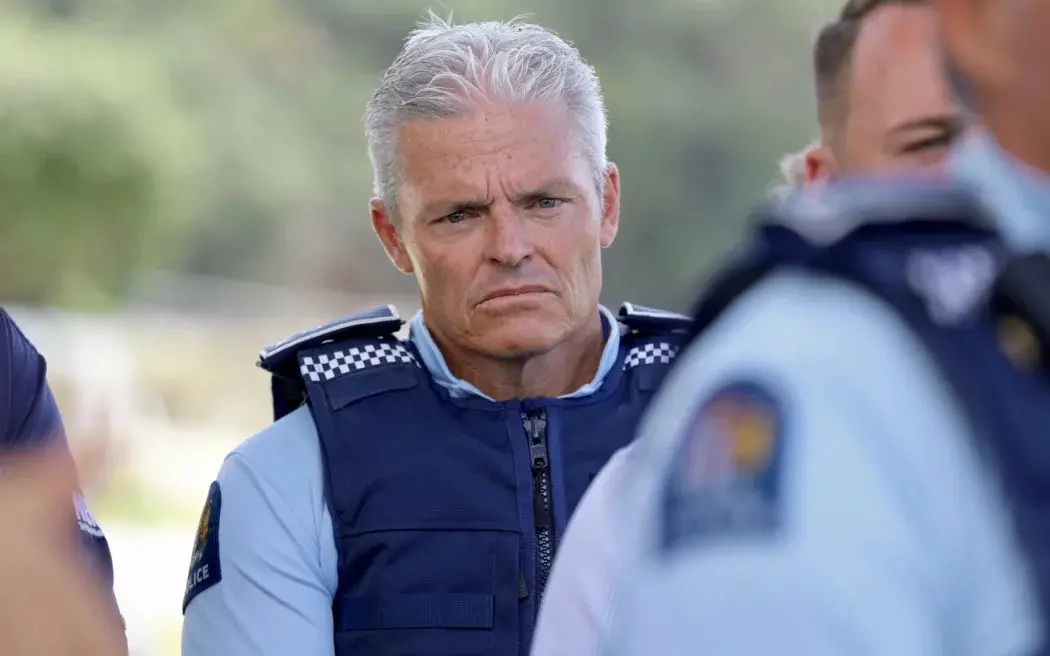
Chambers said integrity and professional conduct were "fundamental for trust and public confidence". Photo: RNZ / Samuel Rillstone
Police had considered the findings and recommendations and developed an Implementation Plan, which was released on Thursday.
"While some issues will require more immediate attention, a key part of the response is the decision to do a 10-year police Capability Plan. That will consider what police need over the
medium to long term to ensure we are well-placed to deliver.
"Those recommendations that link to public trust and confidence, such as integrity and standards, have been prioritised in that plan, as have recommendations relating to support for the frontline."
Chambers said integrity and professional conduct were "fundamental for trust and public confidence".
"Work on implementing the IPCA recommendations is well underway, and the PIR was supportive of the actions we have taken to address those problems.
"We have made excellent progress on the Integrity Action Plan, and these recommendations will further feed into that."
He said recommendations around core policing and investigations techniques and training were another priority area.
"This has concerned me for some time and work that was underway on modernising and improving training for recruits and more senior staff has been accelerated. The new curriculum for the 20-week programme for recruits has already been put in place, starting in January this year."
Chambers added that the review made it clear the "re-focus to core policing and frontline support" was the right thing to do.
"It praised the progress on targets to reduce violent crime and youth offending, noting the greater visibility of police through beat teams, retail crime and gang disruption work.
"The review also recognised the dedication of our staff and found they were motivated to serve
their communities and want to keep improving the way we work.
"We have had a challenging year, we have worked hard and it is encouraging to know we are on the right track in many ways."
