
PHOTO
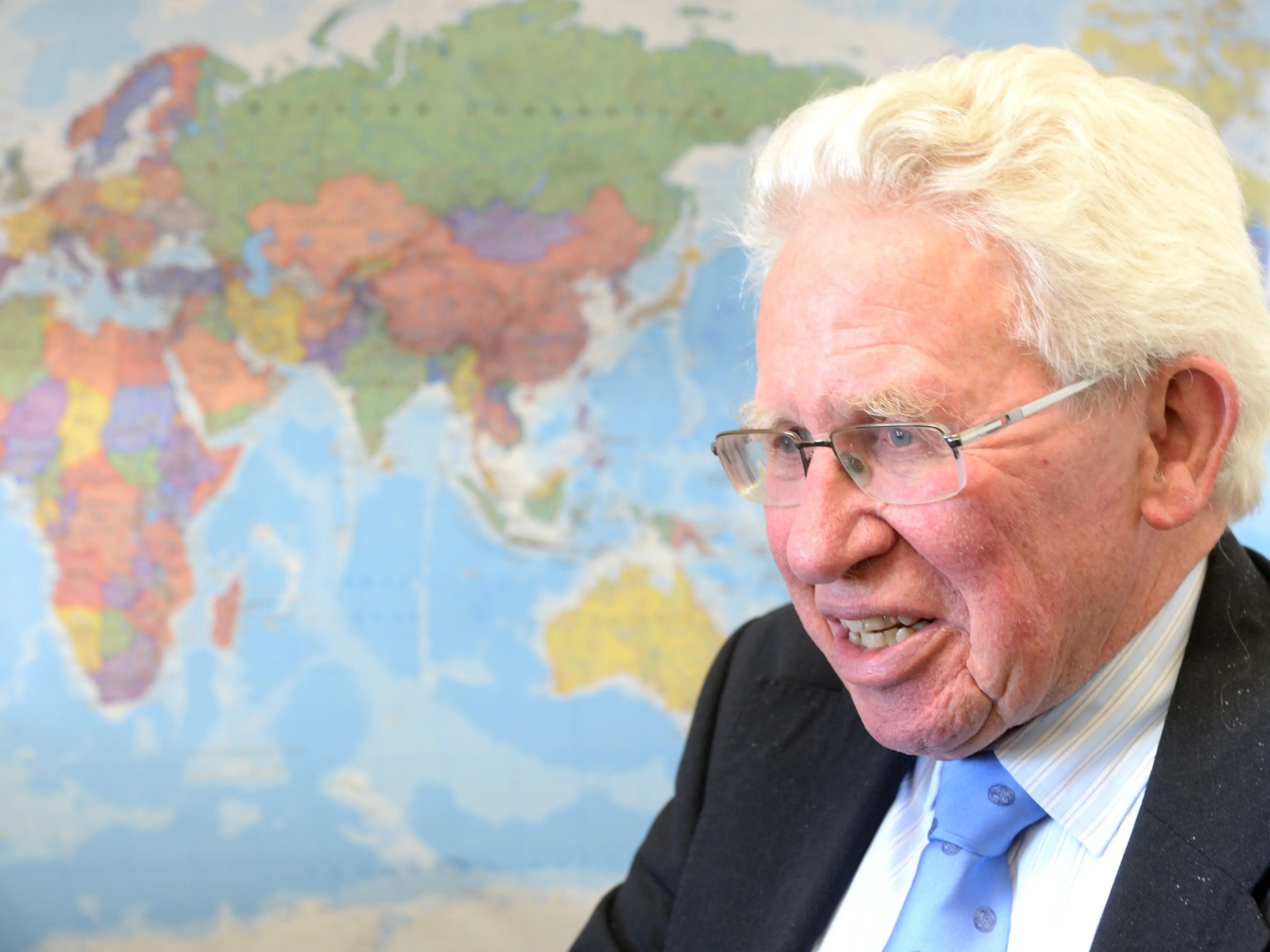
Few New Zealand lawyers have reached the heights achieved by Sir Kenneth Keith: a Supreme Court justice, a seat on the International Court of Justice and international respect as a writer and teacher on legal matters.
Sir Ken was also a founding member of the Law Commission and its president, and helped craft statutes such as the Official Information Act and the New Zealand Bill of Rights Act 1990.
He was also a member of the Royal Commission on the Electoral System which helped usher in proportional representation as New Zealand’s electoral system, and wrote the introduction to the Cabinet Manual, one of New Zealand’s most important constitutional documents.
Kenneth James Keith was born in Auckland in November 1937. Educated at Howick District High School and Auckland Grammar, he worked as a clerk in the Magistrate’s Court in Auckand while studying for his LLB from the University of Auckland .
After graduation he became a lawyer in the Department of External Affairs (now Mfat) before joining the Faculty of Law at Victoria University of Wellington, the start of a lifelong association with Victoria.
During his first teaching stint (1962-64) Sir Ken earned an LLM, before completing a second LLM at Harvard Law School (1964-65).
From 1968 to 1970, Sir Ken worked in the Office of Legal Affairs at the United Nations Secretariat in New York, then as director of the New Zealand Institute of International Affairs in 1971-73).
He was Dean of Law at Victoria from 1977 to 1981, and Sir Ken continued to teach there until 1991. When not teaching he was often called upon to serve on legal committees, commissions and working parties.
Sir Ken was a founding member of the Law Commission from 1986 to 1991, and its president from 1991 to 1996.
Sir Ken, having previously served as an appeals Judge in Samoa and the Cook Islands, was appointed Queen’s Counsel in 1994. He would later serve as an appellate judge in Fiji and Niue.
In April 1996, Sir Ken was appointed a Judge of the High Court and Court of Appeal, replacing Sir Robin Cooke. His appointment straight to the Court of Appeal was only the third instance in 40 years where that course of action had been thought appropriate.
Sir Ken served on the Court of Appeal from 1996 to 2003, and in January 2004 he was made an inaugural Judge of the Supreme Court.
He served on New Zealand’s highest court until November 2005, when he retired. He was appointed an acting judge for 24 months.
International law was an abiding interest of Sir Ken. He was a member of the New Zealand legal team which in the 1970s challenged the legality of French nuclear testing in the Pacific.
He led the New Zealand delegation to the 1977 diplomatic conference which prepared the additional Protocols to the Geneva Convention in 1977, and was a member of the International Humanitarian Fact-Finding Commission under the first additional Protocol to the Geneva Convention for the Protection of War Crimes from 1991 to 2006. He was president from 2002-06.
That same year Sir Ken was elected to the International Court of Justice, based in The Hague — the first and only New Zealander to achieve this honour.
He served a full nine-year term on the ICJ before retiring in 2015. He worked on two further cases for the ICJ as an ad hoc judge from 2021.
In 1988 he was appointed a Knight Commander of the Order of the British Empire, for services to law reform and legal education.
In the 2007 Queen’s Birthday Honours, Sir Ken was appointed a Member of the Order of New Zealand, New Zealand’s highest honour.
An extensively published author of academic articles and chapters, last year Sir Ken published Without Fear or Favour: A Life in Law — part memoir, part a series of observations on important aspects of domestic and international law.
Sir Kenneth Keith died on May 13, aged 88. He is survived by his wife Lady Jocelyn Keith — a former president of the New Zealand Nurses Association and former president of the New Zealand Red Cross — and their four children.
Chief Justice, Dame Helen Winkelmann, said Sir Ken had made an exceptional contribution to New Zealand and to the international legal order.
‘‘Sir Ken played an important role in developing the legal minds and constitutional understanding of many of today’s leaders, both within the law and beyond. He saw legal education as a matter not just of learning rules, but of understanding legal process and what he termed ‘the law-making enterprise.
‘‘By my estimate, at least 20 of New Zealand’s current senior court judges were educated by him.
‘‘He not only helped to shape New Zealand’s constitutional settlement, but also helped to explain it to the rest of us.’’ — Courts of New Zealand/Allied Media