
PHOTO
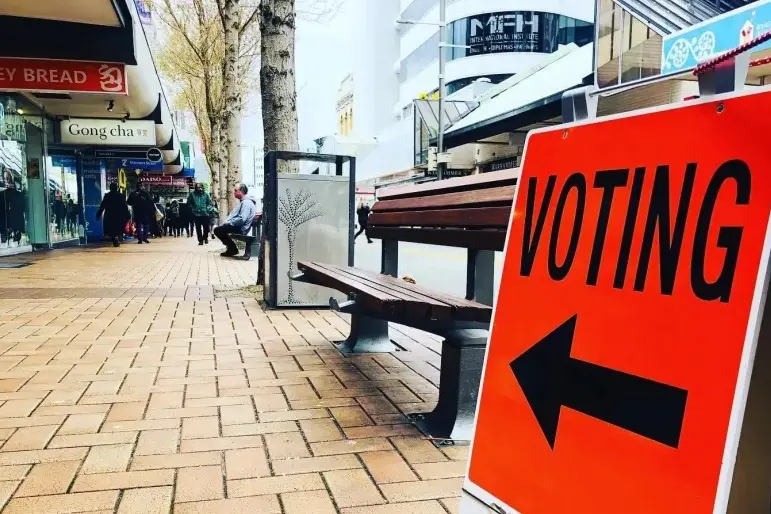
The enrolment rate for the country's youngest voters has plummeted to 53%, sliding for a sixth consecutive election year.
The Electoral Commission said it was pushing hard to get numbers up, while politicians have urged young people to get involved.
In 2011, 70% of 18-24 year olds were enrolled to vote by the end of June.
The number has dropped consistently since then, with 60% enrolled in 2023 - while the trend is reversed for those in their mid to late 20s.
Across all age groups, 89% of people are enrolled, which is up on the past two election years.
At Victoria University in Wellington, students who were enrolled - and those who were not - said they and their peers felt apathetic, ambivalent and nihilistic, and described feeling like their vote would not make any difference.
"Things are screwed anyway, why try?" one said.
AUT political scientist and senior lecturer Julienne Molineaux believed compulsory civics education in schools would help - as would lowering the voting age to 16.
"This sounds counterintuitive to solving youth enrolment problems, but young people are still at school at 16, most of them are," she said.
"If schools became a hub of voting enrolment and education and encouragement, we might see more engagement with the political system from young people."
Molineaux was not convinced automatic enrolment was the answer, saying the process of enrolment encouraged people to go on and vote.
"So if it happens automatically, the people who are currently disengaged would still be disengaged. They would just be disengaged and enrolled," she said.
Electoral Commission strategic engagement and partnerships director Shane Whitfield said it was doing everything it could to boost enrolment.
"We're making sure that we're available in communities and places and spaces where young people are, so that they can have that opportunity to have their voices heard," he said.
That would include social media, radio and television campaigns as well as being present at sports clubs, schools, universities, polytechs, and malls.
Whitfield hoped the commission would not be alone in their mission.
"The kaumātua, the grandparents, the parents, the sports coaches, we think that together we can get a whole bunch more young people involved," Whitfield said.
Politicians urge young people to have their say
Politicians told RNZ they were obligated to encourage people to enrol, but there was also an element of personal responsibility.
"If you're unhappy with the system, we need young people to come into politics and to engage with democracy and the political system," Prime Minister Christopher Luxon said.
Labour's Kieran McAnulty said politicians had to give young people a reason to participate.
"Certainly that's our intention with our policy offering and how we're going to be conducting the campaign," he said.
New Zealand First deputy leader Shane Jones said he always checked with young people whether they were enrolled.
"And often they aren't, but end of the day, you know, it's an obligation as well."
Act New Zealand leader David Seymour said young people had more interest in the future of the country because they would be around for more of it.
Greens co-leader Chlöe Swarbrick told young voters the only way to make change was to get involved.
"Basically, if you don't do politics, politics is going to do you."
Enrolments close at midnight October 25.
